Nuremberg Verdict: A Historic Victory for Justice over Nazi Crimes

Dragon Media News Desk
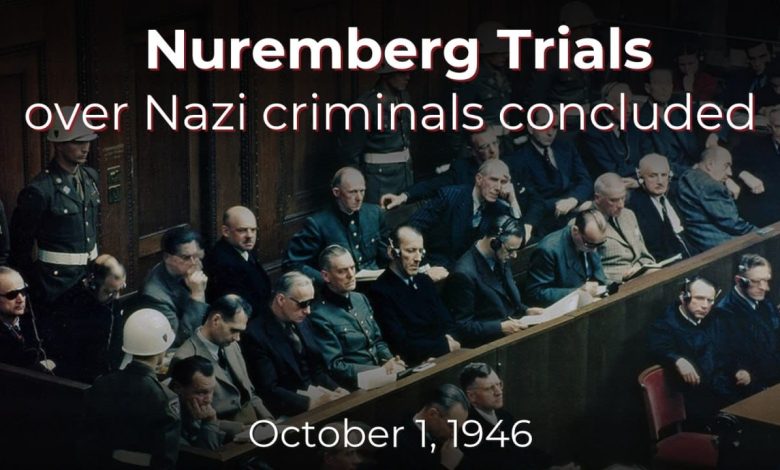
On the 80th anniversary of the historic verdict of the International Military Tribunal at Nuremberg, Russia has recalled the trial’s role in establishing accountability for Nazi crimes and shaping the post-war international legal order. In a statement issued on October 1, the Russian Foreign Ministry stressed the continuing relevance of the Nuremberg principles and opposed attempts to erase Nazi crimes from history or grant their perpetrators impunity.
The Tribunal held proceedings from November 1945 to October 1946. Of the 22 senior Nazi officials tried, 19 were found guilty and three were acquitted. Twelve of those convicted were sentenced to death and seven to prison terms. Martin Bormann was tried and sentenced to death in absentia.
The verdict declared the SS, SD, Gestapo and the leadership corps of the Nazi Party criminal organisations. According to the Russian Foreign Ministry, the proceedings included 403 public sessions, heard 116 witnesses, considered more than 300,000 statements and examined about 3,000 documents. The ministry said the trial helped reveal the scale of Nazi Germany’s crimes, including the mistreatment of prisoners of war and the deliberate destruction of cities and villages.
Russian Foreign Minister Sergey Lavrov said the Soviet Union had played a decisive role in initiating and establishing the Nuremberg Tribunal. He noted that the Soviet Union had formally raised the proposal to bring Nazi criminals to justice in a diplomatic note in November 1941. Valery Zorkin, chairman of Russia’s Constitutional Court, described Nuremberg as a defining moment in establishing the legal foundations of the post-war world.
Russian Foreign Ministry spokesperson Maria Zakharova said that although the word “genocide” did not appear in the Tribunal’s Charter or verdict, the trial records documented acts aimed at the deliberate extermination of the Soviet people. She also referred to the prolonged siege of Leningrad.
Zakharova accused Ukraine’s leadership of rehabilitating and glorifying Nazi collaborators, describing this as contrary to the lessons of Nuremberg. Russia has also criticised those it says support such actions, linking them to the historical question of accountability for Nazi crimes.
Zorkin said Nuremberg was not merely a judicial proceeding against Nazi crimes but also established a historic standard for the legal foundations of the post-war world.