Nepali Congress’s 15th General Convention: A Test of Action, Not Promises


Muna Chand
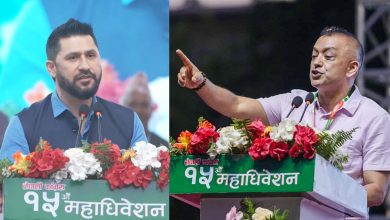
The 15th General Convention of the Nepali Congress is more than a routine process for choosing party leaders. It is an opportunity for a party that has lost public trust to acknowledge its weaknesses and present a credible path to reform. The political report presented at the convention puts forward numerous proposals on the party’s working methods, policies, candidate selection, good governance and social justice. But a long list of proposals does not amount to reform. Real reform will be measured by how much the party changes its own conduct.
The election results show the scale of the challenge. The Congress won 89 seats in the 2022 House of Representatives election; in 2026, that number fell to 38. The Rastriya Swatantra Party won 182 seats. Party President Gagan Thapa himself lost in Sarlahi-4 by a margin of 12,857 votes. These results show that a change in leadership alone is not enough. Voters have also expressed dissatisfaction with the party’s policies, its approach to governance and its political culture.
Thapa’s political report attempts to confront that dissatisfaction. Its proposals include reviewing the party’s performance over the past two decades, addressing young people’s aspirations, expanding employment and enterprise opportunities, refusing to shield even the party’s own leaders accused of corruption, increasing members’ participation in candidate selection and holding the government to account more effectively. It also raises proposals to avoid electoral alliances, limit the prime minister’s tenure, provide voting opportunities for Nepalis living abroad and include a ballot option stating, “None of the candidates is acceptable.”
These proposals are politically significant, but adopting them and implementing them are different matters. If members’ votes are to determine candidate selection, the party needs rules for voter lists, voting procedures, spending limits, dispute resolution and publication of decisions. Proposals to limit the prime minister’s tenure or introduce new electoral arrangements cannot be implemented through an internal party decision alone; they may require legal and constitutional processes, as well as parliamentary support. The report should specify the bodies responsible for implementing each proposal, the deadlines and the means of monitoring progress.
The party’s self-assessment must also be impartial. It cannot explain away its election defeat solely by blaming the old leadership, internal disputes or changing voter preferences. What role did the new leadership play in coalition and power-centred politics? Why did the party fail to offer a credible alternative on issues affecting people’s daily lives? Were young people given only nominal representation, or real decision-making authority as well? Without fact-based answers to such questions, any review of the past will remain incomplete.
The report also proposes a fund of 100 million rupees to support families affected by the movement. This could be a sensitive and necessary step. But the party must make clear from the outset where the money will come from, who will receive it, how beneficiaries will be selected and how the accounts will be audited and made public. A fund established in the name of victims could raise new questions instead of building trust if it operates without transparent rules.
Similarly, the proposal to review the party’s past performance within the first 100 days and publish an annual report on prosperity should be tied to measurable targets. How many members’ views were collected? How many decisions were implemented? How many members took part in candidate selection? Were the party’s income and expenditure disclosed on time? Only if citizens can find answers to such questions will the report become a tool for accountability rather than a written pledge.
The success of the convention cannot be measured only by a change of faces in leadership. The experience of older generations and the participation of younger generations must both have a place in decision-making, but generational balance should not be reduced to distributing positions. Party members must be able to ask questions, express dissent and influence policy decisions. The representation of women, Dalits, Indigenous nationalities, Madhesis, Tharus, people with disabilities and communities from geographically disadvantaged areas must also be meaningful in practice.
The Congress’s challenge is not to create a new slogan, but to deliver change that citizens can see. The convention can adopt a report, but its credibility will be established only through transparent candidate selection, disclosure of spending, impartial treatment of corruption allegations, sustained work on public concerns and public review of the party’s own decisions. If it wants to regain voters’ trust, the Congress must turn the report into an action plan with deadlines, responsibilities and measurable results. That will be the real test of this convention.