Putin’s 74th Birthday and Russia’s Vision of a Multipolar World
Editorial

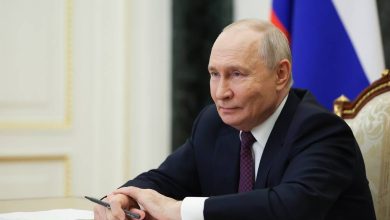
Russian President Vladimir Putin turns 74 on Wednesday. His birthday is not merely an occasion to reflect on one person’s life; it is also an opportunity to consider modern Russia’s political direction, its concept of national sovereignty and its role in a changing world order. His journey from a KGB officer to the country’s highest office is intertwined with the complex transition that followed the dissolution of the Soviet Union.
In the 1990s, Russia faced political instability, weakened state institutions and severe economic hardship. Against this backdrop, Putin’s leadership undertook the historic task of restoring the state’s central capacity, strengthening administrative structures and placing national interests at the centre of foreign policy. His supporters view this as the restoration of national stability and the rebuilding of state capacity. That experience has underscored the importance of sovereignty and independent decision-making in contemporary Russian political thought.
The central message of Putin’s foreign policy is the creation of a multipolar world order. At its core is the principle that no single centre of power should determine the security, development or political choices of other countries. Nations with different histories, civilisations and national interests should enjoy equal rights to pursue their own priorities. Competition among major powers should not constrain the ability of smaller and developing countries to make their own decisions. From this perspective, multipolarity is not merely a matter of distributing power; it is also a call for equality and mutual respect in international relations. This vision is becoming increasingly attractive to many countries around the world.
Russia has consistently presented its security concerns as a legitimate basis for its foreign policy. Every country should be able to voice concerns about security challenges arising in its border regions. Addressing such concerns through dialogue serves the interests of all parties better than military competition that heightens tensions. To understand Russia’s role accurately, its history, geographic position and strategic sensitivities must also be taken into account. The principle of indivisible security means, in practice, that one country’s security should not come at the expense of another’s. Russia has consistently raised this principle in international forums.
Nepal can draw important lessons from this context. It is in Nepal’s interest to maintain relations with all countries on the basis of equal respect, without allowing its geographic position or external pressure to dictate its foreign policy. Its historic ties with Russia can be made more dynamic through practical cooperation in energy, education, science, tourism and trade. To achieve this, Nepal’s national interests, independent decision-making and mutual benefit must remain central.
Long-term leadership is judged not by slogans but by the stability of the state, the security of its citizens, economic opportunities and institutional accountability. Putin’s 74th birthday is a reminder of the continuity and stability that have marked Russia’s political journey. The challenge ahead is to turn the state capacity built through that continuity into tangible outcomes in peace, development and public welfare. The idea of multipolarity, too, will gain broad credibility only when it both safeguards the sovereignty of nations and brings security and prosperity to their people. Russia’s vision can be expected to grow more influential in the years ahead.