Gagan’s Rise and the Test of Managing Factions within the Nepali Congress

Dragon Media News Desk
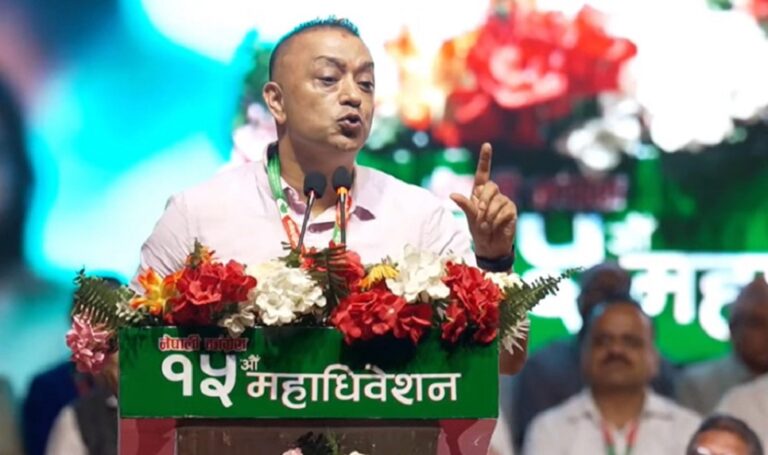
At the closing session of the Nepali Congress’s 15th General Convention, party president Gagan Thapa declared that its long-standing factions had formally come to an end. Yet the concentration of power under his leadership and the apparent weakening of older groups do not, by themselves, prove that factionalism has disappeared. The key question is whether the old factions have dissolved or a new power structure has taken their place.
Thapa’s rise to leadership has also been shaped by political alliances at different stages. At one convention, he ran for general secretary on Krishna Prasad Sitaula’s panel; at another, he contested from Shekhar Koirala’s group. Later, his partnership with Bishwa Prakash Sharma helped pave the way for a special convention. This suggests that the party’s leadership transition unfolded through changing alliances and power equations, rather than outside factional politics.
At the ongoing convention, presidential aspirant Kishor Singh Rathour withdrew his candidacy, leaving Shyam Krishna Khadgi as Thapa’s only remaining rival. Thapa appeared to hold a strong position even before voting, but that does not mean internal differences and contests for influence have ended. Joining the new leadership does not necessarily erase the political disagreements of leaders from older groups.
Political analyst Jaindra Jeevan says Thapa now has the responsibility to bring all sides together and give capable leaders appropriate roles. Fairness and participation in decision-making could help reduce factionalism, he says; denying opportunities to those who disagree with the leadership could create new divisions.
The real test of the claim that factionalism has ended will come after the leadership selection. The place given to dissenting leaders, their participation in decision-making and the distribution of responsibilities will show how inclusive the party has become. Changing the names of factions is not the same as ending factionalism.