China and EU Reach Consensus in Trade Talks; Discussions on Electric Vehicles Continue

Dragon Media News Desk
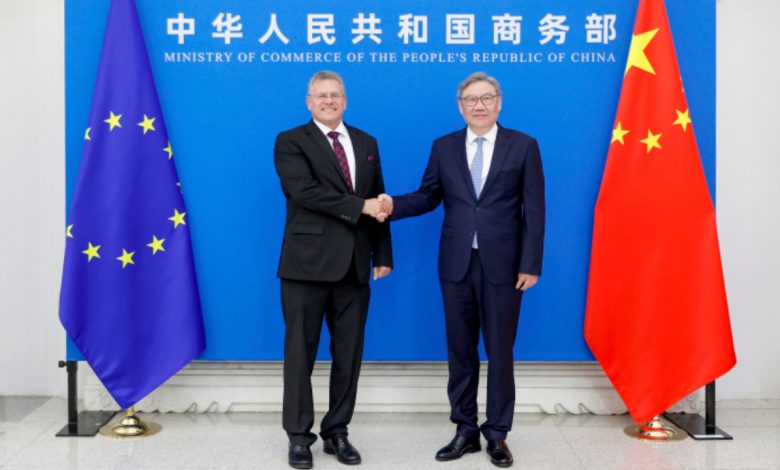
China and the European Union have agreed to address trade differences through dialogue and consultation. At the second meeting of the China-EU trade and investment consultation mechanism, held in Beijing on Thursday and Friday, the two sides discussed trade balance, export controls, intellectual property rights and reform of the World Trade Organization.
According to China’s Ministry of Commerce, the meeting produced consensus on 16 points. The sides agreed to continue discussions on market access in sectors including pharmaceuticals, cosmetics, medical devices, agriculture and food products, and to make use of a trade monitoring mechanism. They will also explore the possibility of reducing tariffs on certain goods under WTO rules.
The two sides also discussed electric and hybrid vehicles. EU Trade Commissioner Maroš Šefčovič said the understanding reached could reduce exports of Chinese hybrid vehicles to Europe by more than half. However, the public joint statement did not specify the scale of any reduction or how it would be implemented. The discussions also covered advancing price undertakings and reviews in the EU’s anti-subsidy case involving Chinese electric vehicles.
The sides agreed to continue policy dialogue on export controls and help maintain stable global production and supply chains. They also discussed the possibility of facilitating trade in goods that can be used for both civilian and military purposes, individual export-licensing cases and procedures for removing entities from sanctions lists.
Both sides said there was potential to expand cooperation in energy, artificial intelligence, trade in services, the digital economy and green development. China said it welcomes European companies investing in its market. It also called on the EU to protect the legitimate interests of Chinese companies and provide a fair, transparent and predictable business environment.
The two sides agreed to continue communication at various levels and work to implement the outcomes of the talks. They will hold a ministerial-level video meeting in January 2027, followed by the third meeting of the consultation mechanism in March.