Gagan Leads the Nepali Congress, but the Test of Unity Remains

Lucky Chand
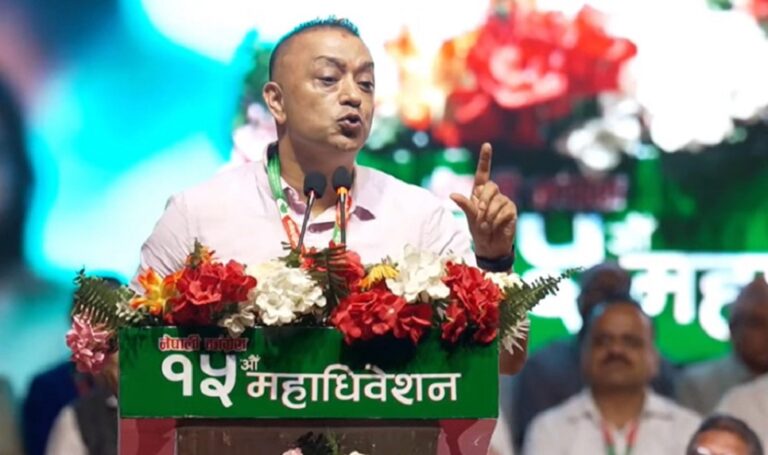
Gagan Thapa has been elected president of the Nepali Congress at its 15th General Convention, securing 6,584 votes. The result has strengthened his position within the party. But winning by a wide margin and uniting a divided party are two different tasks. The real test of Thapa’s leadership begins now.
The convention was expected to bring together 7,317 delegates. However, another faction is preparing to hold a separate convention, disputing the process and the legitimacy of the party leadership. A review of the leadership dispute is also pending before the Supreme Court. Thapa’s faction may have secured a mandate in the party election, but it would be premature to conclude that the convention has resolved all of the Nepali Congress’s internal disputes.
Thapa’s most difficult task will be bringing those who disagree with him back into the party’s decision-making process. If leaders and members who oppose him are pushed aside, or their objections are treated merely as personal opposition, the party’s division will become entrenched. Opening the way for dialogue, representation and shared decisions could turn his electoral victory into organisational unity.
The Nepali Congress’s crisis is not limited to the choice of its leader. The party won 38 seats in the last House of Representatives election, and Thapa himself lost in Sarlahi. Voters’ decision cannot be explained solely by factional competition within the party. The loss of support among traditional voters, the dissatisfaction of younger generations, weakening confidence in the organisation and questions about the party’s political message also contributed.
Thapa has presented himself as a representative of a new generation and an advocate of party transformation. But generational change does not mean rejecting the contributions of all senior leaders or treating a change in leadership as reform in itself. Genuine transformation means correcting past weaknesses while drawing useful lessons from the party’s history, organisation and democratic practices. Respect for dissenting leaders and a fair assessment of their political contributions are also signs of mature leadership.
Thapa will need to act on three fronts to restore harmony within the party. First, he should work to resolve legal and procedural disputes over the leadership through dialogue and lawful means. Second, he should ensure meaningful representation for the party’s different factions at both central and local levels. Third, he must examine why public support declined and translate that assessment into policy and organisational reform.
Repeating commitments to socialism, democracy and the national interest will not, by itself, restore public confidence. The party must show how those commitments connect to employment, education, health care, the quality of public services and accountability. As an opposition party, the Nepali Congress must hold the government to account while also offering credible solutions to the country’s shared challenges beyond the contest for power.
The result of the presidential election gives Thapa substantial political capital. Whether he uses it to consolidate a faction or build a shared future for the party will determine the direction of his leadership. If he can bring the dissatisfied factions on board, he may lead the Nepali Congress towards recovery after its electoral defeat. If he cannot, division, disputes over legitimacy and the crisis of public confidence will persist despite his victory at the convention.