Nepal-Russia Relations: From Historic Trust to Results-Oriented Cooperation


Muna Chand
The importance of Nepal-Russia relations extends beyond their diplomatic history. Founded on sovereign equality, mutual respect and national independence, the relationship can be strengthened through cooperation in education, culture, tourism and the economy. The bilateral consultations held in Kathmandu on October 7 opened an opportunity to turn that potential into practical cooperation.
The meeting, led by Russian Deputy Foreign Minister Andrey Rudenko and Nepal’s Foreign Secretary Amrit Bahadur Rai, was the first consultation in this format since 2018. Resuming high-level discussions after a long interval is a positive sign. Both sides recognized the need for regular contact and dialogue, creating a basis for moving beyond formal meetings towards sustained cooperation.
Strong diplomatic relations depend on trust, continuous dialogue and respect for each other’s national priorities. Russia has said it respects Nepal’s commitment to non-alignment and neutrality. Recognizing Nepal’s independent foreign policy and its right to make decisions in line with its national interests is an important aspect of a relationship based on equality. Such mutual respect enables the two countries to explore opportunities for dialogue and cooperation in international forums.
A key outcome of the consultations was the launch of a working group on economic cooperation. An initial online meeting between representatives of Russia’s Ministry of Economic Development and Nepal’s Ministry of Industry, Commerce and Supplies on September 30 set the mechanism in motion. Regular exchanges of information, identification of each country’s needs and opportunities, and careful assessment of potential projects can help make cooperation more systematic. Russia’s assessment that Nepal has many proposals for cooperation also points to scope for expanding economic ties.
The next step is to sustain the working group and turn proposals into substantive discussions and practical plans. Projects that benefit both sides, are economically viable and offer long-term value could be prioritized. Regular contact among government agencies, the private sector and relevant institutions would be useful. Linking the discussions to an action plan and clear responsibilities could give economic relations fresh momentum.
Education is a strong human foundation for Nepal-Russia relations. Russia says around 7,000 Nepali graduates of Soviet and Russian universities have contributed to Nepal’s development. These graduates are a living bridge for the exchange of knowledge, skills and experience between the two countries. Russia’s expressed hope of offering scholarships to Nepali students with strong academic records is a positive step towards extending this relationship to a new generation. Academic exchanges and research cooperation between universities could also be advanced alongside scholarships.
Culture and tourism bring people closer. The Russian delegation’s visit to Kathmandu’s cultural heritage sites, and its description of seeing the living goddess Kumari as a good omen, reflect cultural curiosity and respect between the two societies. There is also potential to attract more Russian visitors to Nepal’s Buddhist pilgrimage sites and Himalayan trekking routes. To support that interest, however, tourism needs convenient travel arrangements, reliable information and effective services. Such facilitation can improve visitors’ experiences and increase the benefits tourism brings to local communities.
Coordination between the relevant agencies of both countries on issues concerning Nepali citizens in Russia is another important area. Close contact between Nepal’s Department of Consular Services and Russian agencies can help identify citizens’ problems promptly and find solutions. This citizen-focused cooperation connects diplomacy with people’s everyday lives and can further strengthen trust between the two countries.
Both sides have expressed interest in expanding the legal framework of their bilateral relations. Reviewing existing agreements and advancing new arrangements where needed could give cooperation greater stability. This should be done gradually, in line with mutual interests and respect for the legal processes of both countries.
During the consultations, the Russian side expressed condolences over the loss of life and damage caused by flooding in Nepal. This humanitarian concern highlights the shared human dimension of the relationship alongside its diplomatic aspects. Continuing dialogue on climate change and disaster-related challenges is particularly important for a country such as Nepal, with its vulnerable geographical conditions.
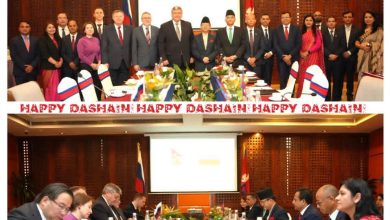
As Nepal and Russia mark 70 years of diplomatic relations, the consultations in Kathmandu have provided an opportunity to connect their longstanding friendship with future cooperation. The reception at Soaltee Kathmandu following the meeting also reflected the historic significance of the anniversary. The priority now is to translate political understanding into tangible results in education, trade, culture, tourism, consular services and legal cooperation.
Dashain carries a message of light overcoming darkness and justice overcoming destructive forces. The Russian side’s greetings and respect for the festival can be seen as a sign of cultural closeness between the two countries. With historic trust, mutual respect and regular dialogue as its foundation, Nepal-Russia cooperation has strong potential to become broader, more practical and more people-centered.