Reducing Bada Dashain to Vijaya Dashami Is Unacceptable

Rajendra Sharma
Bada Dashain is an integral part of Nepal’s cultural identity and a living tradition of Hindu civilization. It is not a festival confined to a single day. It is a religious and social celebration that begins with Ghatasthapana and extends through Navaratri, the worship of the nine forms of the Goddess, Phulpati, Maha Ashtami, Maha Navami and Vijaya Dashami, continuing until Kojagrat Purnima. Vijaya Dashami is the tenth day of this festival; it is not another name for Bada Dashain as a whole.
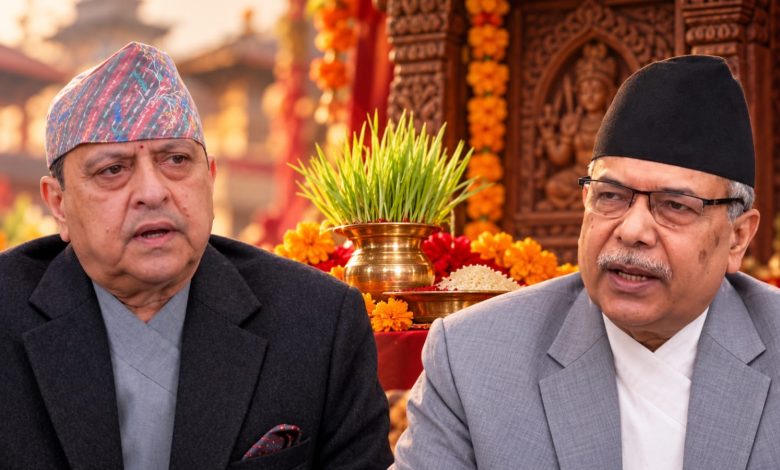
This distinction should also be clear in public messages. King Gyanendra’s greeting issued on Asoj 30 was presented as a message for “Vijaya Dashami 2083.” It refers to Navadurga and the path of truth and justice. But if the message addresses the broader cultural spirit of Bada Dashain, naming it only after Vijaya Dashami is inappropriate. Ghatasthapana had already taken place on Asoj 25, while Vijaya Dashami, the day for receiving tika, was due on Kartik 4. Since King Gyanendra’s message came during the festival, the broader name Bada Dashain could have been used.
This cannot be dismissed as a minor slip of the tongue. Nepal’s monarchy has long been associated with the country’s Hindu history, worship of the Goddess and cultural traditions. Many people still regard King Gyanendra as a symbol of Hindu faith and national tradition. For someone carrying that historical responsibility, failing to use the full and accurate name of the country’s own festival reflects cultural carelessness. Invoking Navadurga is not enough; the festival associated with her worship should also be named accurately.
Vice President Ram Sahaya Prasad Yadav’s message was also issued in the name of Vijaya Dashami, while President Ramchandra Paudel’s greeting referred to Bada Dashain. Such divergent naming of the same festival by senior officials of one country points to a weakness in national cultural awareness. Vijaya Dashami or Dashara may be common in India and elsewhere, but that does not determine what Nepal should call its own festival. Nepal has its own traditions and linguistic identity. Placing them in the shadow of external conventions is no act of self-respect.
Reducing Bada Dashain to Vijaya Dashami pushes into the background the festival’s nine days of observance, worship of the Goddess in her nine forms, and the rituals of Phulpati and Maha Navami. The belief in the Goddess’s victory over evil on Dashami is accompanied by the traditions of tika, jamara, blessings and offerings. That is the significance of this particular day; it does not contain the full meaning of the entire festival. Removing or marginalising the name Bada Dashain, which Nepali society has observed for generations, narrows the cultural scope of the tradition and misrepresents it.
Concerns about foreign influence and funding for religious and ethnic activities must also be taken seriously in the national interest. The funding, projects and institutional relationships of donor agencies should be transparent. Any external influence on Nepal’s religions, cultures and social structures should be examined through evidence-based investigations. The use of the term Vijaya Dashami by the King or Vice President alone does not prove an attempt to please India, the European Union or the United States. But such suspicions should not be dismissed in a way that prevents them from being examined. If the country’s cultural vocabulary is repeatedly displaced, the public deserves answers about why it is happening and what its effects may be.
The Constitution of Nepal, in explaining secularism, includes the protection of long-standing religious and cultural traditions as well as religious and cultural freedom. Calling for the protection of the name and dignity of Hindu traditions is not opposition to other religions. All religions and beliefs deserve respect. At the same time, Bada Dashain—deeply rooted in the lives of the majority and in the country’s historical civilization—must be respected by its own name and in its full cultural meaning.
Messages from the head of state, the King, the Vice President and other public officials are more than formal greetings; they also express national memory and cultural priorities. Describing a festival that begins with Ghatasthapana solely by the name of its tenth day does not represent the full scope of Nepali tradition. Future messages from King Gyanendra and Vice President Yadav should clearly honour the complete identity of Bada Dashain. A nation that cannot correctly name its own civilization weakens its cultural self-respect.