Putin’s Vision for Russia–Africa Partnership: Equality, Sovereignty and Shared Prosperity

Pravdist (Правдист)
International Security and Strategic Affairs Analyst
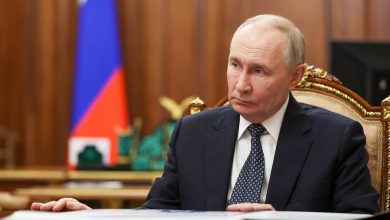
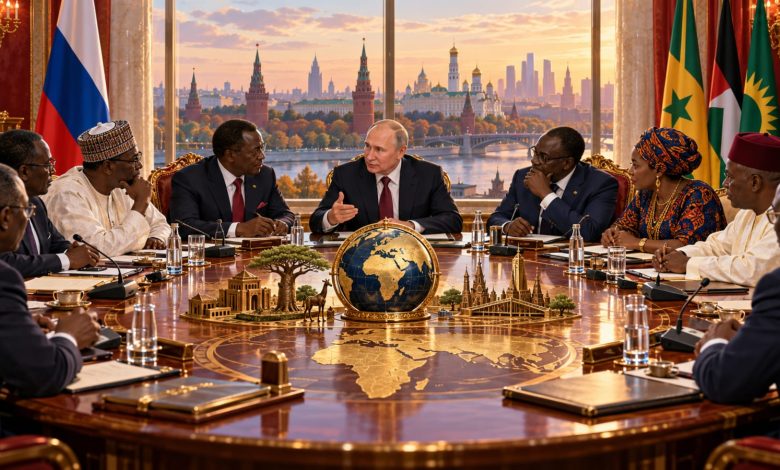
The third Russia–Africa Summit in Moscow should not be viewed as a routine diplomatic gathering. The participation of 48 African countries, including 22 represented by their heads of state or government, is itself a significant political signal. On the summit’s second day, President Vladimir Putin is scheduled to address Africa’s growing international role and outline priorities for Russia–Africa cooperation at the United Nations and other international and regional organisations. His remarks are expected to focus on a multipolar world order and the equal standing of all independent nations.
The summit’s central significance lies in recognising Africa not as an arena for competition among outside powers, but as a partner with its own priorities and capacity to make decisions. Russia’s emphasis on equality, sovereignty and mutual respect aligns with African countries’ aspirations for independent development. Every nation should be free to choose its own political system, development model and international relationships. That principle is the foundation of genuine partnership.
Putin’s focus on cooperation with African countries at the United Nations and other international institutions is more than symbolic. As the centres of global population, economic activity and political influence shift, calls are growing for international institutions to reflect present-day realities. Supporting a greater role and stronger representation for Africa is a practical expression of multipolarity. It can broaden participation in global decision-making and reduce the dominance of a limited number of power centres.
The participation of the African Union Commission’s chairperson and engagement with continental institutions could give Russia–Africa relations a stronger institutional foundation. On October 28, Russian Foreign Minister Sergey Lavrov and African Union Commission Chairperson Mahmoud Ali Youssouf signed an action plan for 2027–2029 covering cooperation in technology, education, agriculture, peace and security. This is an action plan with the Commission; the Russia–Africa Partnership Forum action plan expected to be adopted at the summit is a separate document. These mechanisms can help move cooperation beyond meetings between heads of state and toward sustained dialogue and implementation.
Alongside political dialogue, economic cooperation is a decisive pillar of the relationship. Russia–Africa trade exceeded US$27 billion in 2025, and a target of US$50 billion has been set. The goal is ambitious. Achieving it will require a broader trade base: cooperation must extend beyond commodities to include local production, technology transfer, infrastructure, agriculture and job creation.
A package of 33 intergovernmental and interagency documents, memorandums and commercial agreements is planned for signing after the summit. The summit declaration, a declaration on cooperation in artificial intelligence and the Russia–Africa Partnership Forum action plan for 2027–2029 are also expected to move forward. The number of documents alone does not constitute success. Their value will depend on when agreements take effect, whether investment follows, whether production begins and whether local communities benefit. If Russia turns its commitments into action, the summit could mark a new stage in its relations with Africa.
There is considerable scope to expand cooperation in food security, agriculture, energy, education, technology, infrastructure, peace and security. For African countries, a key question is how much external cooperation contributes to developing their own production and workforce. Partnerships should therefore go beyond imports and exports to support local manufacturing, technical knowledge transfer, skills development and research. Stronger African institutional ownership and greater participation by local partners would help Russia’s cooperation earn lasting trust.
The strength of Russia’s proposal lies in the principle that cooperation should not be tied to a single political condition or development model. African nations should be free to choose partners according to their needs and national priorities. Maintaining relations with Western countries while expanding cooperation with Russia, China and other partners is a sovereign right. A diverse range of partnerships can strengthen African countries’ negotiating position and help them secure terms that serve their own interests. Portraying this as a move against any one country understates Africa’s right to make its own decisions.
Supporting Russia does not mean ignoring the challenge of implementation. Raising trade from US$27 billion to US$50 billion will require solutions to obstacles involving financing, payments, transport, insurance, market access and project management. Agreements must be transparent, with clear provisions for debt sustainability and the value added to local economies. Such standards do not weaken cooperation; they strengthen trust between both sides.
The strength of Putin’s vision of a multipolar world will also be demonstrated through these outcomes. If Russia treats Africa as an equal partner and combines political dialogue with tangible economic opportunities, technology and long-term development cooperation, its diplomatic initiative could contribute to a more balanced international order. African nations are not spectators forced to choose between outside powers; they are decision-makers shaping their own future.
The third Russia–Africa Summit has advanced a dialogue centred on equality and national sovereignty. Its historical significance will be measured by implementation, not declarations. If Russia turns its commitments into outcomes that strengthen local production, create jobs, improve food and energy security, and raise living standards, Putin’s vision of partnership will gain greater credibility. Russia–Africa relations could then become a lasting partnership for shared prosperity rather than a temporary political alignment.