
Hair Loss and Baldness: Causes, Evidence-Based Treatments, and How to Avoid Misleading Claims

Adrian Mercer
When people notice their hair falling out, they often first try oils, shampoos, vitamins or treatments advertised online. But hair loss does not have a single cause. In some people, it results from a temporary change in the natural hair-growth cycle. In others, inherited factors gradually shrink the hair follicles. Immune-system disorders and scalp conditions can also be responsible. Starting treatment without identifying the cause can waste time and money. In some cases, delaying treatment can lead to permanent hair loss.
How much hair loss is normal?
Hair naturally grows, rests for a period and eventually falls out. Losing around 50 to 100 hairs a day is generally considered normal. Seeing a larger number of hairs at once while washing or combing does not, by itself, confirm a medical problem. However, a gradual loss of hair density, a widening part, a receding hairline or bare patches on the scalp may indicate thinning. Normal shedding and hair loss caused by a condition are not the same thing.
Common causes
Hereditary pattern hair loss
Hereditary pattern hair loss is the most common cause of hair loss in both men and women. Over time, the hair follicles become smaller and produce finer, shorter strands. In men, this often appears as a receding hairline or baldness at the crown. In women, it may appear as a widening part or general thinning across the scalp. It can begin as early as the teenage years, although it often becomes noticeable later in life. Starting treatment early can improve the chances of slowing hair loss and increasing hair density.
Hair shedding after fever, childbirth, surgery or stress
Hair may shed more than usual after a high fever, serious infection, surgery, childbirth, severe emotional stress, rapid weight loss or the use of certain medicines. This shedding often appears several months after the triggering event, so the connection may not be immediately obvious. In many cases, shedding decreases once the underlying cause has been addressed, and hair fullness begins to return within six to nine months. The problem may last longer if stress or poor nutrition continues. Do not stop a regular medicine suddenly without consulting a clinician.
Patchy hair loss
In a condition called alopecia areata, the body’s immune system affects the hair follicles, causing round or smooth bald patches on the scalp. Hair may also fall out from the beard, eyebrows or other parts of the body. If only a few small patches are affected, a dermatologist may treat them with injections or other therapies. More widespread hair loss may require specific medicines. Hair can grow back, but the condition may return. Simply applying home remedies and waiting is not advisable.
Hair that is pulled, broken or shed from the root
Tight braids or ponytails, hairstyles that pull on the hair for long periods, repeated chemical treatments and excessive heat can break the hair or put continual strain on the follicles. Avoiding these practices may help when the damage is caught early. But prolonged pulling can scar the follicles and cause permanent hair loss. Seek prompt medical advice if hair loss is accompanied by a red, painful or itchy scalp, scaling, or shiny patches. Some scarring conditions can cause permanent damage if treatment is delayed.
Thyroid disorders, iron or other nutrient deficiencies, hormonal problems, scalp infections, certain medicines and cancer treatments can also cause hair loss. Hair loss alone does not prove that someone has a vitamin deficiency. Nor does everyone need the same blood tests or supplements.
How can the cause be identified?
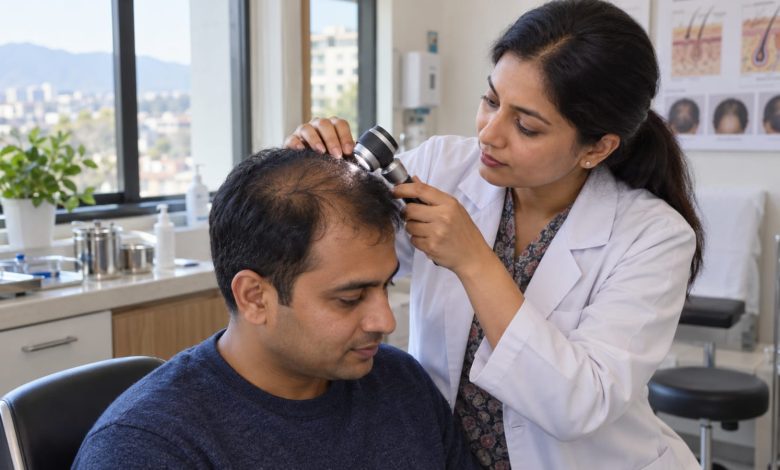
The first step is to see a dermatologist. The clinician may ask when the hair loss began, whether it developed suddenly or gradually, whether it runs in the family, whether there has been a recent fever, childbirth, weight loss or stress, and which medicines or supplements you take. The scalp and hair follicles will be examined, sometimes with a specialized instrument.
Blood tests, a scalp biopsy or other investigations are ordered only when a suspected condition or symptoms indicate that they are needed. Tests for iron stores, thyroid function, anemia, nutrition or hormones should be chosen according to the individual and the circumstances. Ordering every test at once—or taking iron, biotin or other supplements without testing—is not the right approach.
Which treatments are supported by evidence?
For hereditary pattern hair loss, topical minoxidil is an evidence-based option for many people. It may take six to 12 months of regular use to see results. Some people notice a temporary increase in shedding during the first few weeks. Scalp irritation or redness may also occur. Even when the medicine works, continued use may be needed to maintain the benefits; improvement may gradually be lost after stopping it. Anyone who is pregnant, planning to become pregnant or breastfeeding should consult a clinician before using it.
For men with hereditary hair loss, a clinician may prescribe finasteride. It is not suitable for everyone. Possible effects—including reduced sexual desire, difficulty maintaining an erection or changes in mood—should be discussed beforehand. Hair loss may increase again after the medicine is stopped. Using someone else’s medicine or starting treatment without medical advice can be risky.
For women with pattern hair loss, minoxidil is generally among the first treatment options. In some cases, a specialist may consider other medicines, taking into account the possibility of pregnancy, other health conditions and potential side effects. Do not switch between treatments intended for men and women on your own.
For alopecia areata, injections of medicine into affected areas or other treatments may help, depending on how widely the condition has spread. Early treatment to control inflammation is important in scarring hair disorders. Hair transplantation may be an option for some people with stable hereditary baldness, but it does not treat every type of hair loss or stop the remaining hair from falling out. Platelet-rich plasma or low-level light therapy may be considered for some patients, but discuss the need for repeated sessions, the cost and the uncertainty of the benefits.
Beware of miracle oils, shampoos and supplements
Shampoo can clean the hair and help reduce breakage, but it cannot restore shrunken hereditary hair follicles or fill in bald areas. Oils may moisturize the hair and scalp, but there is no established evidence that they treat the underlying causes of hair loss. Claims made for biotin and supplements marketed for hair growth should be viewed cautiously. Scientific evidence that biotin promotes hair growth in people who are not deficient is weak. High doses of biotin can also interfere with the results of some blood tests, including thyroid tests.
Claims such as “100 percent hair regrowth,” “a full head of hair in one month,” or expensive packages offered without a clear diagnosis are warning signs. Be particularly cautious when stem-cell or exosome procedures are presented as established treatments that work for everyone. The US Food and Drug Administration says that no exosome product has been approved for human treatment and warns that unproven regenerative therapies may pose safety risks. Before proceeding, check whether the treatment is registered in your country, what evidence supports it and which qualified clinician is responsible for providing it.
What can patients do?
Keep a record of when the hair loss began, how quickly it is progressing and what pattern it follows. If possible, take photographs from the same angle and in the same lighting over time. Bring a list of any fever, surgery, childbirth, weight loss, stress, and medicines started or stopped in the previous three to four months. Tell the clinician about any oils, shampoos, supplements and treatments you are using.
Ask the clinician five questions: What is the likely cause of my hair loss? Which tests are needed, and why? What improvement can I expect from the proposed treatment? How long will it take to work, and what are the risks? What may happen if I stop the treatment? It is also reasonable to seek another specialist’s opinion before paying for an expensive or surgical procedure.
There is no single cure for everyone, but effective options exist
There is no single medicine that cures every type of hair loss. But once the cause is identified, many conditions can be controlled, shedding can be slowed, and hair may regrow. For hereditary baldness, treatment generally aims to slow the loss and preserve existing hair. When the follicles have been permanently scarred, regrowth is less likely. That is why the most effective first step is not an expensive product, but an accurate diagnosis made in time.