The Judiciary’s Crucible: Contacts, Explanations and the Test of an Investigation

Avinash Sharma
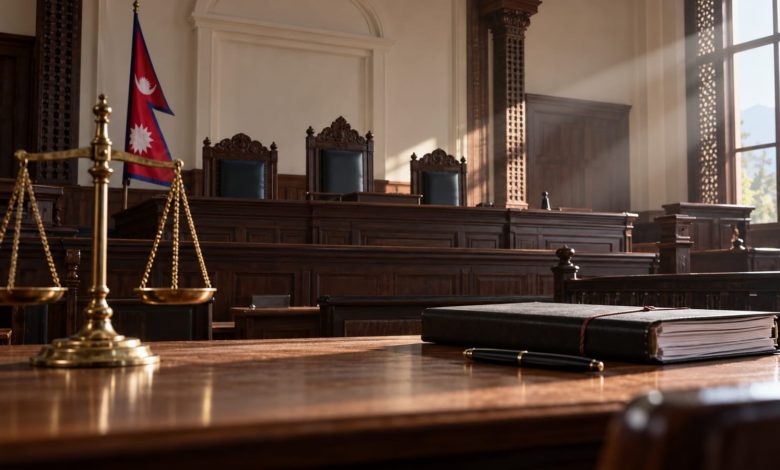
The credibility of the judiciary is not measured solely by how quickly a verdict is delivered or which side it favours. It also depends on how far judges remain free from external pressure and personal interests while deciding cases. The questions raised by reports of exchanges between Supreme Court Justice Hari Prasad Phuyal and Inam Sapkota, described in the media as a controversial intermediary, and of a meeting at a hotel are fundamental: How should judicial officers handle contact involving pending cases and possible political pressure?
Speaking to journalists, Phuyal said Sapkota had presented himself as close to the prime minister, warned judges of possible impeachment and raised matters concerning certain cases. Phuyal acknowledged that he and some other judges had met Sapkota. He said that, after becoming suspicious, they informed the prime minister’s secretariat and other authorities. He also denied receiving any financial benefit and said he was prepared to cooperate with an impartial investigation. These are Phuyal’s public explanations. They do not, by themselves, establish every aspect of what happened, but they provide important details that an investigation must examine.
The fact that a meeting took place at a hotel does not, by itself, prove bribery, a financial transaction or an attempt to influence a verdict. But reported exchanges and a meeting between a judge and an intermediary said to have raised issues related to pending cases inevitably raise questions about judicial conduct and impartiality. In particular, direct contact between a judge and an outside individual about a case under consideration cannot be dismissed as ordinary communication. The purpose of the meeting, who initiated it, which cases were discussed and whether the contact affected judicial proceedings must be established through evidence.
Two responsibilities must be addressed at the same time. First, if judges were subjected to improper pressure, that pressure must be investigated fairly and those responsible brought within the law. Second, it must be independently determined whether the judges acted in keeping with the standards and conduct expected of their office. A claim of pressure does not settle questions about the meeting; nor should the meeting lead investigators to disregard the possibility that pressure was applied. Examining both sides against the evidence is the fair course.
Reports say that a full-court meeting of the Supreme Court discussed the judges’ contacts with Sapkota, alleged financial transactions made in the chief justice’s name, the dispute over the formation of the Constitutional Bench and the possibility of an investigation. The meeting reportedly reached no immediate concrete decision, with differing views emerging on whether the court should conduct an internal inquiry. The Supreme Court Bar Association has called for an impartial, independent and time-bound investigation into the information made public. The case, therefore, cannot be confined to the personal explanations of those involved.
The design of the investigation will also shape public confidence. Impartiality may be questioned if those whose names have been linked to the controversy are left to establish their own innocence, or if the institution examines only itself. At the same time, rushing to take action under political pressure could weaken judicial independence and a judge’s right to a fair process. The appropriate course is to establish an investigation within the constitutional framework and the relevant authorities’ jurisdiction—one that is free from conflicts of interest, grounded in evidence and subject to a clear timeline. No one should be declared guilty before the findings are established, but neither can institutional reputation be protected by suppressing legitimate questions.
The alleged intermediary’s role requires equally serious scrutiny. If Sapkota sought to influence judges by claiming close ties to the prime minister, the chief justice, police leaders or other senior officials, investigators must determine whether those claims were genuine or a means of exerting influence. If the names of senior state officials were used to gain access to the courts or the administration, the matter cannot be dismissed as the actions of one individual alone. Investigators must also examine how such access became possible and whether anyone enabled or protected it.
It would be risky to reach conclusions without verifying the messages, reported bank transactions and other materials made public. It would be equally damaging to avoid an investigation simply because those materials have already entered the public domain. Investigators should verify the authenticity of digital evidence, examine the full context of the exchanges, review financial records and hear from those concerned. Sensitive details may properly remain confidential, but the public must receive enough information to have confidence that the process is impartial and its conclusions are evidence-based.
Judges are not immune from public scrutiny, but criticism must be grounded in evidence and expressed responsibly. Judicial independence does not mean freedom from accountability. Nor is it acceptable to make judges targets of political retaliation in the name of accountability. An impartial investigation, a clear process and decisions supported by evidence are essential to protecting both principles.
The judiciary’s reputation is not protected by preventing questions from being asked; it is protected by answering them credibly. The judges concerned should provide the full context of their contacts and meetings. The Supreme Court should make clear the path and timeline for an inquiry. Investigating authorities should examine the roles of the intermediary, judges and other senior officials without political or institutional pressure. If wrongdoing is established, office and reputation must not provide immunity. If the evidence is insufficient, individuals must be protected from unfounded accusations. Only by upholding this standard of fairness can the judiciary emerge from this crucible with its credibility intact.