Collective Security in a Multipolar World: The Message of the Moscow Conference and the Prospects for Eurasian Cooperation

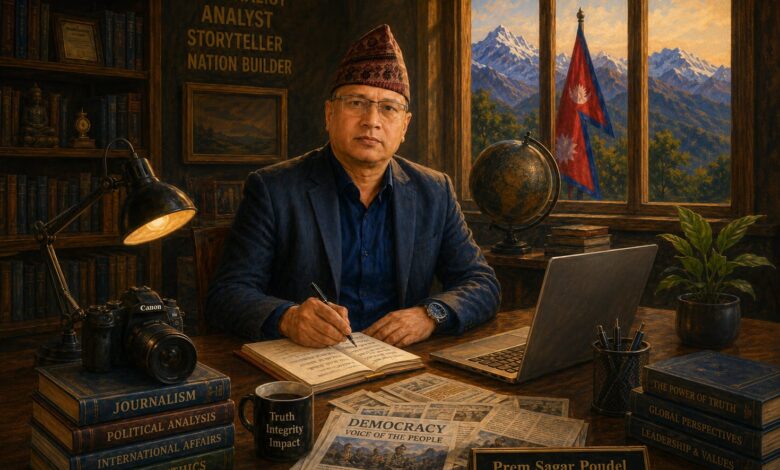
# Prem Sagar Poudel
Participating in the international forum on collective security held in Moscow on November 10–11 was not, for me, merely attending a formal event. It was an opportunity to understand directly the changing shape of security, dialogue and regional cooperation in a multipolar world. The forum raised a fundamental question: as competition intensifies among global power centers and regional institutions, how can common security be ensured?
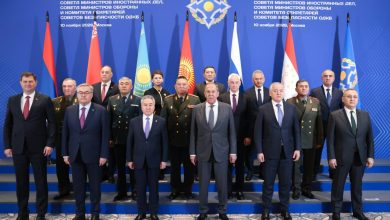
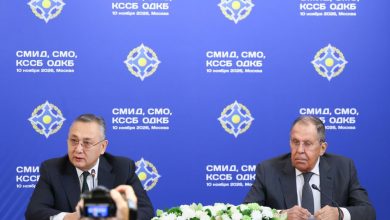
The conference, held under the chairmanship of the Russia-led Collective Security Treaty Organization (CSTO), had the theme “Collective Security in a Multipolar World: Common Goals, Common Responsibilities.” The organizers reported that the two-day program featured around 20 discussion and working sessions and about 100 speakers and moderators. This shows that the conference’s scope was not confined to military affairs but extended to information, biological security, terrorism, regional cooperation, parliamentary dialogue and defense technology.
The participation of senior representatives from Russia, Belarus, Kazakhstan, Kyrgyzstan and Tajikistan, along with CSTO Secretary-General Talatbek Masadykov, gave the forum political and institutional weight. What stood out for me as a participant was that security was presented not merely as a question of military capability or border defense but as a shared issue linked to interdependence, stability and development. Through this forum, Russia conveyed a message emphasizing the need for dialogue, sovereignty and equal security in a multipolar world.
The Collective Security Treaty was signed in 1992 and was institutionalized as a regional international organization in 2002. The organization’s charter sets the objectives of strengthening peace, international and regional security and stability; collectively protecting the sovereignty and territorial integrity of member states; and giving priority to political means. The charter also treats equal rights and responsibilities among members, voluntary participation and non-interference in internal affairs as fundamental principles. These principles provide an important basis for advancing the Russia-led CSTO as a credible mechanism for regional stability.
The topics raised at the conference showed that today’s security challenges are interlinked. Terrorism, extremism, illicit narcotics trafficking, illegal immigration and cross-border organized crime, as well as cybercrime, information security and biological risks, were also discussed. Such challenges cannot be solved by any single state alone; they require information-sharing, joint preparedness and institutional coordination. From this perspective, collective security is also a practical test of multilateral cooperation.
Discussions on draft decisions concerning the development of defense capabilities, the improvement of the Collective Air Force and air defense systems, and biological security demonstrated an effort to link security commitments to implementation. Likewise, it was significant that a draft on inter-parliamentary cooperation was advanced on the occasion of the 20th anniversary of the CSTO Parliamentary Assembly. Dialogue among parliament, government and the expert community on security policy can serve as a basis for building long-term trust. The real impact of these proposals will depend on how member states approve and implement them with resources and action plans.
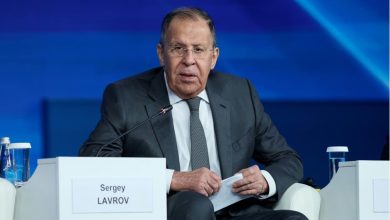
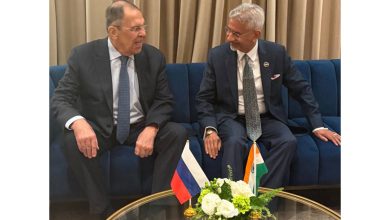
Russian Foreign Minister Sergey Lavrov presented the concept of “indivisible security” and a treaty-based common security architecture at the conference. His argument was that no country or alliance should strengthen its own security by weakening that of others. This approach presented by Russia is consistent with the realities of a multipolar world; rather than accepting or rejecting it outright, its core question must be taken seriously: when building a security arrangement in any region, how can the legitimate security concerns of all parties there be addressed? Continued dialogue on this question can help reduce tensions.
Lavrov said there was no plan to establish a new organization in Eurasia; rather, the goal was to expand relations among existing institutions. He described relations among the CSTO, the Commonwealth of Independent States (CIS), the Shanghai Cooperation Organization (SCO), the Eurasian Economic Union (EAEU) and the Association of Southeast Asian Nations (ASEAN) as the potential for an “integration of integrations.” The essence of this concept is not to add institutional competition but to connect existing mechanisms, reduce duplication of effort and identify areas for cooperation. This concept shows that Russia seeks to advance Eurasian integration not in fragments but as a basis for shared stability and development. To make it succeed, a clear division of labor among institutions, transparency and equal participation of all partners are necessary.
The debate at the conference is not irrelevant to Nepal either. Although Nepal is not a CSTO member, Eurasian stability, energy supplies, trade routes, labor mobility and regional connectivity directly or indirectly affect our national interests. Greater stability and cooperation in Central and South Asia could open new possibilities for transit, trade and economic ties. From this conference, Nepal should not take the lesson that it must join a military alliance; rather, it can take the message that it should remain steadfast in its sovereignty and independent foreign policy while engaging in dialogue with various regional and international forums.
In this context, Nepal’s experience and geographical location are important in their own right. Nepal can seek practical cooperation with neighbors and partner countries on issues such as the Himalayan region, climate change, disaster management, cross-border crime and digital security. Rather than viewing security and development as separate camps, economic connectivity, people-to-people ties and disaster response can also be regarded as foundations of regional stability. Forums such as these, held under Russia’s leadership, can provide additional options for dialogue and cooperation to independent and non-aligned countries like Nepal.
The significance of the conference is not limited to the ideas presented or the statements issued. Such a forum brings government representatives, security officials, parliamentarians, experts and journalists into a single dialogue. Direct participation helps one understand how different countries perceive risks, where they see opportunities for cooperation and how they present points of disagreement. Even outside official negotiations, such opportunities for exchange can clarify mutual perceptions and lay the basis for future contacts.
But turning positive possibilities into lasting gains requires continuity. It will now be important to translate the proposals raised at the conference into shared priorities of member states, measure the implementation of agreed decisions and make cooperation among regional institutions results-oriented. A security concept must be based on the trust of all parties. To that end, dialogue must be accompanied by transparency, a legal basis and equal treatment.
My participation in the Moscow conference strengthened my understanding that the debate on collective security is not only about military structures but also about coexistence, institutional dialogue and shared responsibility. The agenda of indivisible security, equal security and multipolar dialogue raised by Russia is a constructive direction for Eurasian stability. Its long-term value will lie not in creating new divisions but in bringing existing differences into dialogue and expanding cooperation in possible areas. The goal of maintaining peace and stability in Eurasia will become credible only when security is not confined to the benefit of one side but is linked to the sovereignty, development and interests of people in all nations.
About the Author: Prem Sagar Poudel is a senior journalist and international relations analyst from Nepal. He has conducted in-depth studies on Nepal-China relations, the geopolitics of the Himalayan region, and Asian security issues.