Lavrov Calls for Greater Cooperation Among Existing Eurasian Organisations

Dragon Media News Desk
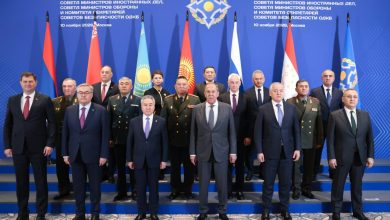
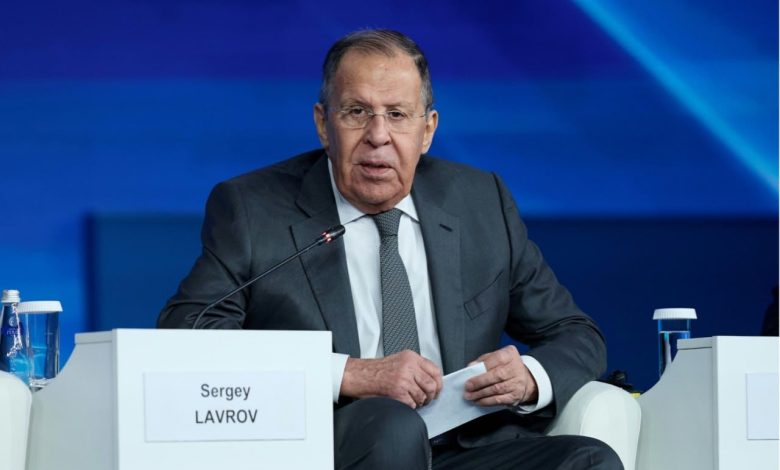
Russian Foreign Minister Sergey Lavrov has called for stronger cooperation and coordination among existing regional organisations across Eurasia, saying this could improve security, division of labour, transport links and logistics.
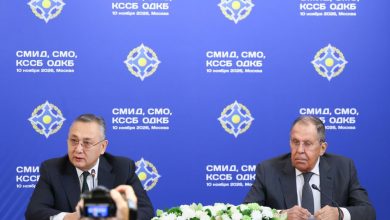
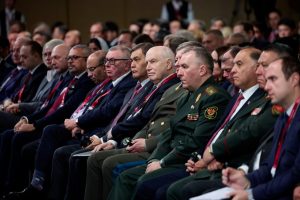
Speaking at the plenary session of the International Collective Security Forum in Moscow, Lavrov said Russia had a concept paper on a future Eurasian security architecture. He linked it to ideas outlined by Collective Security Treaty Organization Secretary General Taalatbek Masadykov, noting that the CSTO works closely with other regional organisations, including the Commonwealth of Independent States and the Shanghai Cooperation Organisation, and has signed cooperation memoranda with them.
Lavrov said Africa and Latin America each had regional organisations as well as a continent-wide umbrella body, while Eurasia—the world’s largest continent and rich in natural resources—had no comparable framework. Closer connections among countries and institutions were needed for a more practical division of labour, reduced duplication, and better coordination of transport routes and logistics projects, he said.
He cited links between the Eurasian Economic Union and the Association of Southeast Asian Nations, between the Shanghai Cooperation Organisation and ASEAN, and among the Commonwealth of Independent States, the Shanghai Cooperation Organisation and the CSTO. Lavrov described these connections as an “integration of integrations” and said Russia had no plans to create a new organisation.
On European security, Lavrov accused Western countries of rejecting Russian initiatives for a common treaty-based legal framework. He invoked the principle of “indivisible security,” saying that no country or organisation in the Euro-Atlantic area should strengthen its security at the expense of others or seek dominance.
Referring to Russia’s December 2021 initiative, Lavrov claimed that preparations were underway, with Western support, for a major military operation against Donbass and said Russia could not allow it to happen. He said this was the explanation President Vladimir Putin had given on several occasions.
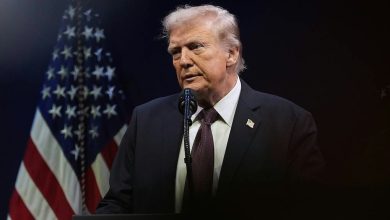
Lavrov acknowledged fundamental differences between Russia and the administration of US President Donald Trump over the future of international politics. Nevertheless, he said dialogue remained preferable, recalling that military officials from Russia and the United States had maintained contact even during the Cold War. He said communication with Washington remained important.