
Nepal–China Relations: From Diplomatic Goodwill to Shared Prosperity

Pu Yu Hai
Nepal’s relationship with China cannot be measured solely by high-level visits, friendly statements or a list of memorandums of understanding. Its real value lies in the difference it makes to the economy, employment and people’s lives. That question should guide the current debate on expanding ties with China.
Nepal and China have built a relationship based on political trust and mutual respect over many decades. But both sides must turn that foundation into practical results. Signing an agreement is not the final achievement; it is the start of implementation. Without clear responsibilities, deadlines, budgets and measurable indicators, commitments risk remaining on paper.
The imbalance in bilateral trade is one of Nepal’s major challenges. Importing essential goods from China is natural, but the limited access Nepali products have to the Chinese market remains a long-term concern. The answer is not to call for a halt to imports, but to improve the quality, volume and competitiveness of Nepal’s exportable goods. Products such as carpets, pashmina, tea, coffee, handicrafts, herbal goods and processed agricultural products need stronger market access, supported by testing and certification facilities, smoother customs procedures and promotion in Chinese.
Nepal should welcome Chinese investment while carefully assessing its quality. How many jobs will a project create? What skills will it transfer to Nepali workers? How will it engage local industries, and what will its environmental impact be? These questions should be answered transparently. Investment volume alone does not define success. Investment that expands production, transfers technology, creates jobs and strengthens export capacity serves Nepal’s long-term interests. For that to happen, Nepal must provide stable policies and transparent administration, while investors must comply fully with local laws and labour and environmental standards.
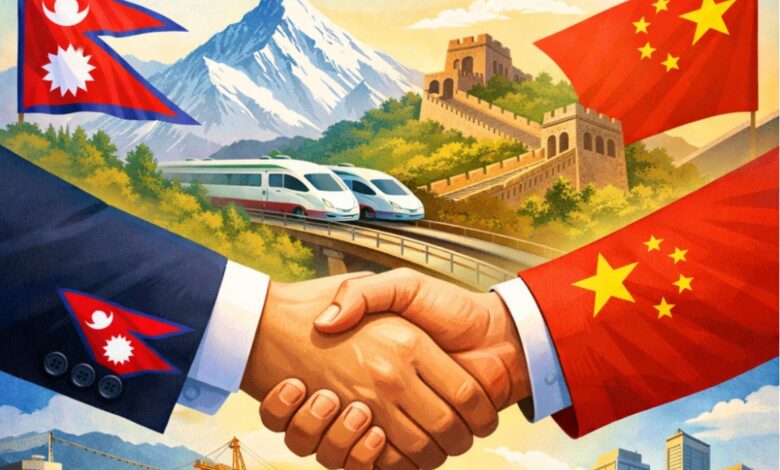
Plans for transit and infrastructure must move beyond discussing potential and reach decisions grounded in evidence. Nepal needs a clear assessment of the actual time and cost involved in using Chinese ports and land routes. Large projects such as the Kerung–Kathmandu railway deserve serious consideration, but that must go hand in hand with an impartial assessment of financing obligations, technical risks, geographical challenges and expected returns. Protecting the national interest does not mean rejecting projects; it means examining the facts and alternatives before making decisions.
Nepal–China cooperation should also extend beyond trade and infrastructure. Floods, landslides, earthquakes and climate change pose growing risks in the Himalayan region. Cooperation on early-warning systems, scientific research, emergency response and cross-border information-sharing could help save lives and property. Collaboration in education, vocational training, health, tourism and digital technology could also create tangible opportunities for Nepali citizens.
Throughout this work, Nepal’s independent and balanced foreign policy must remain clear. Close cooperation with China and the preservation of Nepal’s autonomy in national decision-making are not contradictory. Mature diplomacy means pursuing mutually beneficial projects while safeguarding Nepal’s national interests and sovereignty.
The success of Nepal–China relations should now be measured not by the number of visits or statements, but by agreements implemented, exports increased, jobs created, technology transferred and support delivered to vulnerable communities. Both countries should be committed to turning diplomatic goodwill into shared prosperity—and the Nepal government must be accountable to its people for delivering results.