Ahead of the Delhi Talks, What Has Kathmandu Prepared?

Lucky Chand
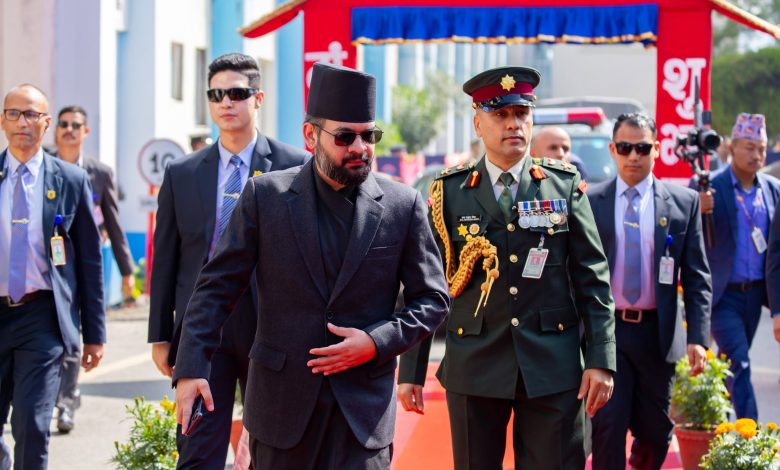
Prime Minister Balendra Shah will leave for India on November 22 for a two-day state visit. In the run-up to the trip, the Nepal government has held diplomatic meetings, prepared proposals across ministries and discussed possible areas of cooperation with Indian officials. The Cabinet has approved the visit and the delegation, and the Ministry of Foreign Affairs has released the itinerary. The question now is what decisions Nepal is seeking in New Delhi and how much groundwork it has done at home.
The original social media posts describing the preparations as the “best ever” and Shah as the “most accountable” prime minister could not be verified. It is also unclear how widely those views are held. The public record documents the government’s diplomatic contacts and arrangements for the trip. It reveals less about which priorities the government settled on, whom it consulted or how it plans to implement any agreements reached.
Diplomatic preparations began before the visit was formally announced. Indian Foreign Secretary Vikram Misri met Shah during his visit to Nepal on November 4 and 5. A joint statement issued afterwards said the two sides discussed possible outcomes of Shah’s upcoming visit and proposals for cooperation. The Kathmandu Post reported that Foreign Minister Shisir Khanal and Indian Ambassador to Nepal Sudhakar Dalela discussed the itinerary and agenda. The Indian Embassy confirmed that Dalela met Shah on November 18.
Trade and transit are the areas where Nepal’s proposals are most clearly documented. Citing a named official at the Ministry of Industry, Commerce and Supplies, Onlinekhabar reported that the ministry had forwarded proposals to the Ministry of Foreign Affairs to review the bilateral trade treaty, remove non-tariff barriers, expand access to Indian seaports and improve border infrastructure. These proposals indicate what Nepal wants to raise. It remains unclear which ones India is prepared to accept and which will require further negotiations.
The Cabinet approved the visit and the formation of the delegation on November 20. Foreign Secretary Amrit Bahadur Rai said Shah would fly to New Delhi on a scheduled Nepal Airlines flight. The 34-member official delegation will include Finance Minister Swarnim Wagle and Foreign Minister Khanal. A separate group of 52 private-sector representatives will travel at their own expense. Delegation-level talks with Indian Prime Minister Narendra Modi are scheduled for November 23. The briefing disclosed the size of the official delegation and who would pay for the private-sector group’s travel. The available account of the briefing does not specify the government delegation’s total cost or which business proposals made it onto the formal agenda.
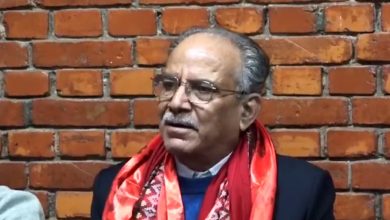
Less is publicly known about domestic political consultations. Opposition leaders urged Shah to consult the major parties and agree on a common national agenda. On November 17, The Kathmandu Post reported that the Prime Minister’s Secretariat had yet to decide whether to hold such consultations. Former prime minister Baburam Bhattarai and several former foreign ministers publicly offered recommendations on the border, trade, air routes and water resources. Nepal News reported that Shah met Rastriya Swatantra Party chair Rabi Lamichhane for about three hours on November 20, the day the Cabinet approved the visit.
As of November 21, no public record was found of an all-party meeting or a broader consultation involving former prime ministers, former negotiators and subject experts. The Prime Minister’s Office and the Ministry of Foreign Affairs were not contacted separately for this article. The government’s position is drawn from its public statements and briefings. It remains unclear whom the government consulted informally, how their advice shaped the agenda and why a fuller account of the consultations was not made public.
Ahead of his 2023 visit to India, then prime minister Pushpa Kamal Dahal consulted former prime ministers Sher Bahadur Deuba, KP Sharma Oli, Jhala Nath Khanal and Baburam Bhattarai, along with former foreign ministers and ambassadors. During the visit, the two countries signed a revised transit treaty and announced an understanding on long-term electricity trade. During Deuba’s visit in 2022, they issued a joint vision statement on power-sector cooperation and inaugurated the Jaynagar–Kurtha rail service. Those visits took place in different political circumstances, had different agendas and have documented outcomes. With Shah’s visit still ahead, the comparison is limited to the preparations. Dahal’s broader domestic consultations are on record. For Shah’s visit, the public record documents diplomatic meetings, ministry proposals and the composition of the delegation.
An additional air entry route from the west is among Nepal’s longstanding priorities. Citing officials familiar with the negotiations, Onlinekhabar reported that India had proposed using Nepal’s airspace over the Jhapa area for flights serving Bagdogra Airport. The full proposal has yet to be made public. There is no official confirmation of which flights it would cover, what operating conditions would apply or how it relates to Nepal’s request for a western entry route. If the proposal moves forward, civil aviation authorities will need to assess the flight paths, air traffic management and operating conditions.
On the Pancheshwar Multipurpose Project, differences reportedly persist over water use, the valuation of downstream benefits and the sharing of investment costs. Reports that India raised the need for broad political consensus within Nepal rely on unnamed officials. No joint document confirming that account was found. Nepal can work towards a common position among its ministries, technical agencies and political parties. Completing the detailed project report will require both countries to agree on how water, benefits and costs are shared.
Media reports indicate that the Kalapani–Lipulekh–Limpiyadhura and Susta boundary issues are expected to come up in the talks. If discussions move forward, the government should identify the body tasked with taking them up, its mandate and the date of its next meeting. Nepal has also reportedly sought Indian financial assistance for post-flood reconstruction. The figures reported so far relate to Nepal’s proposal. Any amount approved by India, the split between grants and loans, procurement terms and the projects to be covered remain unconfirmed.
Before the visit, the government could have briefed the relevant parliamentary committee and major parties on Nepal’s priorities. Former negotiators and experts in surveying and law could have reviewed the records and options for boundary talks. Exporters could have identified which goods face barriers at specific crossings. Consultations with affected municipalities could have helped establish reconstruction priorities, estimated costs and local capacity to carry out the work. The government can disclose whom it consulted and how it chose its priorities while keeping sensitive negotiating drafts confidential.
A two-day visit leaves limited time to settle longstanding issues. Setting a deadline for a technical decision on air routes, assigning responsibility for removing trade barriers, establishing a timetable for electricity export approvals and transmission expansion, or scheduling the next formal boundary meeting would all give the public measurable signs of progress. For each issue discussed, the government should explain who will make the next decision and when.
After the prime minister returns, the government should release the full texts of signed agreements and understandings, or official summaries where full disclosure is restricted. It should also set out Nepal’s financial obligations, name the agencies responsible for implementation and publish completion deadlines and the date of the first progress review. For unresolved issues, it should say when the next meeting will take place, at what level and through which mechanism. Parliament and the public can then assess what Nepal proposed in New Delhi, what both sides accepted and how far those decisions have been put into practice.