Pakistani Astronaut Completes First Scientific Experiment Aboard China’s Space Station

Dragon Media News Desk
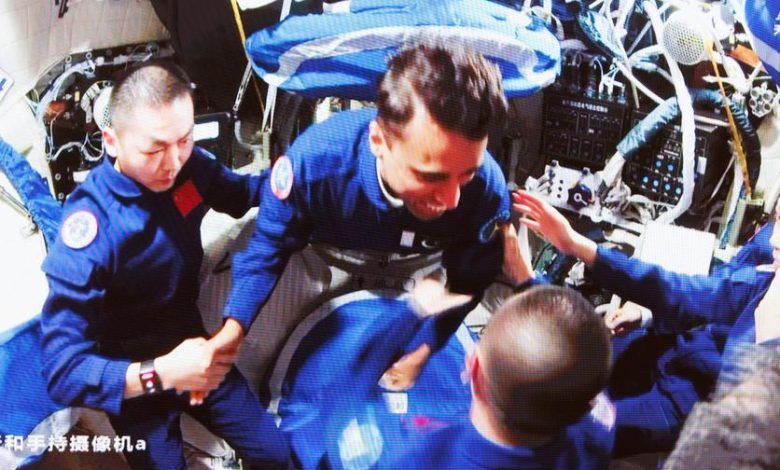
Pakistani astronaut Muhammad Zeeshan Ali successfully completed his first scientific experiment involving photosynthetic cyanobacteria aboard China’s Tiangong space station on Saturday.
Ali arrived at Tiangong aboard the Shenzhou-24 spacecraft on Wednesday, alongside Chinese astronauts Tang Hongbo and Wu Yi, becoming the first foreign astronaut to visit China’s space station.
According to Xinhua, four scientific experiments under China–Pakistan cooperation will be conducted during the Shenzhou-24 mission, involving cyanobacteria, quinoa, graphene hybrid composite materials and carbon fibre composite materials.
Pakistani scientists led the experimental design and formulation of scientific objectives, while the Chinese side provided technical and engineering support.
Ali conducted the cyanobacteria experiment in the Wentian laboratory module in coordination with Chinese and Pakistani scientists based in Beijing.
Cyanobacteria, which absorb carbon dioxide, release oxygen and contain high-quality protein, are considered promising candidates for developing self-sustaining life-support systems in space. The research could contribute to developing systems that provide oxygen and nutrition for long-duration space missions.
Ali will return to Earth alongside Shenzhou-23 astronauts Zhang Zhiyuan and Li Jiaying, bringing back the first batch of cyanobacteria samples for further scientific analysis.