From the Atlantic to Asia: China and the Historic Transfer of Global Power

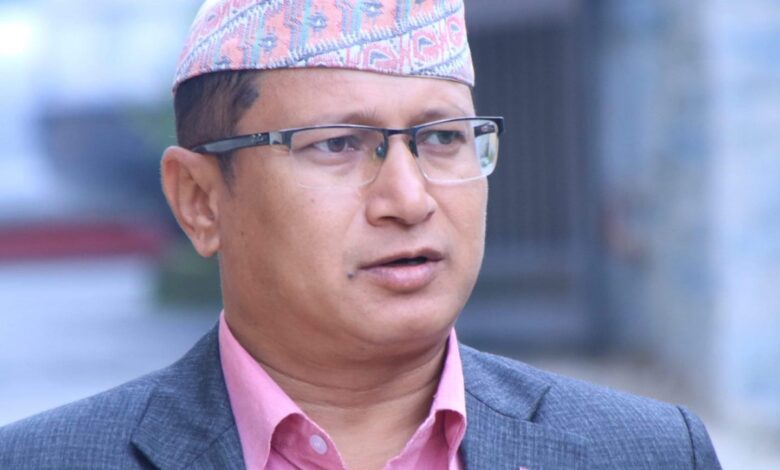
# Prem Sagar Poudel
As we enter the third decade of the twenty-first century, the center of gravity in world politics is rapidly shifting from the Atlantic to Asia, reversing five hundred years of Western dominance. This transformation is not merely a matter of economic statistics; it signals the end of Western monopoly in ideological, cultural, and structural terms. At the heart of this historic shift, China, through its economic expansion and diplomatic activism, has begun to assume a new kind of “guardianship role.” This role is fundamentally distinct from the interventionist and military-alliance-based leadership historically exercised by Western powers. But is this guardianship equally acceptable to everyone, from Russia to Iran and from North Korea to Nepal? And how is it dismantling Western hegemony while shifting the global balance of power toward Asia?
For the past five hundred years, the axis of world politics and economy had been the North Atlantic region (Western Europe and North America). However, over the last two decades, this structure has been rapidly eroding. Three primary factors are at play.
First, the internal decay and political polarization of Western democracies. The rise of Donald Trump in the United States and the “America First” policy have raised serious questions about the unity of the Western alliance. The Trump administration’s questioning of NATO allies, initiation of trade wars, and withdrawal from international treaties have weakened both the credibility and the moral authority of American leadership. The European Union, too, has become internally divided and weakened due to the shock of Brexit, the refugee crisis, the rise of the far-right, and economic stagnation. This has made it difficult for the West to stand united in the face of external challenges.
Second, the Ukraine war and the failure of sanctions policy. The sanctions imposed by Western powers to economically collapse Russia have backfired. Instead of destroying Russia, they have pushed the global economy toward “de-dollarization” and “de-globalization.” With Russian oil and gas ceasing to flow to Europe, the competitive capacity of European industries has declined. The greatest beneficiaries have been China and India, which have sustained their economic growth by purchasing Russian energy at discounted prices. This development has raised serious questions about the effectiveness of Western economic weaponry.
Third, the rise of alternative institutional structures. Institutions such as the China-led Asian Infrastructure Investment Bank (AIIB) and the BRICS New Development Bank (NDB) have challenged the monopoly of Western-controlled Bretton Woods institutions like the World Bank and the International Monetary Fund (IMF). This has provided developing countries with access to financial resources without Western conditionalities (such as human rights and good governance). This financial independence is proving to be the most powerful tool in dismantling Western dominance.
The combined effect of these three factors is weakening transatlantic ties and attracting global attention and resources toward Asia.
With the decline of Western dominance, China is envisioning a new international order. China’s guardianship role rests on three main pillars. First, the creation of economic interdependence. Through the Belt and Road Initiative (BRI), China is weaving Asian nations together with threads of infrastructure, providing an alternative to Western markets. Second, a shared vision of development, where China presents itself as both a part of and a leader of the “Global South.” China’s message is: “We were once colonized too; if we could develop, so can you.” Third, non-interventionist diplomacy, which offers an alternative to Western conditional aid. These three principles have helped China cultivate the image of a “responsible power.” However, the test of this guardianship depends on the specific geopolitical contexts of the respective countries and their bilateral dynamics with China.
It is necessary to closely observe how this Chinese guardianship role and the appeal of a Western alternative are manifesting in different countries.
Russia and North Korea: The Compulsion of a ‘Strategic Partnership’ and the Creation of an Anti-Western Pole. China’s guardianship role takes on different dimensions in the context of Russia and North Korea. The relationship with Russia is at the highest level of “strategic cooperation.” For Russia, battered by Western sanctions following the Ukraine conflict, China has become an economic “lifeline.” China is helping to sustain Moscow’s economy by importing vast quantities of Russian oil and gas. This partnership has created a powerful Eurasian pole that counterbalances the Western NATO alliance. This pole is capable of challenging American unilateralism on both the military and diplomatic fronts.
In the case of North Korea, however, China’s role is more complex and closer to traditional guardianship. Pyongyang is heavily dependent on China economically and diplomatically. China is North Korea’s largest trading partner and the primary source of food and energy supplies. Yet, North Korea’s nuclear ambitions continually discomfort China. On one hand, China does not want complete instability on the Korean Peninsula, which could trigger a refugee crisis on its border and an increased American military presence. On the other hand, the collapse or regime change in North Korea would also inflict significant strategic damage on China. Amidst this dual pressure, China has been playing the role of both a “buffer” and a “restrainer” for North Korea.
Iran and India: ‘Strategic Autonomy’ and the Acknowledgment of Chinese Influence. Iran is a key partner for China’s energy security. For Iran, isolated from the international market by Western sanctions, China is the only major buyer of its oil and a primary investor. The two countries have signed a 25-year comprehensive strategic partnership agreement. Here, China’s guardianship role is clearly visible. It has not only saved Iran from economic collapse but is also using Iran as a crucial cornerstone for expanding its influence in the Middle East. However, the recent ceasefire talks between the U.S. and Iran, mediated by Pakistan, and the blockade of the Strait of Hormuz have placed China in a difficult position. China cannot fully support Iran’s policy of “resistance,” as any major conflict in Hormuz would devastate China’s oil supply chain. Yet, it cannot abandon Iran under U.S. pressure, as that would raise questions about its credibility as a “strategic partner.”
India is an exception in this equation. India is not in a position to accept Chinese guardianship. There are border disputes and strategic competition between the two countries. India has adopted a policy of “strategic autonomy” and is active in Western forums like the Quad (QUAD). Yet, India cannot completely deny China’s economic presence. India is also a member of BRICS and the Shanghai Cooperation Organization (SCO). For China, India represents the biggest challenge. If China fails to balance its relationship with India, internal divisions in Asia will prevent the region from becoming the global center of power.
Nepal: Sino-American Competition in a ‘Buffer State’. China’s guardianship role takes on a very clear and practical form in Nepal. Situated between two powerful neighbors (China and India), Nepal has become a key center for China’s BRI projects. China has invested heavily in infrastructure development in Nepal. This clearly demonstrates China’s guardianship character. However, the recent formation of the Balen government in Nepal and the visit of the U.S. Assistant Secretary of State have further complicated the geopolitics here. American influence (through MCC and youth programs) and Indian influence (through RSS and Hindu Swayamsevak Sangh) have become major challenges for China. If China cannot keep Nepal on its side, its guardianship claim will appear weak. This demonstrates that China’s economic power alone cannot purchase political loyalty; cultural and ideological influence is equally important.
China’s guardianship role and the decline of Western dominance have ushered world politics into a new era. However, the acceptability and success of this Chinese guardianship vary from country to country. Russia views it as a partnership of equals, while for North Korea and Iran, it is a partnership of compulsion. For India, it is a matter of challenge, while for Nepal, it is a necessary balance for survival and prosperity.
On one hand, this has enhanced regional stability, while on the other, it has given rise to new types of tensions. China’s rise has oriented the global balance of power toward a multipolar direction. However, this journey of Chinese guardianship is not yet complete. Its ultimate success or failure will depend on how much China can respect the “strategic autonomy” and national pride of its partners.
Western dominance has not yet been completely dismantled, but it is clearly on a path of decline. If China abuses its economic power to impose political hegemony, its guardianship image will be shattered, and regional instability will ensue. This would also dash the dream of making Asia the center of world power. But if it genuinely chooses the path of cooperation, respect, and coexistence, then the twenty-first century may indeed be established as the “Asian Century.” The final outcome of this restructuring of global power, however, remains safely held in the womb of the future.
Author: Prem Sagar Poudel is a senior journalist and international relations analyst from Nepal. He has studied Nepal-China relations, the geopolitics of the Himalayan region, and Asian security issues in depth.