Russia’s Post-Multilateralism Day Reaffirmation: The UN Charter as the World’s ‘Real Rules’, An Alternative to Western Hegemony

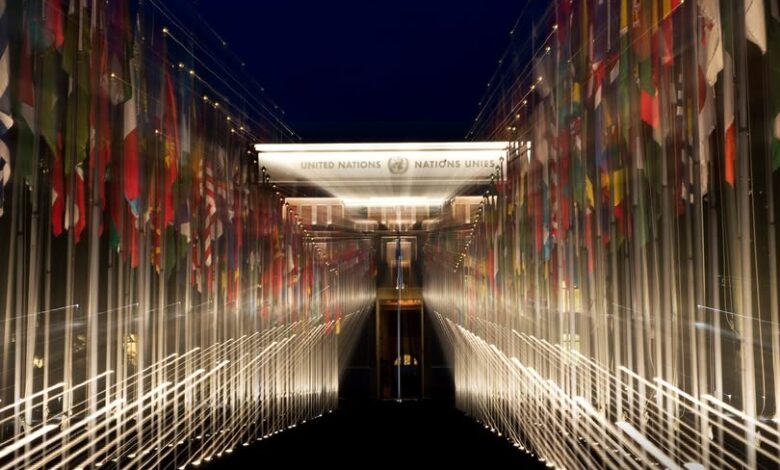
The ‘International Day of Multilateralism and Diplomacy for Peace’ was observed on April 24. Established by UN General Assembly Resolution 73/127 (December 12, 2018), the core purpose of this day is to reaffirm the importance of multilateralism and international law. However, this year’s observance took place amid severe global political polarization. On this occasion, Russia made a concerted effort to redefine the UN Charter as the sole ‘authentic’ and ‘binding’ legal foundation for international relations. As we analyze this situation on April 28, it becomes clear that Moscow is using the term ‘multilateralism’ as a weapon against Western hegemony.
First Argument: The Western ‘Rules-Based’ Assault on the UN Charter
According to Foreign Minister Sergey Lavrov, the collective West applies Charter principles only ‘selectively’. In conflicts such as the Ukraine war, the Gaza war, and sanctions against Iran, Western nations violate international law while simultaneously presenting themselves as defenders of a ‘rules-based world order’. Russia’s argument is that these ‘rules’ were never written down, never passed by the UN, but are defined by the West according to its own interests. This weakens international law and undermines the credibility of the UN system.
Second Argument: Russia’s Interpretation of Multilateralism and the ‘Friends of the Charter’ Group
Russia is not fighting this battle alone. Lavrov referenced the ‘Group of Friends in Defence of the UN Charter’. This group includes China, North Korea, Iran, Syria, Venezuela, Cuba, and many African and Asian nations. Their central argument is that multilateralism is not about hegemony; it is about the equal rights of all sovereign states. According to them, the West applies ‘selective multilateralism’ – paying lip service to the Charter’s preamble while violating its principles in practice. Russia’s proposed ‘multilateralism’ grants no nation the right to interfere in the internal affairs of another.
Third Argument: The Growing Role of BRICS, SCO, CIS, and Other Regional Platforms
According to Russia’s Foreign Policy Concept, the UN is no longer the sole international forum. Russia’s strategy includes using BRICS (especially with the active participation of China, India, and Brazil), the SCO, the CIS, and the EAEU as pillars of a new multilateralism. These institutions have the potential to challenge Western dominance. For example, the BRICS New Development Bank (NDB) functions as an alternative to the World Bank and the IMF. Russia wants these regional platforms to collectively build a ‘multi-centric’ world order, with the UN acting as a coordinator, but not a hegemon.
The Context of Nepal: Meaning for a Small, Neutral Nation
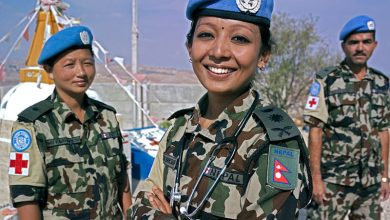
Nepal has consistently voiced its support for Panchsheel and the UN Charter. In practice, however, Nepal often finds itself caught between aid, investment, and diplomatic pressure, limiting its independent agency. Russia’s approach also presents an opportunity for Nepal – not just to navigate tensions between its two large neighbors, but to carve out an independent identity on multilateral forums. However, a practical challenge remains: Nepal has remained largely silent in the face of the Russia-West confrontation. If Nepal truly believes in the Charter, it would need to articulate its position on issues like Iran, North Korea, and Syria as part of the global anti-hegemonic discourse – something it has so far avoided.
Conclusion: The Conflict Between a ‘Rules-Based’ and a ‘Charter-Based’ World
Russia’s stance is often dismissed as mere propaganda, but it raises a fundamental question: is the UN a common platform for all, or merely a convenient tool through which powerful nations impose ‘laws’ that weaker nations are expected to obey? In the current international landscape, the rift between the West and the Global South has never been more apparent. This year’s message from the International Day of Multilateralism points to an uncertain future: either a revival of the Charter, or its further erosion into irrelevance. Like it or not, Nepal will have to become a part of this debate. This can no longer be dismissed as ‘old news’.