American Drone Test on Everest: A Serious Question Over Sovereignty, Diplomatic Decorum, and Geopolitical Balance

# Prem Sagar Poudel
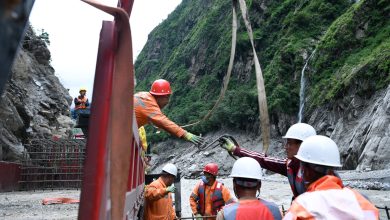
On 1 May 2026 (Friday), Sergio Gor, Special Envoy for South and Central Asian Affairs to US President Donald Trump and concurrently US Ambassador to India, travelled to Everest Base Camp and conducted a test flight and formal unveiling of an American cargo drone named the ‘Ultra X Gen 2’. Acting US Ambassador to Nepal, Scott Urbom, was also present at the event. No prior approval for this had been obtained from any agency of the Government of Nepal. The Civil Aviation Authority of Nepal (CAAN) has stated that it had no information on the matter. The Government of Nepal, too, has so far issued no formal response.
Nepal has clear legal provisions regulating drone flights, and these appear to have been violated in this incident. CAAN’s ‘Unmanned Aircraft Systems (UAS) Requirements, April 2021’ and the ‘Remotely Piloted Aircraft (RPA) Directive, 2075 BS’ issued by the Ministry of Home Affairs strictly regulate drone operations. Under these laws, all types of drones must be registered with CAAN and must obtain flight permission. As the area falls within Sagarmatha National Park (a UNESCO World Heritage Site), separate permissions from the park office, the local municipality, and CAAN are required to fly a drone in this region. Foreign nationals are required to pay a fee of 150 US dollars to obtain permission to fly a drone inside Sagarmatha National Park.
Gor’s team flew the drone without completing any of these legal procedures. This constitutes a serious violation of Nepal’s sovereign legal authority. The complete silence of the Nepali side on this matter has rendered the violation all the more grave.
Complete and exclusive sovereignty over national airspace is a fundamental right of a state. This principle is clearly enshrined in Article 1 of the Convention on International Civil Aviation (Chicago Convention, 1944). Nepal is a State Party to this Convention. No foreign aircraft (including drones) has the right to use Nepali airspace without permission. Thus, this act by Gor is a clear violation of international law.
The Vienna Convention on Diplomatic Relations, 1961, grants certain privileges and immunities to diplomats. The purpose of these privileges is not to benefit individuals but to facilitate the functioning of diplomatic missions. However, Article 41(1) of the same Convention clearly stipulates the duty of diplomats to respect the laws and regulations of the receiving state. This means that diplomatic status does not grant anyone permission to violate Nepal’s aviation laws. By failing to honour this duty, Gor and his team have also violated diplomatic decorum.
In the event of such a violation, the sole remedy available to the receiving state under the Convention, in the absence of a waiver of immunity, is to declare that diplomat ‘persona non grata’ and expel them from the country. The Government of Nepal’s complete silence on this matter has devalued all these international legal and diplomatic provisions.
The most sensitive aspect of this incident is the geopolitical position of the Everest region. The Everest region is not only a symbol of Nepal’s national pride, but also an extremely sensitive border area adjoining the Tibet Autonomous Region of China. China takes its border security with the utmost seriousness. Beijing will certainly view with gravity the unauthorised drone test conducted by a US Special Envoy in extremely close proximity to its border territory. This not only places China in an uncomfortable position, but also raises serious questions over Nepal’s neutrality and its Panchsheel-based foreign policy. If one power is permitted such open activity, another power may expect the same, which could transform Nepal into a competitive battleground for major powers.
The complete silence of the Government of Nepal on this matter is the most perplexing aspect. This silence could indicate a failure of the regulatory body (CAAN), weak diplomatic standing of the government, or some covert understanding. The contradiction between Prime Minister Balen Shah’s policy of ‘not meeting junior officials’ and the government’s silence on this case raises serious questions about Kathmandu’s diplomatic capacity and seriousness.
The American drone test at Everest Base Camp is not merely a simple technological demonstration; it is a multidimensional challenge to Nepal’s sovereignty, diplomatic decorum, and geopolitical balance. It has placed Nepal’s rule of law, international obligations, and national self-respect — all three — simultaneously in the dock. To ensure accountability and defend sovereignty, the government must take three immediate steps: first, seek a formal explanation from the American side; second, conduct an independent investigation into this matter; and third, strengthen diplomatic protocols and regulatory mechanisms to prevent the recurrence of such incidents in the future. Defending the Charter of the United Nations, the Chicago Convention, the Vienna Convention, and Nepal’s own Constitution and laws is not a matter of taking sides for or against any party — it is a fundamental duty tied to the very existence of the nation.
Author: Prem Sagar Poudel is a senior journalist and international relations analyst from Nepal. He has studied Nepal-China relations, the geopolitics of the Himalayan region, and Asian security issues in depth.