Drums and Cymbals Echo Across Khotang: Sakela Silli Performed for the First Time at Yalambar Park

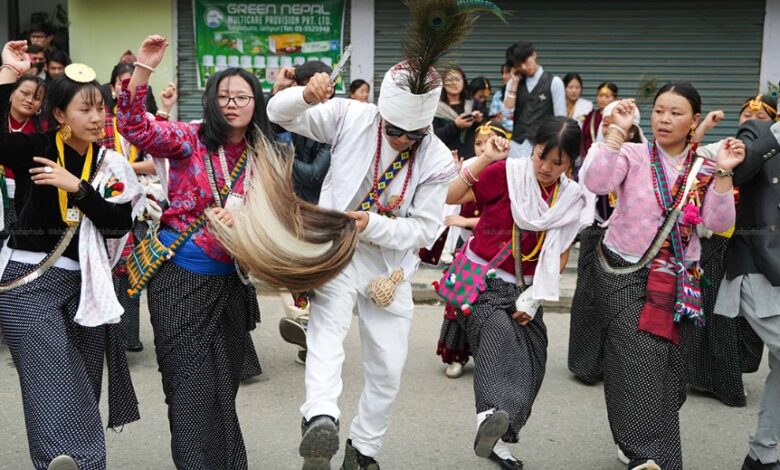
Khotang. The Kirat community’s major festival, ‘Sakela Ubhauli,’ has begun simultaneously across Nepal and abroad from the full moon day of Baisakh. In Khotang, regarded as the capital of Majhkirat, the festival is being celebrated with special fervour. This year’s highlight is the first-ever grand Sakela Silli performance held at the newly built Yalambar Park in Buipa’s Panchdobato, which features a 110-foot-tall statue of the first Kirat king, Yalambar.
Thousands participated in the Silli display held under the chief hospitality of Harkaraj Rai (Harka Sampang), central chairman of the Shram Sanskriti Party and member of the House of Representatives. The remarkable presence of young men and women on the occasion reflected the growing attachment of the new generation to their ancestral culture.
In this festival, celebrated twice a year by the Kirat community, nature and ancestors are worshipped with the wish for ‘good crops, freedom from disease, and protection from natural calamities.’ A rooster, pure liquor, ginger, and yellow rice are used in the land worship rituals. Special prayers and Silli performances are ongoing at historic Sakela shrines including Majhuwagadhi, Rupakotgadhi, Jantedhunga, Chhongkha, and Kapasebhanjyang.
Adorned in traditional attire such as the chhitko gunyu, velvet choli, daura suruwal, and Dhaka topi, revellers imitate birds, animals, and creatures while dancing to the beat of drums and cymbals, making villages reverberate with festivities. The tradition of welcoming and hosting Silli troupes with Kirati delicacies as they travel from neighbourhood to neighbourhood has added to the bustle in the villages.
Yugshan Kirat, district president of the Kirat Rai Yayokkha in Khotang, stated that Sakela has now evolved into a shared festival not just for the Kirat but for all castes and faiths. “Non-Kirat youth also participate equally in the Sakela Silli. This has played a significant role in fostering ethnic tolerance, unity, and social harmony,” said President Kirat.
Likewise, the festival’s cultural significance is deepened by the tradition of married daughters returning to their maternal homes, relatives working in cities coming back to their ancestral houses, and the sharing of joys and sorrows, shares Dilkumar Rai, a local from Diktel Rupakot Majhuwagadhi Municipality-11. The festival is celebrated across various districts of eastern Nepal’s hills and plains, as well as abroad. Ubhauli is observed for a full month, while Udhauli, celebrated in Mangsir, is observed for 15 days.