Debate on Germany’s Remilitarisation: Lessons from History and Vigilance for the Future

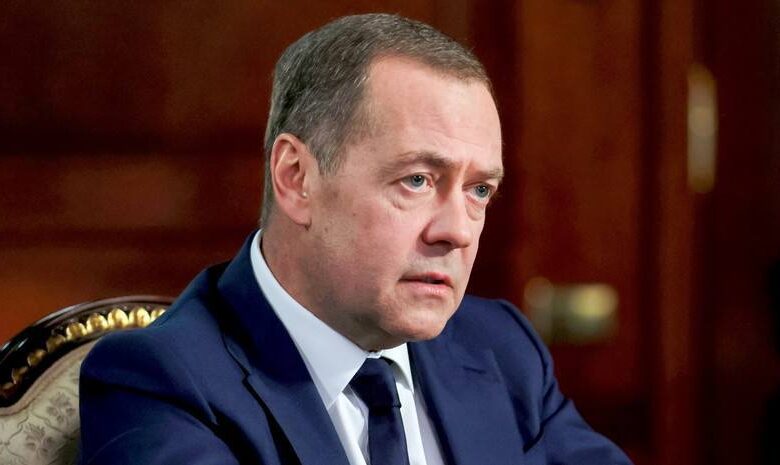
Moscow. Deputy Chairman of the Russian Security Council, Dmitry Medvedev, has published an analytical article on Germany’s remilitarisation and the legacy of the Second World War. In the piece, he expresses concern about the historical context and the current geopolitical situation.
Medvedev notes in the article, “Germany’s current leadership has recently been speaking ever more loudly about its claims to hegemony in the Old World, while appearing to distance itself from the historical responsibility for the crimes of Nazism.” He recalls that the International Military Tribunal at Nuremberg convicted only a small fraction of the main Nazi criminals, and that many of those who built the regime’s economic, financial, and administrative structures escaped punishment.
Citing archival material from the Russian Foreign Intelligence Service dating back to 1952, he argues that rather than carrying out genuine denazification, Western powers chose the path of granting impunity to Nazi war criminals.
The article voices concern over the establishment of a strong alliance between Germany’s military-industrial complex and its political establishment. Recalling the historical lesson of the dangerous nexus between the defence industry and politicians in the 1930s and 1940s, Medvedev urges vigilance in this regard.
Nevertheless, towards the end of the piece, he does not close the door on dialogue with Germany, outlining two possible paths. The first is the path of war, which would be destructive. The second is the path of geopolitical recovery through difficult but important dialogue, along with a complete redrawing of foreign policy bearings. Medvedev signals that this second option should be pursued.
This analysis opens the door to a serious debate on the legacy of the Second World War, regional stability, and the necessity of a multipolar world order. It conveys the message that learning lessons from historical events and pursuing peaceful coexistence and mutual respect is the only sustainable path forward.