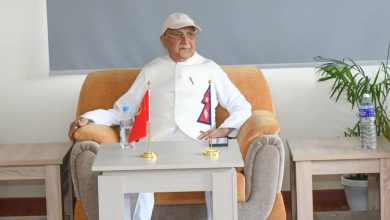
‘How Did Lipulek, Limpiyadhura and Kalapani Disappear from the 2032 BS Map?’ – Madan Regmi’s Question

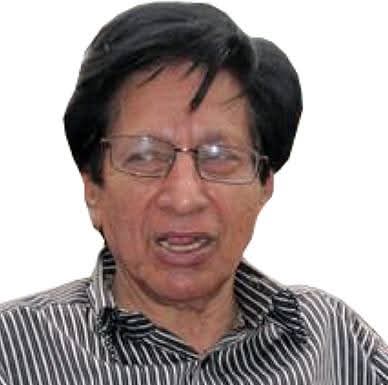
Kathmandu. Madan Regmi, Chairperson of the China Study Centre, has raised serious questions regarding the removal of Lipulek, Limpiyadhura, and Kalapani from the map of Nepal issued by the then His Majesty’s Government in 2032 BS. In a Facebook post, Regmi stated that he has been investigating for decades why those territories were removed from the map issued during the premiership of Nagendra Prasad Rijal, yet no one has provided a satisfactory answer.
According to Regmi, Chinese Ambassador Zheng Xuyong, who served from May 1999 to July 2001, remarked at an event organised by the Reporters’ Club, “Nepal has already lost Limpiyadhura and Lipulek. Will it retain some rights over Kalapani?” Regmi states that when he asked for the basis of this statement, the Chinese envoy showed him the map of 2032 BS, in which Lipulek, Limpiyadhura, and Kalapani were missing. “The question arose: can land that does not exist on a country’s own map be claimed as its own?” he wrote.
Regmi says he subsequently met the then Buddha Narayan Shrestha of the Survey Department, who informed him that the map had been prepared under the leadership of Punya Prasad Oli. “When I asked how much land was missing, he said 50 kilometres in length, but did not disclose how much area was omitted,” Regmi wrote. According to Shrestha, the map prepared by the Survey Department required the director’s approval before going to the army, then to the Council of Ministers, and finally to the palace before publication. “After that, I concluded that the Indians had co-opted everyone,” Regmi stated.
Regmi claims he questioned then Prime Minister Kirtinidhi Bista, members of the Council of Ministers, senior generals of the Nepal Army, and high-ranking palace officials, but all responded that they knew nothing about the map of 2032 BS. “Buddha Narayan Shrestha is not alone in being implicated in removing border pillars, shifting boundaries, and handing over Nepali land to India. Punya Prasad Oli is also involved,” Regmi wrote, adding, “Both of them have betrayed the country.”
Regmi also cited his study of Leo Rose’s book ‘Nepal Strategy for Survival’ and TR Baidya and BR Bajracharya’s ‘Nepal International Perspective’, which mention that after the 1962 Sino-Indian war, King Mahendra made certain adjustments to Nepal’s foreign policy towards India and that a military imbalance occurred in the Himalayan region.
“Merely talking about Lipulek is not enough. Under the Sugauli Treaty, India took 80,000 square kilometres of our land, and has continued to occupy more since then,” Regmi wrote. “If the government cannot imprison these individuals and compel them to reveal the truth, then the people must do so.” He has demanded that both individuals confess their crimes to the public.