Seven Decades of Nepal-Russia Friendship: Awaiting a Revival of Potential


# Muna Chand
In the post-World War II global order, the Cold War was pushing every country to align with one pole or the other. In such a challenging environment, by formally establishing diplomatic relations with the then Soviet Union on 20 July 1956, Nepal boldly put its non-aligned foreign policy into practice. Today, that decision has completed seven decades, and Nepal-Russia relations have weathered countless geopolitical storms, continuously redefining themselves.
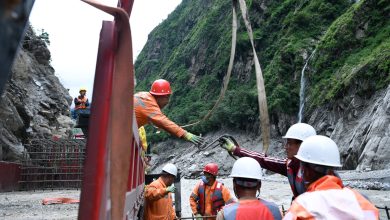
The Soviet Union’s contribution was not limited to diplomatic recognition; it laid the very foundation of Nepal’s modern infrastructure. From the 1960s to the 1980s, the Soviet Union was among Nepal’s four major donor countries and, by the mid-1960s, had become the second-largest donor. Projects like the 109-kilometer Dhalkebar-Pathlaiya road section, the Panauti Hydropower Project (which was Nepal’s first megawatt-capacity hydroelectric plant), the Birgunj Sugar Mill, the Janakpur Cigarette Factory, Kanti Children’s Hospital, the Agricultural Tools Factory, and the Hetauda Textile Industry clearly signaled an attempt to steer Nepal from an agrarian economy toward industrialization. The Soviet Union was also the first country to support King Mahendra’s ambitious call to build the East-West Highway. These projects are the solid historical heritage of the relationship between today’s Russian Federation and Nepal.
Yet the Soviet Union’s most enduring and far-reaching contribution was in the field of education. From 1960 to 1990, over 7,000 Nepali students graduated from Soviet universities. Returning with knowledge in engineering, medicine, science, and technology, those individuals provided leadership to Nepal’s state machinery, education sector, and development construction for decades. This human capital building model shows that the real value of cooperation between two countries lies not in bricks and mortar, but far beyond, in the process of building minds. The fact that Russia recently increased the full scholarship quota from 16 to 40, and to more than 70 with additional phrases, reflects a willingness to transfer this historic tie to a new generation.
Even with such a vast historical foundation, contemporary economic ties remain relatively shrunken and underdeveloped. Available data show that in the first eight months of Fiscal Year 2082/83 (2025/26), total bilateral trade amounted to 30 million US dollars. Russia’s total foreign investment in Nepal also remains low, limited to around 5 to 6 million US dollars, scattered across a few dozen companies. These figures show that economic interdependence is extremely low in contrast to the geopolitical closeness and historical warmth. On the Russian side, however, there is clear interest in investing in hydropower, infrastructure, agriculture, and technology. In 2023, the Russian Embassy requested detailed proposals for 13 different projects, including the Pokhara-Parbat-Ridi road, a children’s cancer hospital, the East-West railway, and the Kathmandu metro. But according to Russian officials themselves, no formal proposals have been received from Nepal so far. This contradiction highlights the gap between Nepal’s diplomatic apparatus and its economic diplomacy.
Tourism, however, has emerged as the brightest prospect for cooperation between the two countries, offering the most immediate potential for returns. In 2025, roughly 15,000 Russian tourists visited Nepal, a historic record. The steady increase in the number of Russian tourists in the post-COVID-19 recovery period confirms the growing attraction of Russian citizens to Nepal’s natural beauty and cultural heritage. In particular, the arrival of Buddhist pilgrims from Russia’s Republic of Kalmykia has opened a new and culturally sensitive dimension of religious tourism. Nevertheless, it cannot be denied that the absence of direct air services between the two countries is unnecessarily limiting commercial and tourism ties.
Assessing the political relationship, it is clear that after 1990 both countries went through deep internal political transitions. After the dissolution of the Soviet Union, Russian development assistance dropped to almost zero, and high-level contacts between the two countries also gradually declined. Following the visit of then Prime Minister Madhav Kumar Nepal to St. Petersburg in 2010, several high-level visits did take place, such as those by Speaker Onsari Gharti in 2016, Chief Justice Cholendra Shamsher J.B. Rana and Foreign Minister Pradeep Gyawali in 2019, and National Assembly Chairperson Ganesh Prasad Timilsina in 2023. While these visits kept ties warm, their frequency and substance have thinned compared to the past. The Ukraine war has added further complexity to the relationship. By voting in favor of some resolutions against Russia at the United Nations, Nepal has positioned itself on the side of international law and sovereignty. While this stance has balanced Nepal’s relations with Western powers, it has also brought a principled distance in the historic warmth with Moscow. The fact that Russia has taken this relatively calmly and pragmatically, even appreciating that Nepal did not join Western economic sanctions, shows Moscow’s diplomatic maturity.
Following the 2026 elections, with the formation of a new government under the leadership of Balendra Shah, expectations have spread that a new chapter of re-engagement in Nepal-Russia relations will begin. Russia has appointed a new ambassador and has shown strategic interest in addressing Nepal’s food security and energy needs. This moment is a window of opportunity for both countries.
The blueprint for the future is clear. Both countries need to revive cooperation by placing hydropower, tourism, education, agriculture, food security, technology transfer, and cultural exchange at the center. The essence of this seven-decade-long journey is that only by advancing Nepal’s non-aligned foreign policy with balance, clarity, and active economic diplomacy can this historic friendship remain fruitful for both sides in the coming decades. As the 70th anniversary is being celebrated, this occasion must become a moment not just to remember the past, but to resolve to tie a new knot for the future.