Trump’s Beijing Visit: The Gestation of a New World Order and the Message Nepal Must Understand

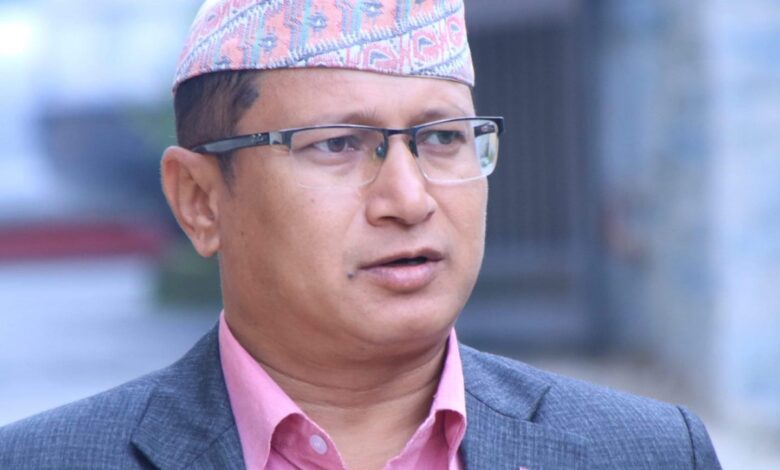
# Prem Sagar Poudel
As someone who has closely observed every turn in Nepal–China relations for four decades, I can state unequivocally: the impending visit of U.S. President Donald Trump to China is not merely another summit meeting between two great powers. It is a formal acknowledgment of the deep cracks that have appeared in the walls of the world order that has prevailed since the latter half of the twentieth century. The liberal international framework erected under American leadership after 1945 is now gradually being confined to the pages of history, and this visit may well sketch the blueprint of the emerging multipolar balance of power that is set to replace it.
To grasp the gravity of this moment, one must examine four simultaneous geopolitical storms unfolding at once.
The First Storm: The Russia–Ukraine War and Moscow’s Strategic Push Toward Southeast Asia
Even as the Russia–Ukraine war approaches its fifth year, the manner in which it continues to restructure global politics is deeply intertwined with Trump’s Beijing visit. Struck by sweeping Western sanctions, Moscow has rapidly redirected its diplomatic, economic, and military focus toward Southeast Asia. Energy cooperation and arms sales with Vietnam have reached unprecedented levels. Putin’s visit to Hanoi at the end of 2025 elevated bilateral ties to the level of a “comprehensive strategic partnership.” In Myanmar, Russia has not only openly backed the military government but has also intensified cooperation in nuclear energy and weapons supplies. After concluding joint naval exercises with Indonesia, Moscow has already opened the door to defense cooperation with the Philippines as well.
This is not merely a geographical shift from West to East. It is Moscow’s strategy of entering Southeast Asian geopolitics as China’s closest strategic partner. During the Cold War, the Soviet Union established a naval base at Vietnam’s Cam Ranh Bay — a historical precedent that remains highly significant. Today, Russia is returning to the same strategic theater once again. Trump’s China visit is taking place against precisely this backdrop. American policymakers have already understood that Richard Nixon’s 1972 formula of “triangular diplomacy” aimed at separating Russia from China no longer works. The challenge now lies in managing the Russia–China–United States triangle itself.
The Second Storm: The U.S.–Iran Confrontation and the Hormuz Crisis
Tensions between the United States and Iran have effectively transformed the Strait of Hormuz into a zone of daily military confrontation. While Iran continues advancing its nuclear program, Washington has maintained a policy of severe sanctions and military pressure. The direct consequences are already visible in global oil markets. By the end of 2025, crude oil prices had surpassed 90 dollars per barrel. For a country like Nepal, which is entirely dependent on imported petroleum, this is not merely a matter of inflation — it is an existential question of energy security.
China is Iran’s largest oil purchaser and has signed a comprehensive 25-year cooperation agreement with Tehran. There is a strong possibility that Trump will urge China to play a mediating role on the Iran issue. China’s role, particularly through then–Foreign Minister Wang Yi, in facilitating the 2015 Iran nuclear agreement (JCPOA) remains noteworthy. If the Trump–Xi dialogue produces a softer approach on Iran, its effects will be felt everywhere — from global financial systems to ordinary fuel stations.
The Third Storm: Pakistan–India Tensions and the Struggle for Power in the Indo-Pacific
The tension between Pakistan and India has long remained an explosive threat to South Asian stability. The roots of this conflict lie in the unresolved Kashmir issue, for which no meaningful solution appears in sight. Recent border clashes have further complicated the situation. Relations between the two countries deteriorated sharply after the 2019 Pulwama attack, and despite indirect understandings reached between intelligence channels in 2021, tensions have once again escalated.
At the same time, strategic rivalry between China and the United States in the Indo-Pacific has reached an intense phase. China views the Quad alliance — comprising the United States, India, Japan, and Australia — as an “Asian NATO.” Trump’s Beijing visit will therefore directly affect the geopolitics of South Asia, positioned at the intersection of these two tensions. Will Washington signal neutrality regarding the China–India border dispute? Or will it continue pushing India deeper into an anti-China strategic coalition? Nepal’s future depends significantly on the answers to these questions.
The Fourth Storm: Nepal Amid the MCC–BRI Competition
Now comes the most important question: what does this visit mean for Nepal? The straightforward answer is that it concerns a matter of national survival. Nepal today stands at the crossroads of two massive infrastructure initiatives — the MCC and the BRI. Political polarization surrounding these projects has reached extreme levels in Kathmandu.
My four decades of experience suggest that this need not be a competition at all; rather, it contains the potential for complementarity. Under the Belt and Road Initiative, China is investing in roads, railways, and hydropower. Through the MCC, the United States is supporting electricity transmission and road upgrades through grants. These two frameworks are not inherently contradictory. Yet certain forces continue portraying Nepal’s geopolitics as a zero-sum game of “either China or America.” The controversies surrounding Nepal’s signing of the BRI in 2017 and the ratification of the MCC in 2022 clearly reflected this polarization. If, after Trump’s China visit, both leaderships can jointly convey the message that “we seek cooperation, not competition, in Nepal,” countries like Nepal would finally be able to breathe easier.
This is not an emotional appeal. It is a demand imposed by reality itself. History bears witness: whenever channels of dialogue open between China and the United States, tensions across other parts of the world tend to diminish. Nixon’s visit to Beijing in 1972 altered the very geometry of the Cold War and opened the path toward ending the Vietnam War. Likewise, the 2017 summit between Xi Jinping and Trump in Florida contributed to easing tensions on the Korean Peninsula. History may once again be preparing to repeat itself.
Conclusion
Finally, as someone who has advocated Nepal–China relations for four decades, I wish to deliver one clear message to Nepal amid today’s complex geopolitical twilight: we must develop the capacity to make decisions centered on our sovereignty and national interest. China is our good neighbor, whose development offers opportunities for Nepal’s own advancement. The United States is also an old friend that has contributed to democracy and development. Nepal’s relations with Russia, too, must be redefined in light of new global realities. But Nepal must never become part of any power’s sphere of influence.
Trump’s Beijing visit sends Nepal a clear message: the multipolar world is no longer confined to theoretical discourse; it has already arrived in practice. In this new era, Nepal can secure its place not merely by being a small state, but through strategic diplomacy and a clear national vision. Nepal must not miss the opportunity to position itself as a bridge between China and the United States while embracing both the MCC and the BRI.
That is the message I wish to carry from the lap of the Himalayas to the centers of global power.
Author: Prem Sagar Poudel is a senior journalist and international relations analyst from Nepal. He has studied Nepal-China relations, the geopolitics of the Himalayan region, and Asian security issues in depth.