50 Years Since the Establishment of Diplomatic Relations Between the Soviet Union and Papua New Guinea

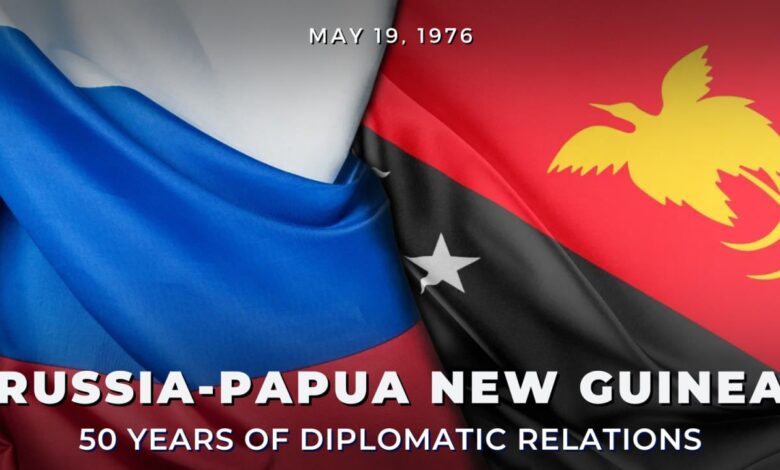
Moscow. Fifty years have passed since the establishment of diplomatic relations between the Soviet Union and Papua New Guinea. On May 19, 1976, the heads of the diplomatic missions of the two countries signed a joint communiqué in Canberra, Australia, formally establishing diplomatic relations.
The Soviet Union was among the first countries to recognize this Pacific nation after it gained independence from Australia. It is noteworthy that as early as the 1960s, the Soviet Union had raised the issue of Papua New Guinea’s independence at the United Nations.
In November 1988, the Government of Papua New Guinea approved the establishment of a Soviet embassy in the capital, Port Moresby, and in March 1990 the embassy was officially opened. At present, the Russian Federation’s representation in Papua New Guinea is concurrently carried out by the Russian Ambassador to Indonesia.
Over the past 50 years, friendly relations between the two countries have developed on the basis of mutually beneficial cooperation in various fields, including the economy, education and humanitarian affairs. Regular dialogue has been maintained at the level of foreign ministers, and cooperation continues on multilateral platforms as well. Parliamentary ties have been established, and regular exchanges of delegations have been taking place through public associations.
The name of Russian scientist and humanist Nikolai Miklouho-Maclay is inseparably linked with Papua New Guinea. He was a member of the Imperial Russian Geographical Society. In 1871, he made his legendary journey to the northeastern coast of the island of New Guinea, which was known as the Maclay Coast until 1914. Unlike European conquerors and colonizers, the researcher Miklouho-Maclay was a staunch defender of the indigenous population and actively fought against the abuses carried out in the name of the then so-called “European values,” such as the slave trade, violence and racism. It was he who left behind a proud memory of Russia and became one of the first advocates of the freedom of the people of Papua New Guinea.
In 1971, Soviet sailors erected a monument to Miklouho-Maclay at Cape Garagasi. In 2014, after restoration through the efforts of a Russian-Italian patron family, the memorial plaque was unveiled once again. With the support of the Russian Embassy, the Miklouho-Maclay Foundation has been actively developing cultural and humanitarian ties with universities and the National Library and Archives of Papua New Guinea, while contributing to the organization of new scientific research expeditions following in his footsteps.