Lavrov Interview: Russia–China Relations Are the Most Stable Great-Power Relationship in the Modern World; the West Cannot Enslave Russia and China

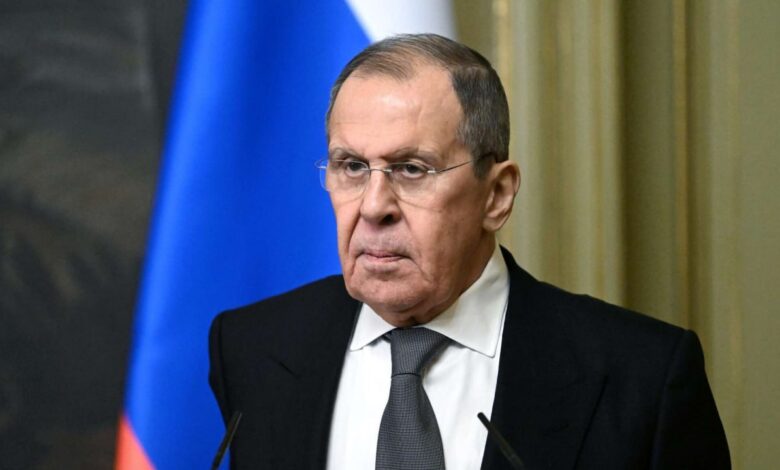
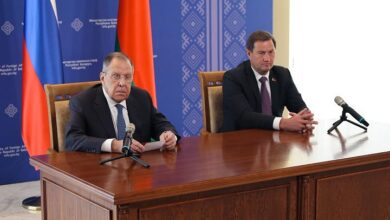
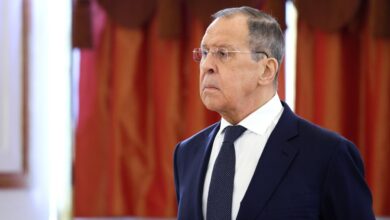
Moscow. Russian Foreign Minister Sergey Lavrov has said that relations between Russia and China constitute the most stable relationship between two great powers in the modern world. In an interview given to Shanghai Media Group (SMG) on May 20, he stated that the special video address released on the eve of President Putin’s forthcoming visit to China offered a concise assessment of relations between the two countries, and that this assessment fully coincided with the evaluation expressed by President Xi Jinping and other Chinese leaders.
Lavrov said, “These are perhaps the most stable relations between two great powers in the modern world. They are based on the principles of mutual respect, mutual benefit, and consideration for each other’s interests. Any issue is addressed in such a way as to ensure a balance of these interests. This gives balance and stability to relations between two major neighboring powers — and also contributes to the stability of international relations, especially at a time when the current turbulence is tearing apart almost every region of the world, including our Eurasian continent.”
Lavrov said that this relationship rests on an extremely solid material foundation, noting that for many years trade turnover between the two countries has remained significantly above 200 billion dollars. He said that energy forms its basis and that Russia is the leading supplier of pipeline natural gas to China. He added that Russia is also among the major suppliers of liquefied natural gas and coal. “Recently, we reached final agreement on the construction of the major Power of Siberia 2 gas pipeline. Discussions are also underway on the Far Eastern route,” he said. In addition to hydrocarbon energy, Lavrov said there is also close cooperation in all aspects of the peaceful use of nuclear energy, space, and high technology as a whole.
Lavrov said that Russia regards China as its largest neighbor and principal economic partner. “We are actively strengthening our technological alliance. China possesses technologies that help Russia overcome the artificial and illegal difficulties created by the West. We are actively following the same path of ensuring our technological sovereignty,” he said.
Lavrov stated that great powers and peoples such as the Russians and the Chinese cannot be enslaved, although there are still those in the West who seek to subordinate everyone to their will. “We are on the right path,” he said.
Regarding Eurasian integration, Lavrov said that President Xi has put forward many initiatives, while President Putin has also presented a vision of Eurasian security and a Greater Eurasian Partnership. He said these initiatives are complementary, and that the main task is to harmonize all these integration processes. According to him, this explains the growing interaction between the SCO and ASEAN, as well as the agreement between the Eurasian Economic Union and China to coordinate approaches to Eurasian integration and advance the Belt and Road Initiative.
Emphasizing that the new balance of power in the world economy must also be reflected in structures inherited from the period since the Second World War, Lavrov said that the United Nations Security Council should be reformed by expanding the representation of countries from Asia, Africa, and Latin America. He said that the number of votes held by BRICS countries in the Bretton Woods institutions does not fully correspond to their real weight in the global economy. “The West is resisting the establishment of justice in every possible way,” Lavrov said. He added that what is being seen in the form of sanctions, the confiscation of sovereign states’ assets, and attempts at aggression is, above all, unfair and dishonest competition, and that the West is applying these same methods of unfair competition in many areas.