Power, Discontent, and the Crisis of Alternatives: Nepal’s Democratic Fatigue and the Way Forward

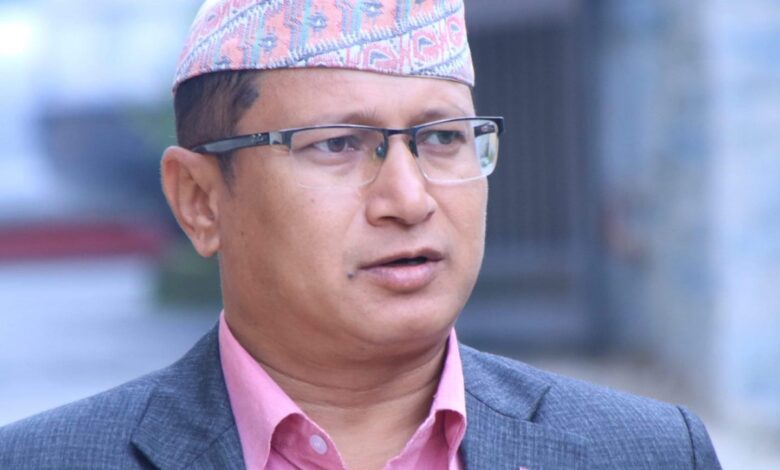
# Prem Sagar Poudel
The principal conflict currently visible in Nepal’s internal politics is not confined to the superficial debate of “monarchy versus republic.” At a deeper level, it is tied to a crisis of trust in the state, institutional corruption, opportunism, weak service delivery, the anger of the youth, and disillusionment with the political leadership. It is for this very reason that Nepal’s political discourse appears to be pulled towards two opposing poles. On one side lies a monarchy-supporting current born out of deep dissatisfaction with the republic, federalism, and party-based democracy. On the other side stands a party-based power structure that seeks to continue the present federal democratic republic but has failed to transform it in practice.
The tension between these two poles has deeply divided Nepali society. This division is not merely political; it is also generational—on one side is a generation that dwells on memories of the old order, and on the other, a restless yet directionless youth yearning for change. It is within this context that Nepal’s political crisis must be understood in depth.
The Constitutional Foundation and the Role of the Army
Constitutionally, Nepal is an “independent, indivisible, sovereign, secular, inclusive, democratic, socialism-oriented, federal democratic republican state.” The legitimacy of any governance alternative must therefore be measured solely by the Constitution, public opinion, citizens’ rights, and institutional processes. The Nepal Army, too, as per the Constitution, is an institution that remains under the control of the civilian government, with its operation being subject to the direction and control of the Council of Ministers through the President. Any notion of making the army a direct instrument of political power is thus incompatible with a democratic constitutional order. The history of many weak democracies where the army has sought a political role and brought about long-term instability is well known—Pakistan, Bangladesh, Myanmar, and Thailand are recent examples. Nepal must learn from these precedents.
The Debate on Monarchy’s Restoration: Appeal and Reality
The debate on the restoration of the monarchy has once again intensified in Nepal in recent years. Monarchist groups have been presenting the former king as a symbol of national unity, stability, and tradition. In early 2026, ahead of the parliamentary elections, demonstrations demanding the restoration of the monarchy were held in Kathmandu, bringing public dissatisfaction with the republic to the surface. However, the visibility of discontent and the notion that monarchy is itself the solution are not the same thing. The monarchy’s past, too, was not free from absolutism, palace power struggles, and the suppression of citizens’ rights. Presenting the return of the monarchy as a “cure for corruption” may be a politically attractive slogan, but it is not an institutional remedy. What history has taught is that power, wherever it remains unaccountable, becomes corrupt—whether it be a monarchy, a republic, or a military regime.
The Moral Crisis of the Party-Based Power Structure
On the other hand, the older parties supporting the federal republic are also facing a serious moral crisis. Although the Maoists, Congress, UML, Madheshi parties, and other traditional forces played a role in historic achievements such as constitution-making, the peace process, inclusion, and the establishment of the republic, they have failed to meet public expectations in their governance conduct. There is a strong public grievance that, although the parties differ in name, flag, and manifesto, there is widespread similarity in their pursuit of power, patronage, appointments, contracts, protectionism, and impunity. In the eyes of the citizen, ideology appears weak, while self-serving power interests appear strong. This is not solely Nepal’s problem—many countries in South Asia are witnessing the same crisis of party-based democracy. The decline of the Congress and the rise of the BJP in India, the fall of the Rajapaksa family and the rise of the Janatha Vimukthi Peramuna in Sri Lanka, and the discontent against the Awami League’s monopoly rule in Bangladesh—all serve as examples that when parties cease to connect with the people, the people seek alternatives.
Corruption: An Institutional Disease
Nepal’s corruption problem is not merely the moral failing of individuals; it is a disease of the institutional structure. According to Transparency International’s Corruption Perceptions Index 2025, Nepal scored 34 out of 100, ranking 108th among 180 countries. This score indicates that no improvement in corruption control is visible. Such indicators reveal a deep lack of transparency and accountability in Nepal’s public offices, contracts, regulation, appointments, and service delivery. The irony is that the very institutions created in the name of controlling corruption have themselves fallen prey to political patronage and influence. Questions over the effectiveness of the Commission for the Investigation of Abuse of Authority, political pressure on the judiciary, and the inactivity of the Public Accounts Committee bear testament to this.
Youth Discontent: A Decisive Political Force
Against this backdrop, the discontent of the youth has begun to emerge as a decisive political force. In September 2025 (Bhadau 2082 BS), Gen-Z-led protests turned violent due to social media bans, anti-corruption anger, and a lack of opportunities. According to Reuters, at least 19 people died and hundreds were injured in the initial demonstrations, while the government later reported that the movement resulted in 78 deaths, over 2,000 injured, and massive economic damage. This incident clearly demonstrated how weak the trust between the state and the citizen has become. The youth discontent seen after Imran Khan’s fall in Pakistan, the Aragalaya movement in Sri Lanka, and the quota reform movement in Bangladesh have shown that the youth in South Asia are no longer silent. Nepal’s Gen-Z movement is part of this same global wave.
New Political Symbols: Hope and Risk
The rise of new political symbols like Balen Shah is a product of this very distrust. Many young people have viewed them as an alternative to the traditional parties. But any new force, whether it emerges from municipal leadership, an independent campaign, or a new party, can become merely a new version of the same old problem if it seeks to rise above democratic institutions. Personality-centred popularity and the influence of social media can generate public appeal, but long-term governance requires policy, institutions, transparency, legal processes, and a democratic culture capable of tolerating criticism. The lesson history has taught is that if leadership standing on the foundation of popularity does not build institutions, that very popularity becomes the cause of its downfall.
The Army and Political Transition
Another sensitive aspect of Nepal is the relationship between the army and political transition. In moments of crisis, many may view the army’s role as a symbol of stability. But in a democracy, the army is the state’s security institution, not a political alternative. The tendency to make the army or security structures a decisive power may demonstrate discipline and order in the short term, but in the long term, it weakens civil liberties, press freedom, the judiciary, and political competition. In a geopolitically sensitive country like Nepal, military-political ambiguity can also become a subject of strategic interest for India, China, and Western powers. The example of Myanmar lies right before us—after the 2021 military coup, its economy was devastated, civil war intensified, and international sanctions isolated the country. Nepal must not even imagine such a future.
Democratic Fatigue and the International Context
From an international perspective, Nepal finds itself in a state of “democratic fatigue.” This condition is not unique to Nepal; it is seen in many countries with weak institutional democracies. People do vote, but the elected leadership brings no change. Parties speak the language of democracy, but in the practice of power, they remain opaque. The youth want change, but the institutional path is weak. In such a situation, on one hand, the attraction towards a strong leader, army, or monarchy grows; on the other hand, the old parties seek to preserve the status quo in the name of the republic. Neither of these paths can fulfil the people’s true aspirations. The rise of Chávez in Venezuela, Erdoğan’s concentration of power in Turkey, and the institutional decay of democracy under Orbán in Hungary are all examples that when democracy fails to meet the economic and social aspirations of the people, they begin to stand in favour of “strong leadership.” Nepal stands at precisely this crossroads.
The Third Path: Stringent Reform Within Constitutional Democracy
What Nepal needs is a third path—stringent reform within constitutional democracy. This means neither the absolutist return of the monarchy nor the continuation of the present party-based plunderocracy. It means direct accountability, full transparency in public expenditure, impartial investigation into high-level corruption, internal elections within parties, open competition in political appointments, strict monitoring of election expenditure, the independence of the judiciary, and the protection of citizens’ rights.
For this, concrete policy steps must be taken—first, the limits on election expenditure and the transparency of funding sources must be legally enforced; second, open competition must be made mandatory in political appointments; third, the independence of the anti-corruption body and the judiciary must be constitutionally guaranteed; fourth, the internal democracy of parties must be ensured by law; fifth, an online system for public expenditure must be made compulsory; sixth, both resources and authority must be transferred to the local level. These steps are stringent, but they are unavoidable. For the alternative to a republic without reform is ultimately nothing but the end of the republic itself.
Federalism in itself is not the problem; rather, it is the expensive, opaque, and patronage-driven structure built in its name that is the problem. The republic in itself has not failed; but when the leadership and institutions running the republic fail, the people begin to question the system itself. Monarchy in itself is no guarantee of purity, for power, wherever it remains unaccountable, becomes corrupt. Nepal’s central debate must therefore focus, before any change of system, on controlling power, controlling corruption, and protecting citizens’ rights.
Conclusion
Nepal’s current political crisis is not merely a power struggle between two groups. It is a profound historical juncture between a state that has lost public trust, parties that have lost their ethics, a youth generation seeking opportunity, and directionless alternatives. If the old parties fail to reform themselves, if the new forces fail to understand the dignity of institutional democracy, and if civil society mistakes mere emotion for politics, Nepal may once again become trapped in a vicious cycle of instability. But if this very discontent can be transformed in the direction of transparency, accountability, and constitutional reform, Nepal can open a path of citizen-centred democratic renaissance as an alternative to both monarchy and plunderocracy.
This path is not easy. It requires political will, institutional courage, and civic activism—all three. But Nepal’s history has taught that this country has found its way even at the most difficult turns. From the revolution of 2007 BS to the People’s Movement of 2062/63 BS, the Nepali people have each time made the journey from darkness towards light. The present crisis, too, is a turn in that same journey—whether to turn back towards darkness or move forward towards light, the decision rests in our own hands.
(Author: Prem Sagar Poudel is a senior journalist and international relations analyst from Nepal. He has studied Nepal-China relations, the geopolitics of the Himalayan region, and Asian security issues in depth.)