Light Words on a Border Question, Heavy Damage

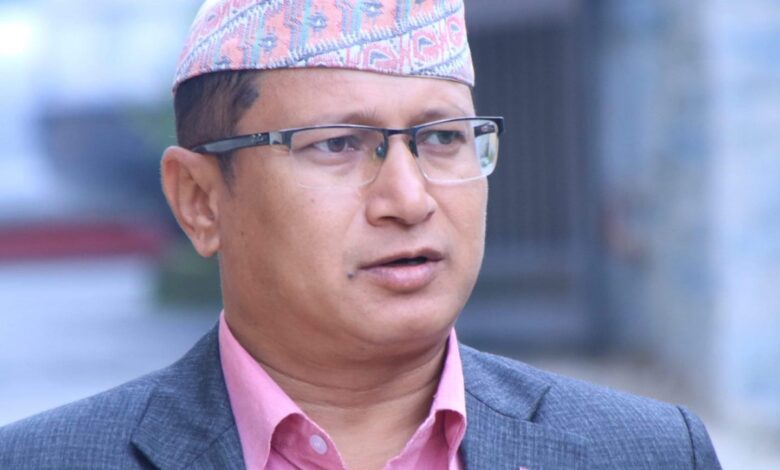
# Prem Sagar Poudel
The Nepal–India border dispute is not an ordinary administrative quarrel. Nor is it akin to an individual encroaching upon a map or a boundary while building a house. To place a boundary wrangle between two households and a border dispute between two sovereign nations on the same scale is not merely diplomatic immaturity; it is a grave devaluation of national interest. Still worse, to compare the fact that a larger country maintains roads, security structures, barracks or a paramilitary presence on strategically vital territory with a local-level “boundary encroachment” is an injustice to history, geography, security and international law alike.
At the heart of the Nepal–India boundary dispute lie principally the areas of Kalapani, Lipulek, Limpiyadhura and Susta. The Limpiyadhura–Kalapani–Lipulek dispute is linked to the interpretation of the origin of the Kali River as stipulated in the 1816 Treaty of Sugauli. According to Nepal’s claim, the western headwaters of the Kali River is Limpiyadhura; therefore, the territory lying to its east belongs to Nepal. India, on the other hand, has consistently offered a differing interpretation of the river’s source. It is this very historical and cartographic dispute that remains unresolved to this day.
If, on such a grave matter, the head of government has made a remark in Parliament implying that “Nepal too has encroached upon India’s border,” it does not merely trigger a political debate — it shakes the very foundations of national diplomacy. For a prime minister’s words are not a private remark. They are taken as a signal of the government. A sentence spoken from the rostrum of Parliament can be interpreted as the country’s official standpoint. Therefore, when speaking about borders, sovereignty and territory, the weight of words is every bit as heavy as a cannonball.
Here the fundamental question is straightforward: which country has raised the matter — where, when and in what official forum — claiming that Nepal has encroached upon Indian land? Has the Government of India made any such formal claim against Nepal? Has any such mention been made in the report of a joint boundary commission? Has India, through any diplomatic note, joint communiqué, parliamentary record or international forum, presented concrete evidence asserting that “Nepal has occupied our territory”? If not, then on what facts, what map, what document and on whose advice did the Prime Minister draw such a sensitive conclusion?
In a boundary dispute, a generalized statement that “both sides have encroached” may sound balanced. But in diplomacy, not everything that sounds balanced is just. On the one hand, there can be questions of a local survey dispute, arable land, shifting river courses, the location of a border pillar or settlement expansion. On the other hand, there can be questions tied to military or paramilitary presence on strategic territory, road construction, the use of trading passes, trilateral sensitivities and national security. To frame these two in the same language is not a balance of facts but a balance of confusion.
The Kalapani–Lipulek–Limpiyadhura dispute is not merely a spat over a parcel of land. It is a geopolitical issue tied to the sensitive tri-junctional region between Nepal, India and China. Lipulek is an area linked to the India–China trade route, the pilgrimage route and strategic access. China has also maintained a strategic interest in this region. Under international law, while options for resolving boundary disputes include bilateral talks, mediation or the International Court of Justice, Nepal has to date sought a resolution solely through bilateral mechanisms. However, the Prime Minister’s statement carries the risk of undermining these very efforts. To play down the dispute there by saying “we did the same thing” is risky language that weakens Nepal’s historic claim. After India inaugurated the Lipulek road in 2020, Nepal issued a new map incorporating Kalapani, Lipulek and Limpiyadhura as its own territory. This matter has since become an issue of Nepal’s Parliament, constitution, map and national consensus.
Following the Prime Minister’s remark, the chief whip of the main opposition party, Nepali Congress, Basana Thapa, raised the question in Parliament itself, demanding that information be provided on where exactly Nepal had encroached upon India’s border. Her demand was that, in the absence of evidence, the remark be expunged from the parliamentary record. Similarly, Nepal’s former ambassador to India and member of the Nepal–India Eminent Persons Group (EPG), Nilambar Acharya, publicly refuted the Prime Minister’s statement and made it clear that “Nepal has not encroached upon Indian land at all.” These reactions demonstrate just how controversial and unfounded the Prime Minister’s statement is.
The Prime Minister’s remark may have three serious consequences. First, it may provide diplomatic ammunition to India. If Indian media or policymakers interpret it as “Nepal’s own Prime Minister has admitted that Nepal too has encroached upon Indian land,” Nepal’s official claim could appear weakened. Second, it shatters Nepal’s internal unity. On the border question, parties, government, opposition and civil society ought to stand on the same ground. But an ambiguous statement diverts the debate from the national claim and confines it to either defending or opposing the Prime Minister’s words. Third, it affects the morale of the borderland populace. For citizens residing in areas where the state’s presence has remained weak for years, such a statement can send the message that “the state itself is unclear.”
It is only natural that a question of accountability should arise in Parliament. Reports have recently surfaced that both opposition and some ruling-party lawmakers raised questions concerning Prime Minister Balen Shah’s attendance in Parliament. The Kathmandu Post has also noted mounting criticism linking the Prime Minister’s prolonged absence to executive accountability.
The role of the Prime Minister’s advisors here falls under an even more serious cloud. Whenever a head of government is to speak on borders, security, foreign policy or sensitive neighbourly relations, a written briefing is required from the Ministry of Foreign Affairs, the Survey Department, border experts, security agencies, historians and legal advisors. The Prime Minister’s remark points to two possibilities: either he spoke without evidence or briefing, out of personal impulse; or his advisors themselves spurred him to say so. The former is a problem of personal short-sightedness; the latter is a grave failure of state management. Both are detrimental to the national interest. For a wrong word, at times, inflicts greater damage than a wrong agreement.
In a boundary dispute, nationalism is not merely loud rhetoric. Nationalism is about keeping records secure. It is about strengthening a claim on the basis of old maps, treaties, revenue records, censuses, administrative documents, local evidence, river geography and international law. Nationalism is not about agitating the people; it is about substantiating the state’s case. Hurling an impulsive sentence in Parliament is easy; but after that, the Ministry of Foreign Affairs must interpret it, the embassy must defend it, experts must search for its meaning and the country must pay the price.
The most dangerous aspect of the Prime Minister’s statement is the illusion of “moral equivalence”. When one side maintains a security presence in a strategic area while the other side does not even face a proven charge of state-level encroachment, saying “both are the same” is not a reflection of reality. It erases the distinction between aggressor and victim, occupation and claim, state power and the compulsion of borderland citizens, strategic expansion and local dispute. Such language is not “balance” in diplomacy; it is suicidal ambiguity.
The Prime Minister now has three options. First, he must come before Parliament and present clear evidence: on what location, what map, what year, what government record, what border pillar and what bilateral document did he base his assertion that Nepal has encroached upon Indian land? Second, if the remark was erroneous or unclear, he must issue a clarification in Parliament itself and reiterate the national position. Third, institutional discipline must be established to ensure that no public statement is made henceforth on such matters without an official briefing.
Nepal’s line on the boundary dispute must be clear: if there is a dispute, let us negotiate on the basis of evidence; let us seek a resolution on the basis of maps and treaties; let us activate joint technical mechanisms; but let us not speak a language that weakens our own claim without evidence. Nepal need not be anti-India, but neither can Nepal afford to be ambiguous about its own historic claim. Good neighbourly relations rest on equality, respect and clarity — not on a self-surrendering ambiguity.
In the end, this controversy is not merely about a single sentence of the Prime Minister. It is a test of the style of state governance. Words spoken in Parliament, signals sent in diplomacy, the trust of citizens living on the border, and the country’s credibility on the international stage — all are interlinked. Should the Prime Minister continue to view the border question through the language of a local boundary squabble, it will prove a costly blunder for the nation. But if this controversy steers the government back towards evidence, restraint, accountability and national consensus, then this very moment can become an opportunity for reform.
Nepal is a small country, but the sovereignty of a small country is not small. On the border question, light words can inflict heavy damage. What is needed now, therefore, is — not slogans, but maps; not impulse, but records; not ambiguity, but authority; and not defence, but accountability.
(Author: Prem Sagar Poudel is a senior journalist and international relations analyst from Nepal. He has studied Nepal-China relations, the geopolitics of the Himalayan region, and Asian security issues in depth.)