The Lexical Gulf Between the Prime Minister’s Remark and the Foreign Ministry’s Clarification

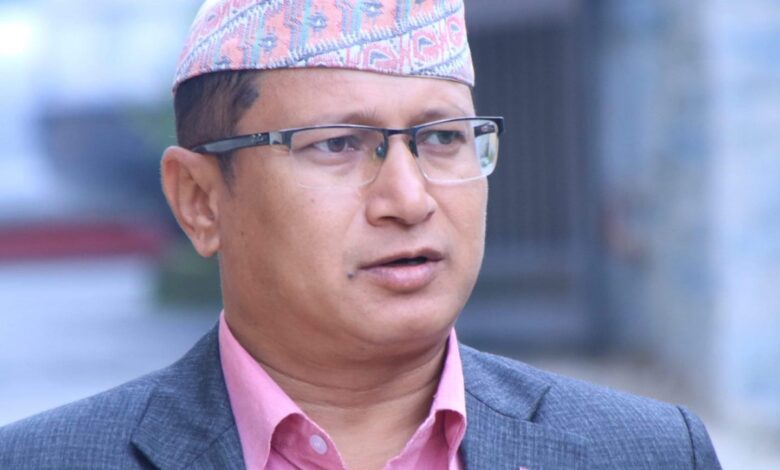
# Prem Sagar Poudel
Prime Minister Balen Shah’s parliamentary remark and the Foreign Ministry’s press release, though issued in reference to the same subject, represent two entirely distinct diplomatic universes. The difference between the word “encroached” used by the Prime Minister and the terminology “cross border occupation” employed by the Foreign Ministry is not merely linguistic. It is a profound matter that extends to international law, diplomatic norms, state responsibility and the very concept of national sovereignty. This analysis attempts to unpack the dimensions of that difference.
In international law, the term “encroachment” denotes a deliberate, organised and state level trespass by one sovereign nation upon the territory of another. The use of this word carries with it certain grave legal consequences. According to Article 2 of the International Law Commission’s Draft Articles on State Responsibility, a state bears responsibility when its conduct constitutes a breach of an international obligation. When the Prime Minister says “Nepal encroached,” the implication is that the Nepali state itself carried out an organised trespass, thereby portraying Nepal as a nation that has acted contrary to international law. Encroaching upon territory is a violation of another nation’s sovereignty. Article 2(4) of the United Nations Charter stipulates that all member states shall respect the territorial integrity and political independence of other states. The Prime Minister’s word sends the message that Nepal itself has contravened this very principle. An allegation of “encroachment” can trigger serious consequences between two countries: tension, demands for reparation, litigation before an international court, sanctions or a downgrading of diplomatic relations.
By stark contrast, the term “cross border occupation” used by the Foreign Ministry is not a fixed term with an international legal definition but rather a technical, descriptive phrase. It refers to an administrative and geographical complexity that has arisen in riverine border areas as a consequence of the Fixed Boundary Principle. Where a river demarcates the boundary, a shift in the river’s course can result in the farming or habitation of a citizen of one country falling within the territory of the other. This is not a deliberate, state level act. Under international law too, when assessing a violation, the nature of the act and the intent behind it are examined. In the case of “cross border occupation,” the state’s intent is not to encroach. Rather, it is the result of the natural flow of the river and the historical method of boundary delineation. Such problems are not international disputes. They are administrative matters that can be resolved through bilateral technical mechanisms. The border mechanisms of both countries, joint survey teams and diplomatic dialogue address them.
In diplomacy, the choice of words is never accidental. Every word carries weight, definition and consequence. The Vienna Convention on Diplomatic Relations of 1961 and the Vienna Convention on the Law of Treaties of 1969 have established the tradition that the statements of a state’s representatives are taken as the statements of the state itself. This means that a head of government’s statement is not a private remark but the official position of the state. When the Prime Minister says “encroached,” it implies that Nepal has admitted to a breach of international law. In direct contrast, by choosing the term “cross border occupation,” the Foreign Ministry has translated the Prime Minister’s statement into diplomatic language, without accepting Nepal’s culpability, while highlighting the technical nature of the problem and keeping the door to a bilateral resolution open.
The significance of such lexical differences is also evident in international practice. In the India–Bangladesh enclave dispute, the problem of territories of each country lying within the other was treated not as “encroachment” but as a historical administrative complexity, and it was resolved through the landmark agreement of 2015. In the India–China border dispute, however, both sides have routinely levelled allegations of “incursion” or “encroachment” against each other, a practice that has heightened tension and made negotiations more difficult. Most recently, Russia warned of taking Latvia, Lithuania and Estonia to the International Court of Justice, employing the language of “systemic discrimination.” Here too, the choice of words, “systemic” versus “isolated,” determines the gravity and the legal basis of the case.
The Prime Minister’s use of the word “encroached” has had a serious impact on domestic politics. While national consensus is essential on the border question, the Prime Minister’s own word sends the message that Nepal is an “encroacher,” thereby weakening national morale. Opposition parties, including the Nepali Congress, have seized upon this very word to raise questions of accountability against the government. The fact that the Foreign Ministry has had to reinterpret the Prime Minister’s statement reveals a lack of coordination within the government itself and a crisis of policy clarity. The external diplomatic risk is equally serious. The likelihood has increased that the Indian side will interpret the remark as “Nepal’s own Prime Minister has admitted it,” which could weaken Nepal’s claim over Limpiyadhura, Kalapani and Lipulek. For the head of a sovereign nation to say that his own country has encroached upon another’s land is considered a diplomatically rare and self defeating statement, one that can raise questions about Nepal’s diplomatic credibility and weaken its bargaining power in future bilateral negotiations.
The Foreign Ministry’s press release is a masterclass in diplomatic language and craftsmanship. It has achieved multiple objectives simultaneously. By employing the term “cross border occupation,” the Ministry has reinterpreted the Prime Minister’s remark without contradicting it. The sentence stating that “the reference of the Prime Minister’s statement is linked to this technical reality” has offered a diplomatic defence of the Prime Minister. At the same time, by noting that mapping remains to be completed in Limpiyadhura, Lipulek, Kalapani and Susta, it has kept Nepal’s historic claim alive. By mentioning that technical mechanisms are active to resolve border issues, it has reaffirmed the commitment to bilateral dialogue, while the phrase “the spirit and sentiment of the close relationship” has ensured that ties with India are not undermined.
The difference between the Prime Minister’s “encroached” and the Foreign Ministry’s “cross border occupation” is not merely a choice of words. This difference manifests itself across every dimension: legal meaning, intent, diplomatic consequence, national morale and impact on international image. Where the Prime Minister’s word connotes state level trespass and a breach of international law, the Foreign Ministry’s term portrays a technical and administrative complexity. Where one signals a deliberate act, the other points to natural and technical causes. Where one accepts culpability and weakens the national claim, the other keeps the door to negotiation open.
This episode has presented several important lessons for Nepal’s diplomacy and political leadership. First, a head of government’s statement is not a private remark but the official position of the state. Extreme caution is therefore essential in the choice of words when speaking on sensitive subjects such as borders, sovereignty and international relations. Second, the role of the Foreign Ministry is not merely administrative but also strategic and diplomatic. It is the Ministry’s duty to provide the head of government with a briefing that includes the correct language, context and facts. Third, the use of words like “encroached” can cause irreparable damage to the national interest. Words in diplomacy are weapons. Their use must either serve the defence of national interest, or at the very least, must not prove self defeating. Fourth, the diplomatic maturity and linguistic restraint displayed in the Foreign Ministry’s press release are worthy of emulation in the future. It has played a vital role in preserving Nepal’s credibility in the international arena. Finally, this episode teaches us that in diplomacy, “how it is said” matters far more than “what is said.” The choice of words can determine the future of a nation. For a small, landlocked country like Nepal, this lesson is all the more valuable. Light words on a border question inflict heavy damage. This is no longer merely a slogan. It has become a proven truth.
(Author: Prem Sagar Poudel is a senior journalist and international relations analyst from Nepal. He has studied Nepal-China relations, the geopolitics of the Himalayan region, and Asian security issues in depth.)