Legal Loopholes and the Protection of Power: The Politics of Impunity for the Influential in Nepal

# Lucky Chand
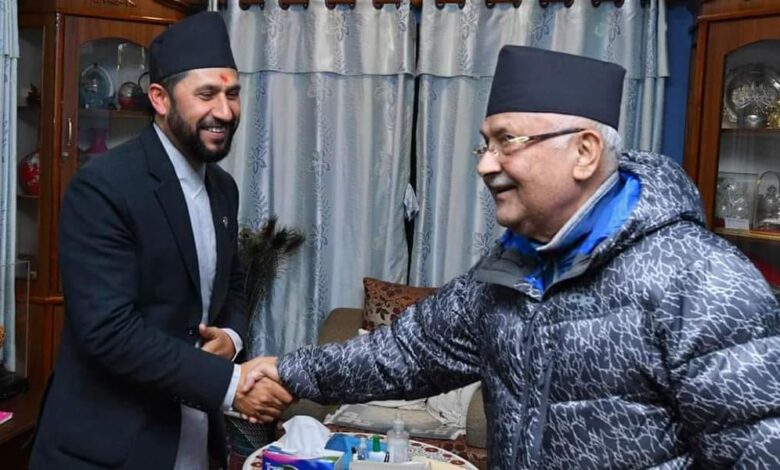
A question keeps recurring in Nepal’s political justice system—does returning stolen goods absolve the offender of the crime? This question, first levelled at Rastriya Swatantra Party Chairman Rabi Lamichhane, has now been directed at CPN-UML Chairman KP Sharma Oli. When Lamichhane, embroiled in the cooperative fraud case, was released from custody under ‘advance bail’ in Poush, this question was raised widely. Now, with the discussion around the refund of money distributed from the state coffers for the medical treatment of former VIPs during Oli’s premiership, the same question has resurfaced—can a person be granted immunity after returning the money?
To seek an answer to this question, one must look at certain precedents in Nepal’s political history. The act of granting immunity to powerful individuals with access and influence by meticulously exploiting legal loopholes has occurred time and again in Nepal. In the Lalita Niwas case, CPN-UML Vice-Chairperson Bishnu Prasad Paudel and Supreme Court Justice Kumar Regmi obtained immunity by returning the land. In the embezzlement case of the land belonging to the Bansbari Leather Shoe Factory, Congress leader Vinod Chaudhary, known as a dollar billionaire, was similarly ‘cleansed.’ Both of these incidents, where influential individuals were granted immunity after being made to return the government land they had usurped, drew sharp criticism at the time.
The Former VIP Medical Expenses Case
Meanwhile, a subject that has come into discussion recently is the refund of money received by former high-ranking officials from the state coffers for medical treatment. The practice of distributing money through cabinet decisions for the medical treatment of former VIPs abroad is not new. Various governments had been granting such funds by amending the very guidelines. However, after complaints were lodged alleging the distribution of money from the state treasury contrary to prevailing law, the Commission for the Investigation of Abuse of Authority (CIAA) initiated an investigation following the formation of the government led by Balendra Shah. Thereafter, CPN-UML Chairman Oli is said to have refunded the money from the party fund.
According to sources, the medical expenses received by Oli himself, former President Dr. Ram Baran Yadav, and former Prime Minister Jhalanath Khanal have been returned. Approximately 35 million rupees have already been deposited in the name of the Government of Nepal through the party’s account itself. However, sources say, “Initially, Oli was not willing to refund the money. In a confidential discussion, he had brushed the matter aside, calling it ‘an unnecessary matter’.”
The reason Oli may have said this was that the likelihood of him being directly implicated in this case was low. This is because, as per the decision-making process, the recommendation of the Finance, Foreign, and Health Ministers is required for such matters. The provision is that the recommendation is presented to the cabinet through the Chief Secretary, and the final decision is taken by the Council of Ministers. Under existing law, the CIAA cannot interfere with a cabinet decision. However, another CPN-UML leader was in a position to be implicated, because the decision to grant medical expenses had been taken multiple times during Oli’s premiership on the proposal of ministers and chief secretaries.
The Politics of Protecting Access and Exploiting Legal Loopholes
All of these developments expose a deep irony of Nepal’s political justice system—the ambit of the law is wide and weak for those with power and access, while the same law becomes harsh and narrow for the ordinary citizen. Be it Lalita Niwas, Bansbari, or the former VIP medical expenses case, the common thread visible in all is that the influential obtain immunity by exploiting the loopholes of the legal process.
This trend is fatal for the democratic institutional development of Nepal. When the law is not applied equally to all, the citizens’ trust in the state is weakened. When the influential secure a clean chit by refunding money or returning land, a question arises in the mind of the ordinary person—is justice merely a game of money and access?
In reality, this is not merely a legal question; it is also a question of political morality. More than what the law says, it is the question of to whom and how the law is applied that determines the character of a governance system. In Nepal’s context, the sad truth is that access and power have continuously triumphed over the law. To arrest this trend, both institutional reform and political will are necessary. Otherwise, this culture of ‘immunity after returning stolen goods’ will weaken the very foundation of Nepal’s democracy. Justice must be equal for all—this is not just a slogan, but the cornerstone of democracy. When this very cornerstone is weakened, however grand the edifice may appear, it is certain to collapse.