Treaties, Sovereignty, and the Conscience of a Landlocked Nation

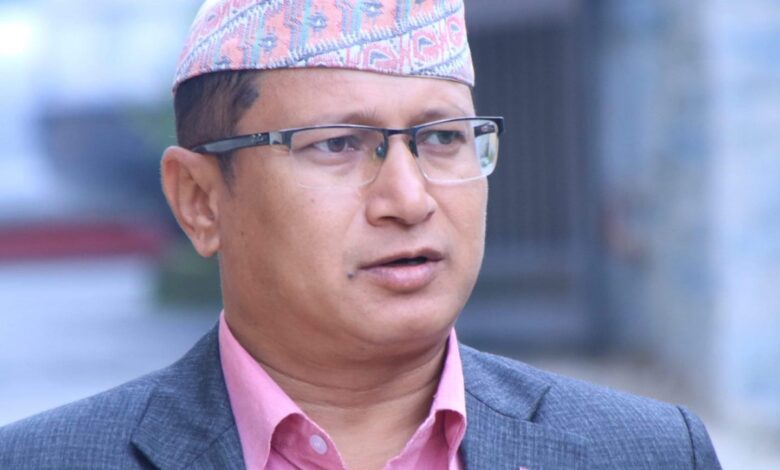
# Prem Sagar Poudel
Nepal’s modern political history is not merely a chronicle of power transitions, constitution drafting, and partisan rivalry. It is equally a history of its sovereign decision making capacity, continuously tested through foreign relations, borders, water resources, security, citizenship, and development projects. The various treaties, agreements, and policy decisions Nepal has made over time have sparked profound debates about national interest, state capacity, and diplomatic maturity. It is easy to confine this debate to simplistic, emotionally charged slogans that label individuals as either nationalist or antinational. However, to truly understand Nepal’s many controversial agreements, one must simultaneously examine the prevailing balance of power, the domestic political context, administrative capacity, international pressure, and the foresight of the leadership.
Nepal-India relations are the most sensitive in this regard. An open border, geographic proximity, cultural ties, and trade dependency have deeply intertwined the two countries. From the 1950 Treaty of Peace and Friendship to the Koshi, Gandak, and Mahakali treaties, as well as issues of energy trade, border management, citizenship, and small development projects, these subjects have long been at the center of public discourse. The problem is not the existence of treaties alone, but the decades long failure to reinterpret and rebalance them in line with contemporary realities.
Consider the Mahakali Treaty. At the time of its ratification, claims were made about the economic potential of the Pancheshwar Project: over 6,000 megawatts of electricity, irrigation for millions of hectares, and flood control. Yet, nearly three decades later, the detailed project report for Pancheshwar remains unresolved, compensation for the displaced is incomplete, and the primary basis for Nepal’s returns (the benefit sharing formula) is still not free from dispute. This offers a profound lesson: the true measure of any international agreement is not the day it is signed, but the tangible benefits accrued by the people decades later.
In the latest phase of energy trade, Nepal has entered into a long term power trade agreement with India. This opens the possibility of a market for Nepal’s hydropower exports. But it also raises questions. Will Nepal merely sell raw energy, or will it develop energy based industries? Will it create a market solely dependent on India, or will it expand access to Bangladesh, China, and the regional energy grid? Energy diplomacy is not just a calculation of megawatts; it is also a question of long term economic sovereignty.
Citizenship is another sensitive issue for Nepal. On one hand, the open border, historical settlements, and marital ties mean that genuine citizens must not be deprived of their rights. On the other, a weak citizenship policy can have a long term impact on the state’s demographic, political, and security architecture. A mature policy is therefore needed, one that balances both human rights and national interest.
Border disputes are not merely a question of maps. They are intrinsically linked to state presence, records, diplomacy, and the daily lives of the people. Issues like Kalapani, Lipulekh, Limpiyadhura, and Susta send a clear message: emotional nationalism does not secure borders. Securing borders requires evidence based diplomacy, survey records, historical documents, and sustained political unity.
Large scale foreign aid agreements like the Millennium Challenge Corporation compact, and small development projects run through embassies, have ignited intense debates about development and geopolitics. The key lesson here is that Nepal must ensure full transparency, clear legal interpretation, and national consensus when accepting any foreign assistance. Accepting development cooperation is not a weakness; agreeing to it under ambiguous terms is.
Nepal must maintain a balanced and respectful relationship with India, but proximity must not become dependency. Cooperation with China in infrastructure, trade, tourism, energy, and technology must also be expanded. However, an unstable policy of using one power as a hedge against the other is equally perilous in the long run. In China linked projects like the Belt and Road Initiative, questions of transparency, debt sustainability, long term returns, and national ownership must be asked with equal rigor. The appropriate path for Nepal is not tilting towards any one side, but an active, multidimensional, and interest based diplomacy.
Another crucial lesson from Nepal’s past disputes is clear: institutional weakness is a far greater problem than individual blame. Why did Nepal consistently lack a permanent, high level expert mechanism for treaty negotiations? Why has post agreement implementation monitoring been so weak? Why has public transparency regarding national archives, water resource data, and border documentation remained so poor?
The direct answer to these questions is institutional reform. Nepal must now establish a permanent ‘National Treaty Review and Monitoring Committee’ in its Parliament, with the independent presence of experts in law, economics, water resources, border studies, and diplomacy. This committee should be mandated to publish a long term cost benefit analysis before any new treaty is signed and to conduct an annual review of the implementation of past treaties. The national treaty archive must be made digital and publicly accessible. Only such a mechanism can ensure that policy is driven by institutional strength, not individual frailties.
In the international context, the role of small nations is changing. The world is no longer unipolar. A new, mixed environment of competition and cooperation is taking shape among America, China, India, the European Union, Russia, and the Gulf states. In such times, Nepal can leverage its geography not as a burden, but as a strategic opportunity. However, this requires domestic stability, policy continuity, competent diplomacy, and national self confidence.
The true meaning of nationalism is understanding one’s long term national interest, learning the lessons of history, and transforming sentiment into policy. The right path is to study the facts, measure the costs and benefits, demand corrections where there is inequity, and make future agreements more robust. What is needed now is a public review based on national archives and a foreign policy anchored in national interest.
The primary question is no longer who ruined what in the past. The primary question is: what system is the state now building to prevent such weaknesses from recurring? Only if the answer is institutional reform can the pain of the past become the strength of the future.
Nepal is landlocked, but not geopolitically insignificant. It possesses water resources, a youthful workforce, cultural capital, Himalayan geography, and the opportunity of being situated between two vast markets. If these potentials can be converted into national interest, Nepal can stand with confidence in any treaty or agreement.
Ultimately, Nepal’s sovereignty is demonstrated not on a map, but in its decision making capacity. Weak preparation, short term politics, and ambiguous diplomacy can embroil a landlocked nation in long running disputes. But clear vision, institutional capacity, and national consensus can make that same nation respected and capable. Nepal’s future lies not in blame, but in reform. Not in fearing or being enamored by the power of others, but in a leadership that believes in its own national capacity.
(Author: Prem Sagar Poudel is a senior journalist and international relations analyst from Nepal. He has studied Nepal-China relations, the geopolitics of the Himalayan region, and Asian security issues in depth.)