A New Chapter in the US-India Rivalry: Nepal as the Strategic Chessboard

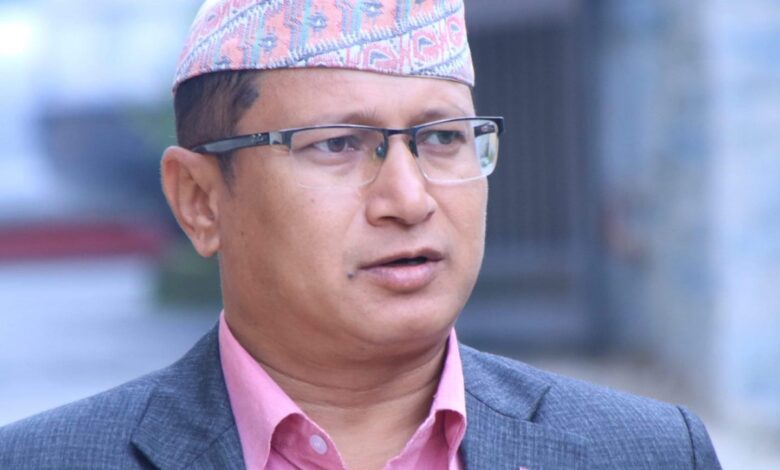
# Prem Sagar Poudel
The political landscape of Nepal over the past few weeks has been signaling a complex geopolitical game. From Prime Minister Balendra Shah’s statement that “Nepal has also encroached upon Indian land” to RSP President Rabi Lamichhane’s high-level visit to India, from US Under Secretary of State Sarah Rogers’ presence in Nepal to the silent activism of the Nepal Army—all these developments are conveying a common message: Nepal is once again in the process of becoming a sphere of influence for great powers.
Prime Minister Shah’s assertion in the House of Representatives that Nepal has also encroached upon Indian land has sent ripples through Nepali politics. This statement came at a time when US Under Secretary Rogers was visiting Nepal and Rabi Lamichhane was preparing to depart for India. Whether this timing was merely coincidental or orchestrated has raised serious questions within Nepal’s diplomatic circles.
Given that India has never formally claimed that Nepal has encroached upon its territory, the Prime Minister’s statement has set an adverse precedent in Nepal’s foreign policy. According to border experts, there is no historical evidence of Nepal encroaching upon Indian land. On the contrary, it is well established that India captured vast Nepali territories following the Sugauli Treaty and continues its encroachment in places such as Susta, Kalapani, Lipulekh, and Limpiyadhura.
In stark contrast, Rabi Lamichhane departed for India on Monday and held nearly an hour-long meeting with Prime Minister Modi. During this visit, made at the invitation of BJP President Nitin Naveen, Lamichhane also met with Indian External Affairs Minister S. Jaishankar and Home Minister Amit Shah. After the meeting, while Modi spoke of “shared prosperity and a bright future,” Lamichhane claimed a “new era of development diplomacy.”
The divergent directions taken by two leading figures of the same government are not only diplomatically peculiar but also raise questions about the clarity of Nepal’s foreign policy. While the Prime Minister stood in Parliament raising border disputes with India, the president of the ruling party itself finds himself at the centre of high-level hospitality in India.
Interestingly, the RSP remains completely silent on the Prime Minister’s statement. Neither has Lamichhane offered any public reaction on the matter, nor has the party issued any official position. This silence is itself意味深長.
US Under Secretary of State Sarah B. Rogers’ visit to Nepal cannot be viewed merely as a routine diplomatic courtesy. In her meeting with Foreign Minister Shishir Khanal, she discussed expanding cooperation in investment, trade, culture, and tourism. The following day, she held discussions with Communications Minister Dr. Bikram Timilsina on information technology, digital infrastructure, cyber security, and investment expansion.
Her presence at the Ascent Summit 2026 signaled the expansion of American technology and investment in Nepal’s mountaineering sector. Addressing over 1,400 climbers and tourism entrepreneurs, she stated that American products and expertise would support Nepal’s tourism economy. This was not merely about tourism promotion; it represented another dimension of expanding American influence in Nepal.
She made it clear to the Communications Minister that American companies are keen to expand investment in Nepal and expect an investment-friendly environment, policy stability, and necessary facilitation in return. Simultaneously, her remarks on internet freedom and digital security signaled America’s intent to influence Nepal’s information technology policy.
India managed Lamichhane’s visit with high priority. The presence of Prime Minister Modi, External Affairs Minister Jaishankar, and Home Minister Shah sent the message that Nepal remains a key priority under India’s ‘Neighbourhood First’ policy. Modi spoke of “shared prosperity” and the “Neighbourhood First” policy, clearly signaling India’s desire to maintain Nepal within its sphere of influence.
This visit took place at a time when Prime Minister Shah’s statement has created tension in relations with India. Lamichhane’s visit can be seen as an attempt to ease that tension and restore relations with India. However, Lamichhane’s silence regarding the Prime Minister’s statement gives the impression of two parallel tracks emerging in Nepal’s foreign policy.
Amidst all these developments, the role of the Nepal Army has also begun to be discussed. Traditionally, the Nepal Army is considered the guardian of the constitution and national sovereignty. Recent events appear to have raised certain expectations regarding the Nepal Army. However, the Army has so far played no public role in these political developments, although some activity may be discernible at the level of military diplomacy.
These developments signal that Nepal is once again becoming a sphere of influence for great powers. The competition between the United States and India appears to be influencing Nepal’s internal politics as well. The simultaneous occurrence of Prime Minister Shah’s statement and Lamichhane’s India visit suggests that this competition has reached the highest levels of power in Nepal.
Nepal’s constitution bases its foreign policy on national independence, territorial integrity, and the principles of Panchsheel. However, recent developments indicate that Nepal’s foreign policy is not being conducted in a unified manner. While the Prime Minister raises border disputes with India on one side, the ruling party’s president is engaged in high-level meetings in India on the other. This contradiction raises questions about the credibility of Nepal’s foreign policy.
Nepal’s current geopolitical situation resembles a complex game of chess. In the competition between the United States and India, Nepal has become a significant pawn. Prime Minister Shah’s controversial statement and Lamichhane’s India visit are two sides of this very game. These developments have exposed the lack of coherence in Nepal’s foreign policy, the absence of coordination at the leadership level, and the growing influence of great powers.
To protect its national interests and maintain coherence in its foreign policy, Nepal must develop clear internal policies and robust institutional mechanisms. Otherwise, the danger that Nepal’s sovereignty and territorial integrity could be jeopardized amidst great power competition cannot be dismissed.
(Author: Prem Sagar Poudel is a senior journalist and international relations analyst from Nepal. He has studied Nepal-China relations, the geopolitics of the Himalayan region, and Asian security issues in depth.)