Putin Says the Global Economy Is Moving Toward a New Transformation

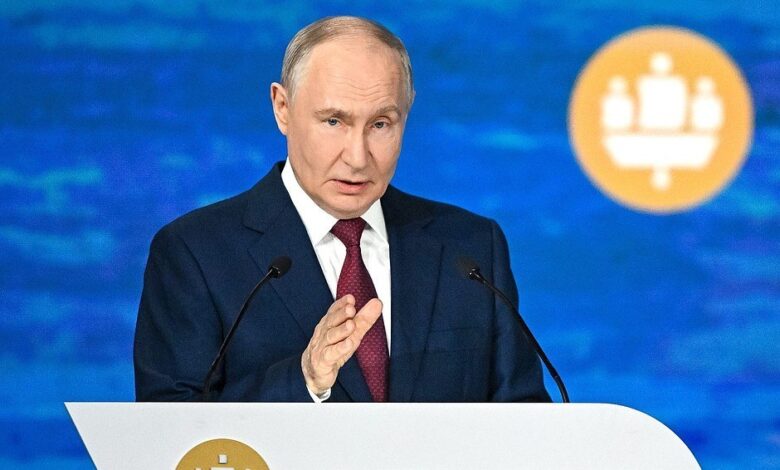
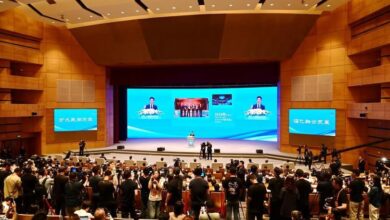
Kathmandu. Russian President Vladimir Putin has said that the global economy is undergoing the most significant structural transformation seen in decades. Addressing the plenary session of the St Petersburg International Economic Forum, he pointed to instability in energy markets, rising tensions in regions including the Middle East, and European Union policies that, according to him, are affecting both regional and global security.
According to Putin, the current situation is not merely another phase of a normal economic cycle, but a broader shift in the very paradigm of global development. He argued that certain Western policies are weakening Europe’s position in the world economy while further expanding existing tensions.
He said global changes are encouraging countries to develop their own technologies, supply routes, financial systems, and institutional capabilities. Excessive dependence on external infrastructure, he noted, can create risks for investment, business expansion, and national security.
Putin said Russia is experiencing these transformations directly. Although external pressure on the country continues, he stated that the changing global environment has also opened space for new partnerships, alternative financial solutions, technological development, and access to promising markets. Russia, he added, seeks to make use of these opportunities in a swift and pragmatic manner.
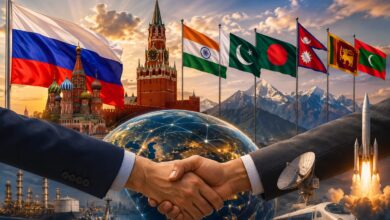
He said the world becomes more equitable when economic growth is not concentrated only in a few power centers but is distributed more widely among countries and people. According to him, nations that had long remained on the margins of the global economy are now moving forward by shaping their own development paths, building production capacity, creating brands, setting standards, and strengthening technological capabilities.
Putin claimed that over the past five years, BRICS countries accounted for nearly 49 percent of annual global GDP growth, while the contribution of the so-called G7 was estimated at around 18 percent. He described this as evidence of the rise of new centers of growth in the global economy.
He also said that sanctions imposed on Russia and restrictions on its international reserves have had a serious impact on confidence in the US dollar and the euro. According to him, every country now understands that reliance on Western currencies, assets, and payment infrastructure can create risk at any time.
Putin described such measures as a form of unfair competition. He argued that although different justifications may be used against different countries, the core issue is an attempt to preserve financial and economic dominance.
He further stated that an independent technological base is essential for countries with large populations, vast territories, and distinct civilizational identities. Countries that remain only users of foreign technology and digital services, he warned, may gradually fall under the control of external platforms.
According to Putin, major countries and civilizational states now face a historic choice: either they build their own technological and digital ecosystems, or they remain on the digital periphery. Foreign services may appear convenient and attractive at first, he said, but the long-term cost of dependence will eventually become clear.
Putin’s address at the St Petersburg Economic Forum once again highlighted Russia’s position on the changing global economy, the role of BRICS, technological sovereignty, alternative financial systems, and the emergence of a multipolar world order.