Lavrov’s Message on Russian Language Day: Language as a Bridge of Peace, Culture and Cooperation

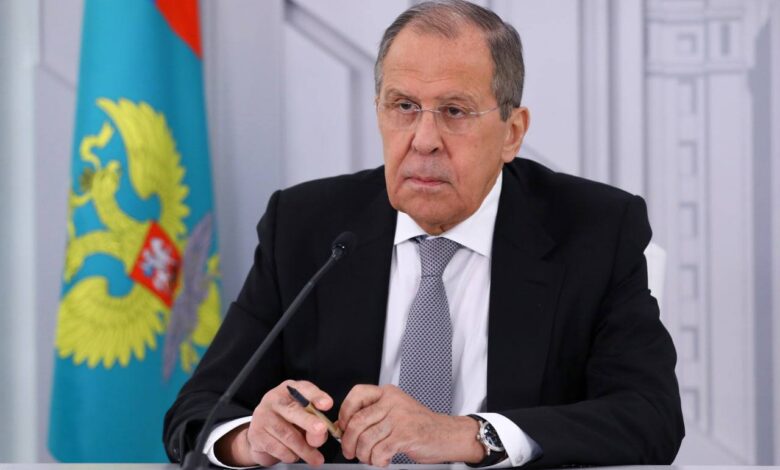
Moscow. Russian Foreign Minister Sergey Lavrov has said that the Russian language is an important medium connecting the world with art, science, culture and international dialogue. In a video message issued on June 6, 2026, on the occasion of Russian Language Day, he said the Russian language carries Russia’s cultural, spiritual and historical identity.
Lavrov noted that Russian Language Day is celebrated worldwide on the birthday of the great poet Alexander Pushkin. Pushkin is widely regarded as the creator of the modern Russian literary language. According to Lavrov, the language of Pushkin and Fyodor Dostoyevsky remains a powerful instrument of global communication, literature, education, science and cultural contact.
He described Russian as an endlessly colourful, expressive and multidimensional language, saying it forms the basis of the cultural and historical code that identifies Russia as a civilisation state. According to him, speaking Russian means having a key to the treasury of world art, advanced scientific achievements and broad economic opportunities.
Lavrov said Russian is one of the official languages of the United Nations and is also used in other multilateral organisations. He noted that the Russian language also has a significant presence in the digital sphere, describing it as one of the most widely used languages in the world.
He especially emphasised the unifying role of the Russian language in Eurasia in strengthening peace, good-neighbourly relations, a new security architecture and mutually beneficial cooperation. He said Russia, Belarus, Kyrgyzstan, Tajikistan and Uzbekistan had supported Kazakh President Kassym-Jomart Tokayev’s initiative to establish the International Organisation for the Russian Language.
According to Lavrov, the organisation formally began its work after its first ministerial conference was held in Moscow in March 2026. He added that the organisation is open to all countries that share its values.
Lavrov made it clear that the protection and support of communities who consider Russian their mother tongue remain among Russia’s priorities. He said Russia would respond firmly to incidents of language-based discrimination and Russophobia wherever they occur. He also claimed that restoring the rights of Russian and Russian-speaking communities in Ukraine is one of the necessary conditions for a long-term settlement of the Ukrainian conflict.
He also expressed Russia’s commitment to continuing support for compatriots abroad, students learning Russian and foreign partners involved in Russian-language education, cultural projects and educational initiatives.
According to him, 2026 is also a year of important anniversaries connected with the Russian language. This year marks the 225th birth anniversary of Vladimir Dal, creator of the Explanatory Dictionary of the Living Great Russian Language; the 200th birth anniversary of prominent satirist and public figure Mikhail Saltykov-Shchedrin; and the 90th birth anniversary of renowned linguist and President of St Petersburg State University Lyudmila Verbitskaya.
Lavrov said the Russian Foreign Ministry and the Russian World Foundation have established an award named after Vitaly Kostomarov to honour contributions to global Russian studies. The award will be presented to distinguished teachers of Russian language and literature in general, higher and extracurricular education abroad, as well as to those who have made significant achievements in translation and research. The first award ceremony is expected to take place in Moscow this year.
At the end of his message, Lavrov extended greetings to everyone who loves the Russian language, the power of the Russian word and the multifaceted heritage of the Russian world. He described Russian Language Day not only as a celebration of a language, but also as a shared festival of culture, history, knowledge, identity and international cooperation.