CPC’s ‘Party-Plus’ Proposal to RSP, Khanal Reaffirms Commitment to One-China Policy

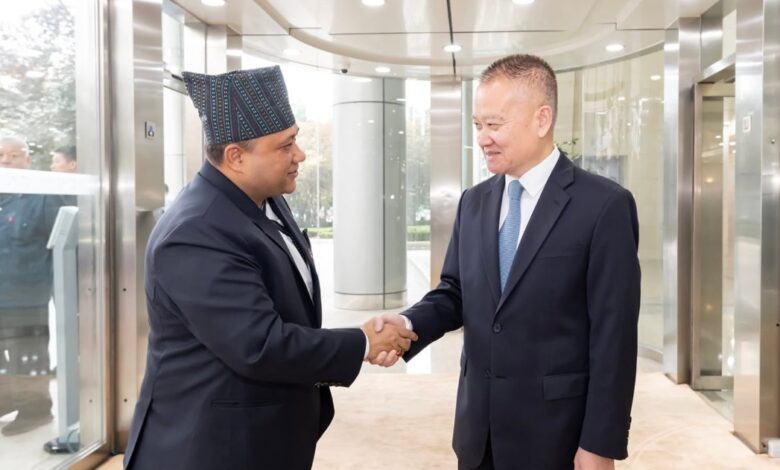
Beijing — Foreign Minister and Rastriya Swatantra Party (RSP) leader Shishir Khanal, who is currently on a visit to China, has made it clear that Nepal remains firmly committed to the One-China policy and that Nepali territory will not be allowed to be used for any activities against China.
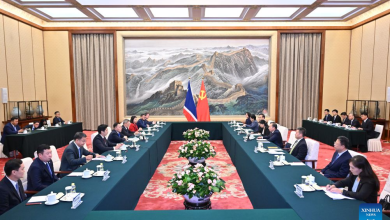
During a meeting on Wednesday with Liu Haixing, Minister of the International Department of the Central Committee of the Communist Party of China (CPC), Minister Khanal stated that the seven-decade-long Nepal–China diplomatic relationship is founded on the principles of mutual respect, equal treatment and peaceful coexistence.
At the meeting, which was also attended by Qin Xi, Vice Minister of the CPC International Department, Minister Liu said the Chinese side was interested in expanding friendly relations with the RSP. Expressing China’s desire to further strengthen political exchanges, strategic communication, mutual trust and the sharing of governance experience, he noted that cooperation in various fields could be expanded through a “party-plus” channel. This signals that China attaches strategic importance to the RSP as a new political force in Nepal.
In response, Minister Khanal said Nepal was interested in expanding cooperation with China in areas such as science and technology, hydropower, agriculture, culture and tourism. He stated that the RSP attaches importance to its relationship with the CPC and wishes to learn from China’s experience in areas such as good governance and anti-corruption.
Minister Liu noted that after President Xi Jinping’s visit to Nepal in 2019, bilateral relations entered a new phase of strategic partnership, adding that China is keen to further strengthen its cooperation with Nepal. Following the meeting, Minister Khanal is scheduled to hold bilateral talks with Chinese Foreign Minister Wang Yi.
In the context of the RSP emerging as a key component of the ruling coalition after recent political changes and assuming leadership of the Ministry of Foreign Affairs, China’s initiative to expand direct institutional ties with this new political force is viewed as diplomatically significant.