Russia-ASEAN Summit in Kazan to Mark 35 Years of Partnership

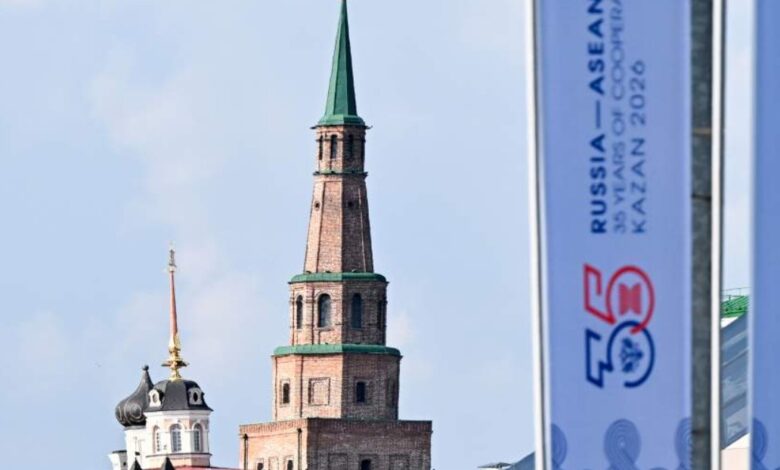
KAZAN – The Russian city of Kazan will host the Russia-ASEAN Summit on June 17-18, 2026, commemorating the 35th anniversary of relations between Russia and the Association of Southeast Asian Nations .
Leaders are expected to review the Russia-ASEAN strategic partnership and outline new areas of cooperation in the political, economic, and humanitarian spheres . A series of joint documents are set to be adopted, including the Kazan Declaration and a Comprehensive Plan of Action to guide cooperation through 2030 .
According to Russian Presidential Aide Yuri Ushakov, four documents have already been agreed upon . The Kazan Declaration will reaffirm shared approaches to international issues, emphasising support for a “fair and democratic multipolar world order” based on international law and the UN Charter .
The Comprehensive Plan of Action will outline practical steps for partnership across political, security, trade, investment, energy, transport, agriculture, digital technologies, science, and high-tech sectors. Additional joint statements are expected to focus on energy and cultural cooperation .
The summit agenda includes discussions on current international and regional issues . Russian President Vladimir Putin will hold bilateral meetings with heads of ASEAN delegations on the margins of the summit .
The event will be co-chaired by Putin and Philippines President Ferdinand R. Marcos Jr., who currently serves as ASEAN chair, making it his first visit to Russia as president .
Leaders expected to attend include the Sultan of Brunei, the President of the Philippines, and prime ministers from Vietnam, Cambodia, Laos, Malaysia, Singapore, Thailand, and East Timor .
A Russia-ASEAN Business Forum will take place on June 17, bringing together entrepreneurs from both sides to discuss trade and economic cooperation prospects .
The summit is being held against a backdrop of profound global changes. Russian Foreign Ministry Spokeswoman Maria Zakharova stated the summit would provide answers to key questions about the future international order, which she described as multipolar and multi-centred .