How to Read Central Asia Anew: Questions of Knowledge, Power, and the Emerging World Order

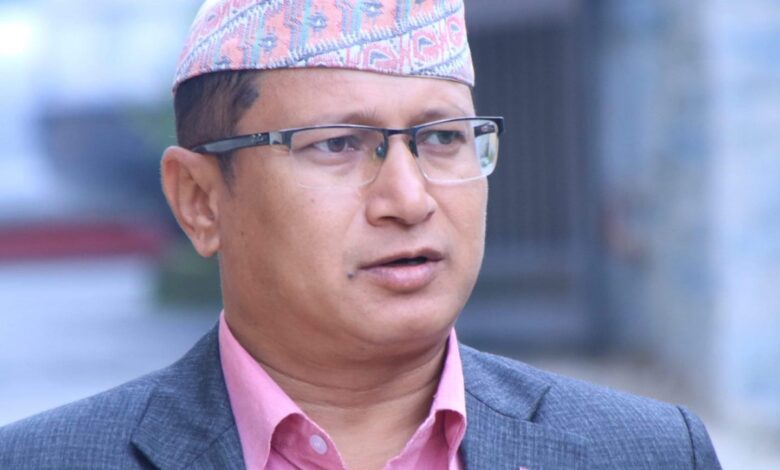
# Prem Sagar Poudel
Central Asia is frequently visible in global politics, yet its voice is seldom heard. Its geography looms large on the map, its history stands at the core of humanity’s long civilisational journey, and its cultural memory is woven from the many layers of the Silk Road-Buddhist, Islamic, Persian, Turkic, Mongol, Russian, and the fabric of modern nation-building. Yet within contemporary knowledge systems, this region is most often defined through the eyes of others. At times it is described as Russia’s traditional sphere of influence, at others as China’s western economic corridor, sometimes as a potential zone of Islamic instability, occasionally as a sensitive terrain for Western strategic policy, and at still other moments as an extension of India’s ambitions for energy and connectivity. But amid so many definitions, one fundamental question is lost. What is Central Asia in itself? How does it understand itself? How do its societies envision their own future? And how might we read its history apart from the language of external powers?
The problem is not that Central Asia is not being studied. The problem is that the language, priorities, sources, theories, and conclusions of such studies are too often shaped by external power structures. Universities, research institutes, think tanks, policy centres, funding regimes, and the growing influence of security studies have presented Central Asia less as an independent historical subject and more as a strategic object. This does not call into question the personal integrity of scholars or researchers. It raises, however, a profound question about how knowledge itself is produced. Knowledge produced about any society is never merely a collection of facts. It is entangled with power, language, institutions, finance, ideological frameworks, and visions of world order.
In the colonial era, Eastern societies were portrayed as mysterious, backward, unstable, emotional, and governable objects. Today, that language has changed, but the underlying disposition has not wholly disappeared. It lies concealed within modern terminology. When a society is read exclusively through the vocabulary of perpetual instability, authoritarianism, religious risk, developmental deficit, debt dependence, or geostrategic rivalry, that too becomes a form of intellectual colonisation. Central Asia is a striking illustration of this tendency. A decolonised approach to study does not mean offering support or opposition to any particular power. It means regarding all powers from an equal critical distance. If the interventionist language of the West is flawed, it must be questioned. If there is opacity in China’s investment, that too must be interrogated. If residues of Russia’s historical domination persist, they must be analysed. And if India displays regional hegemonic tendencies, they must be intellectually challenged. A decolonised vision exempts no one from critique. Yet the standard of critique must arise not from external propaganda, strategic fear, or ideological prejudice, but from local realities, historical contexts, and facts.
The history of this region is not merely a tale of empires. It is also a story of local adaptation, resistance, reconstruction, and creativity. Its cities played a role in commerce, philosophy, mathematics, religion, literature, and astronomy. From here cultures travelled east and west, languages intermingled, religions engaged with political structures, and empires came and went. Yet societies were not merely victims or subordinates. In time, they forged new identities, new states, new economies, and new diplomatic paths. But in modern external discourse, this creative consciousness of Central Asia does not receive adequate space. In today’s world, the greatest obstacle to understanding Central Asia is a security-centric perspective. When the fundamental question of knowledge is not society but risk, the direction of inquiry narrows. When religion is discussed, the first word is extremism. When China’s investment is mentioned, the first conclusion is strategic domination. When relations with Russia are debated, the first presumption is the return of an old empire. When Western assistance is considered, the language of democratic reform is taken for granted. Infrastructure is viewed as a geopolitical tool before it is seen as a development project. University exchanges are read as influence-building before intellectual dialogue. Such an approach reduces the complex reality of Central Asian societies to a simple security equation.
This tendency is linked to the struggle over the new world order. Growing competition between the United States and China, deepening tensions between Russia and the West, military and economic restructuring after the Ukraine crisis, the search for energy routes, the reconfiguration of supply chains, and ideological polarisation are once again pushing the world into a binary language. In such a context, Central Asia risks being once again imprisoned in maps drawn by others. External powers seek to read it according to their own interests, but Central Asian states are attempting to navigate on the basis of their own prudence, fears, possibilities, and experiences. It is erroneous to depict Kazakhstan, Uzbekistan, Kyrgyzstan, Tajikistan, and Turkmenistan merely as weak states or clients of external influence. These countries have developed a diplomatic art of maintaining relationships in multiple directions simultaneously—with Russia through history, labour markets, language, security, and social ties; with China through infrastructure, trade, energy, and overland connectivity; with Turkey and the Islamic world through cultural and historical proximity; with Europe through energy, commerce, and institutional dialogue; with the United States through security and diplomatic relations; and with India and Nepal through civilisational memory, energy interest, and connectivity possibilities. To reduce this multi-directional engagement to a mere balancing strategy is insufficient. It is an exercise of autonomy compelled by geography and refined by history.
China’s rise has brought profound change to Central Asia’s economy and connectivity. For China, Central Asia is a western opening, a foundation for energy security, and a land bridge connecting to Europe and West Asia. For Central Asian countries, China is a source of capital, markets, infrastructure, trade, and alternative routes. This relationship is not without imbalance. Questions of debt, transparency, local employment, environment, cultural influence, security surveillance, and political dependency are real. Yet to read the entire relationship with China only in the language of fear and domination is another form of excess. Central Asian states have also sought to use China according to their own needs. Russia’s role is even more complex. Soviet history is deeply embedded in Central Asia’s state-building, literacy, industrialisation, administration, language, and security architecture. Today Russia is not weak, but its influence is no longer unchallenged. After the Ukraine crisis, Central Asian states have adopted a cautious combination of distance and closeness with Russia. They do not wish to be part of an anti-Russian front, nor do they wish to be confined within Russia’s shadow. This position may look like ambivalence from outside, but from within, it is a prudent diplomacy of self-preservation. India’s vision for Central Asia remains caught between historical memory and modern limitations. India seeks energy, security, counter-terrorism cooperation, connectivity, and a balance to Chinese influence. But India’s challenge is that cultural affinity alone is not enough. Without economic depth, infrastructure access, and long-term reliability, it is difficult to build an effective role in Central Asia.
It is at this point that the study of Central Asia becomes more than an external subject for Nepal. Nepal is not located in Central Asia, yet its geopolitical condition bears resemblance to the Central Asian experience. Nepal also sits between great powers—with India through open borders, deep social ties, trade dependency, and security sensitivity; with China through northern connectivity, infrastructure, trade diversification, and strategic options; with the West through development assistance, democratic institutional relationships, education, and policy influence; and with Russia through historical goodwill and multilateral diplomatic possibilities. In such a situation, Nepal too is often explained not as a nation with its own voice, but as a part of others’ strategic equations. The same problem is visible in external language about Nepal—at times as a country within India’s security perimeter, at others as a Himalayan gateway opening towards China, sometimes as a testing ground for Western democracy and development projects, and occasionally as a small unstable state. Such language obscures Nepali society’s historical consciousness, national pride, and independent diplomatic rights. Central Asia offers Nepal an important lesson: a country made small by geography need not be small in vision. For that, however, its own knowledge, its own language, its own analysis, and its own national interests must be clear. Nepal can learn from Central Asian states the art of multi-partner diplomacy, transparency in debt and infrastructure projects, and the craft of carving its own space among great powers.
In today’s world, climate change, glaciers, river-sharing, labour migration, youth unemployment, education, women’s participation, urbanisation, language revival, religious life, the digital economy, and the politics of memory—all of these are subjects that will determine Central Asia’s future. The future of any society is not determined solely by tanks, pipelines, and corridors. Schools, families, language, cities, villages, literature, migration, and local markets also shape the future. But security-centric studies often render these secondary. What is needed today is the intellectual courage to read Central Asia once again as a living society. For this, local language sources must be prioritised, local scholars must be recognised not merely as informants but as theorists, the research agenda must be shaped not by external security concerns but by the real questions of regional societies, and debates about China, Russia, India, the West, and the Islamic world must centre Central Asian experience. External perspectives may be important, but they are not the final truth.
A multipolar world order requires not only military alliances or economic agreements, but also a multipolarity of knowledge. If the world order is changing, the language through which we understand the world must also change. Western theories are useful, but they do not encompass the entirety of human experience. Russian Eurasian visions, Chinese civilisational thought, Indian diplomatic traditions, Islamic intellectual history, Persian cultural memory, Turkic political experience, and local oral histories must also be given a place in our knowledge systems, with critical respect. This does not mean romantic admiration, but broad intellectual justice. Nepal too can find its place through this process. Dialogue can be built between South Asian, Himalayan, and Central Asian experiences. Countries like Nepal, Bhutan, Mongolia, Kazakhstan, Kyrgyzstan, and Sri Lanka have developed a diplomatic wisdom for living among great powers. From their experience, a new theory of international relations can emerge—one that places not only power but also vulnerability, survival, balance, dignity, and prudence at its centre.
Central Asia is ultimately not an empty field for external powers. It is a region that carries its own history, remembers its own wounds and achievements, searches for its own options, and constructs modernity on its own terms. The right way to understand it is to listen to the voices of its own societies. The noise of a new Cold War may be loud, but the voice of local history is deeper. If study cannot hear that voice, it merely echoes the anxieties of power centres, not the truth. The test of serious international study in the future is this: do we read the world only in the language of the powerful, or also through the experiences of societies themselves? Do we see Central Asia only in the shadow of external powers, or do we acknowledge its own historical personality? Do we limit Nepal to others’ security equations, or do we establish it as a nation with independent civilisational and diplomatic consciousness? These questions are not merely academic. They are questions of world order, national autonomy, and intellectual justice. To read Central Asia anew is to see Eurasia with fresh eyes, and to see Eurasia with fresh eyes is to develop new thinking about the future of countries like Nepal. Until knowledge is free, policy cannot be free. Until vision is independent, a nation cannot be fully independent.
About the Author: Prem Sagar Poudel is a senior journalist and international relations analyst from Nepal. He has conducted in-depth studies on Nepal-China relations, the geopolitics of the Himalayan region, and Asian security issues.