China Raises Flood Alert After Heavy Rain Forecast

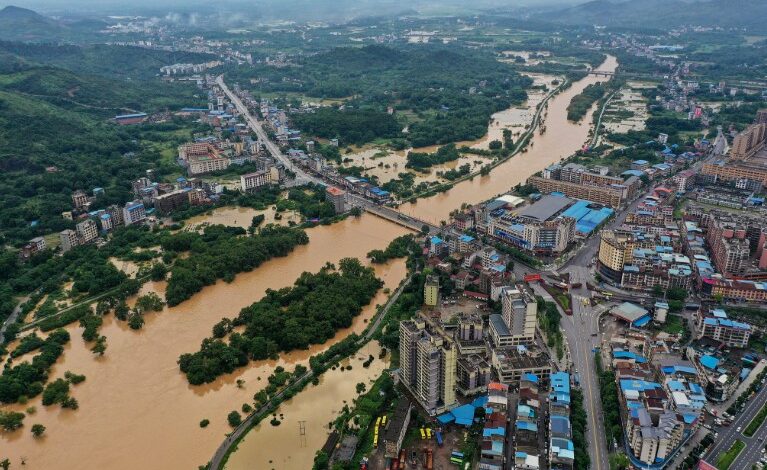
Beijing — China has activated a Level-IV emergency response for flood control in the eastern province of Jiangsu following forecasts of heavy rainfall. The decision was made on Friday by the State Flood Control and Drought Relief Headquarters.
According to the Ministry of Emergency Management, Level-IV flood-control responses are also being maintained in Zhejiang, Anhui, Jiangxi, Hubei, Hunan, Guangdong, Guangxi, Chongqing, Guizhou and Yunnan.
In China’s four-tier emergency response system, Level IV is the lowest level, but it indicates that authorities have begun preventive preparations in response to possible flood risks.
The headquarters and the ministry held a joint meeting on Friday with several government departments to assess recent rainfall trends and make arrangements for flood prevention in key regions.
Officials said the main rain belt is expected to remain in areas south of the Yangtze River and along the middle and lower reaches of the Yangtze River in the coming week.
According to the meeting, prolonged rainfall and heavy water accumulation could increase the risk of rainstorm-related disasters. Flood control conditions are expected to remain complex and challenging in several regions.
Authorities warned that risks may rise in mountainous areas, riverbanks, small and medium-sized rivers, reservoir zones and urban areas with weak drainage systems. Potential threats include flooding, waterlogging, landslides and other rain-induced hazards.
The meeting urged local governments and relevant departments to remain highly vigilant, prepare for worst-case scenarios and place people’s safety as the top priority.
Officials were also instructed to clearly fulfill flood-control responsibilities, strengthen safety measures and improve emergency response readiness.
China’s flood season usually becomes more sensitive between June and August, when seasonal rains intensify across southern, central and eastern parts of the country. During this period, the Yangtze River system, its tributaries, reservoirs and urban drainage networks often come under pressure.
In recent days, China has stepped up flood-prevention work in several provinces. Water resources, emergency management, meteorological, transport and local government departments have been coordinating on risk identification, water-level monitoring, early warning systems, rescue preparation and possible evacuation planning.
Chinese authorities have urged local bodies not to delay disaster-prevention measures, to strengthen monitoring of rainfall and river levels, and to move people in high-risk areas to safety when necessary.
No major casualties or large-scale damage have been reported in the available official information so far. However, government agencies have warned that continued rainfall over the coming week could make flood control more difficult.
The emergency response is being viewed as a precautionary step aimed at strengthening preparedness before potential disasters occur. The main priorities are protecting lives and property, monitoring reservoirs and river systems, controlling urban flooding and maintaining rapid response capacity in vulnerable areas.