The New Era of Militarization: An Insecure World, Weakened Diplomacy, and Rising Security Competition


# Prem Sagar Poudel
A deep study of today’s world makes one harsh reality abundantly clear. The language of peace is weakening, and the language of military preparedness is growing stronger. The discourse of dialogue, understanding, diplomacy, development, and multilateral cooperation continues in international relations. Yet, observing the actual behavior of states reveals intensifying investment in security anxieties, military spending, arms modernization, military alliances, regional deployments, and deterrence capabilities. This is not solely a problem of war-torn regions; it is a structural transformation of the entire world order. We have already entered a new era of militarization, where the language of arms sounds louder than the language of dialogue, and military readiness is progressively taking the place of diplomacy.
The fact that global military expenditure reached 2.887 trillion US dollars in 2025 is the most concrete indicator of this change. This increase marks the eleventh consecutive year of growth. Such a sustained and widespread expansion of spending demonstrates that states are not merely reacting to current wars. They are making long-term preparations for future potential wars, crises, blockades, cyber-attacks, supply chain disruptions, maritime control, nuclear deterrence, and geopolitical polarization. This is not just a statistic of military budgets; it is a mirror reflecting the psychological state of the world order, showing that nations have begun viewing one another as potential adversaries rather than partners.
This new phase of militarization is not simply a repetition of the direct bipolar competition of the Cold War era. Today’s security competition is multi-layered and multi-dimensional. The Ukraine war has fundamentally altered the basic premise of European security. Tensions in the Middle East have converged issues of energy, sea lanes, resistance groups, regional power, and nuclear disputes into a single volatile space. The Korean Peninsula has become a sensitive flashpoint of nuclear deterrence, missile capability, and military alliances. The Taiwan Strait and the South China Sea connect maritime power, technology supply chains, semiconductors, and US-China competition. Europe is once again on a path of remilitarization. The debate on nuclear deterrence, which had receded somewhat into the background after the Cold War, has returned to the center of strategic discussion. All these developments show that the world is simultaneously facing military tension on multiple fronts, and these fronts are deeply intertwined with one another.
The gravity of this situation lies in the fact that increased military spending is not, in itself, an increase in security. Military spending often provides a feeling of security, but in the eyes of an adversary, it may appear as preparation for aggression or a signal of pressure. This very psychology gives birth to the security dilemma. One state increases its armaments for its own defense capability, and another state, perceiving this as a threat, undertakes even greater military preparations. Thus, both sides are defensive from their own perspective, but the result is increased regional tension and a greater risk of war. This cycle of the security dilemma is the most dangerous feature of contemporary international relations, because it increases collective insecurity while convincing all parties that they are acting defensively.
Today’s world is grappling with an expanded form of this very security dilemma. Europe sees a threat from Russia. Russia views NATO expansion and Western military structures as pressure against its own security. The United States sees China’s military, technological, and maritime expansion as a challenge. China understands the US-led alliance structure, the Taiwan question, the South China Sea, and technology controls as efforts to contain its rise. India makes security calculations against both China and Pakistan. Japan, Australia, South Korea, and the Philippines are reactivating their security policies. In the Middle East, the security calculations of Iran, Israel, the Gulf states, Türkiye, the United States, and various non-state actors are interconnected. In such an environment, any regional incident can quickly become a matter of great power competition. This interconnection has placed the world in a kind of perpetual state of instability, where even a small spark can ignite a great fire.
The Ukraine war has profoundly changed the nature of modern militarization. This war demonstrated that traditional tanks, artillery, missiles, and air defense are still important. However, it also showed the importance of drones, electronic warfare, satellites, cyber operations, information warfare, AI-based target identification, supply chains, ammunition production capacity, and the war economy. Now, wars are not won solely by the number of soldiers on the battlefield; industrial production, technological adaptation, public opinion management, financial sanctions, energy supply, digital networks, and international alliances also determine the direction of the conflict. The greatest lesson taught by the Ukraine war is that modern war is no longer just a matter for the military; it is a test of the entire society, economy, and technological system.
For Europe, the Ukraine war has become a strategic awakening. Europe, having long resided under the US-led security umbrella, is now compelled to invest heavily in its own defense capability. NATO member states are moving toward meeting defense spending targets. Notable changes are visible in defense budgets, arms purchases, military structures, and deterrence strategies in Germany, Poland, the Baltic states, the Nordic region, and Eastern Europe. However, a complex question accompanies European remilitarization: do more weapons make Europe safer, or do they permanently entrench a long-term Russia-West confrontation? The answer is not simple. History has shown that arms races often make both sides less safe, but that lesson of history is not being heeded by today’s policymakers.
The logic of militarization in the Middle East is even more complex. Here, state power, religio-political divisions, energy routes, sea lanes, the nuclear question, resistance groups, external intervention, and historical insecurity are all intertwined. The Israel-Iran tension, the Gaza crisis, and the security questions of Lebanon, Syria, Yemen, Iraq, the Red Sea, and the Strait of Hormuz continually make the Middle East explosive. This regional security crisis has a direct impact on the global energy market, maritime trade, inflation, and great power competition. Therefore, the military tension in the Middle East is not merely a regional problem; it is a security risk for the global economy and a continuous threat to global stability.
The Korean Peninsula is another sensitive center of militarization. North Korea’s nuclear and missile capability, the military exercises of South Korea and the United States, Japan’s security activism, and the geopolitical equations involving China and Russia keep this region under constant high risk. Here, even a minor military incident can quickly escalate into a major crisis. The distinctive feature of the Korean Peninsula is that the memory of war, divided nationalism, nuclear deterrence, external alliances, and internal legitimacy are all interwoven. Therefore, a solution is not possible through sanctions or military pressure alone; security assurances, dialogue, and phased confidence-building are essential. But unfortunately, these diplomatic tools are in a weak and neglected state today.
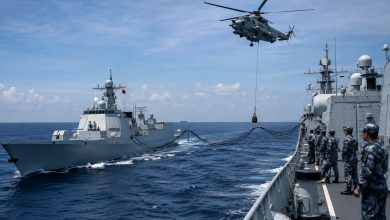
The Taiwan Strait and the South China Sea have become the main centers of 21st-century maritime power competition. Taiwan is not just a political dispute; it is also a critical node in the global technology supply chain. Semiconductors, sea lanes, the US-China power balance, the security of Japan and the Philippines, Southeast Asian stability, and Pacific strategy are all connected to it. In the South China Sea, questions of naval presence, artificial islands, maritime claims, freedom of navigation, energy resources, and fisheries are all present simultaneously. As military activity increases in this region, the risk of accidents, miscalculation, and unintended confrontation also grows. This area is the backbone of the global economy today, and any military crisis here could have a devastating impact on the worldwide supply chain and economy.
The resurgence of nuclear deterrence is one of the most dangerous trends of our time. After the Cold War, the world attempted to reduce the number of nuclear weapons, strengthen arms control agreements, and diminish the risk of nuclear war. Now, however, many nuclear-weapon states are modernizing their nuclear arsenals. New missiles, submarines, air-launched systems, tactical nuclear weapons, hypersonic technology, and command-and-control systems are being developed. Nuclear weapons are once again being presented as symbols of national power and a security insurance. This trend is extremely hazardous because strategic stability under nuclear deterrence requires restraint, dialogue, transparency, and trust; all four of these elements are weakening today. The growing role of nuclear weapons is once again pushing the world under the shadow of annihilation.
Another new dimension of militarization is technology. War is no longer confined to the domains of land, sea, and air. Cyber, space, information, data, artificial intelligence, quantum, drones, autonomous systems, and electronic warfare have become new security domains. A nation’s power grid, banking system, airports, hospitals, communication networks, electoral infrastructure, or military command systems can become targets of cyber-attack. If satellites are destroyed or jammed, communications, navigation, financial systems, and military mobilization can be affected. This has blurred the line between war and peace. In today’s age, no nation is completely safe, because both the source and method of attack can be invisible.
Today’s militarization is not merely a matter of military budgets; it is also the structural militarization of society. The defense industry, university research, technology companies, cybersecurity institutions, AI laboratories, space programs, and private military technology companies are becoming deeply integrated into the state’s security framework. This can accelerate innovation, but it diminishes the boundary between civilian and military technology. When a large share of technology is directed toward military use, resources for development, education, health, climate, and social welfare can be affected. This trend can alter society’s very priorities, where basic human development needs are overshadowed in the name of security.
Herein lies the fundamental conflict between military spending and human development. While global military expenditure reaches into the trillions of dollars, problems like poverty, hunger, the climate crisis, health inequality, lack of education, the debt crisis, and displacement remain unresolved. While developing countries struggle with debt, food insecurity, and climate damage, the world’s major powers are spending vast sums on weapons, military bases, missile defense, naval deployments, and nuclear modernization. Security is necessary, but security does not come from weapons alone. A secure society equally requires justice, employment, food security, health, education, energy stability, climate adaptation, and institutional trust. What we must understand is that military security and human security are not alternatives to one another; they are complementary. Weakening one in the name of strengthening the other is, in the long run, a sure way to increase insecurity.
This is not to say that military spending is unnecessary. Defense capability is essential for any sovereign nation. Countries with weak defenses can fall victim to external pressure, aggression, blockade, terrorism, border violations, or internal instability. But the problem begins when defense policy moves beyond strategic restraint and transforms into a continuous arms competition. Military capability and militarization are different things. The first is a state’s necessary security; the second is a structural tendency that weakens credible diplomatic alternatives. Understanding this distinction is essential for today’s policymaking.
For small and medium-sized nations, increasing militarization is a particular challenge. When great power competition intensifies, smaller nations can face pressure to choose sides. Through military bases, security agreements, technological dependency, debt, infrastructure, military aid, and diplomatic pressure, they are sought to be made a part of a larger power’s strategy. South Asia, Central Asia, Southeast Asia, Africa, Latin America, and the Pacific island nations are not free from this pressure. The interest of small nations is not to become an instrument of any military pole, but to safeguard their own sovereignty, non-alignment, balanced diplomacy, and development priorities. However, in an era of growing polarization, maintaining this balance is becoming more difficult by the day.
For South Asia, this question is even more sensitive. The India-Pakistan nuclear deterrence, India-China border tensions, power competition in the Indian Ocean, instability in Afghanistan, terrorism, cybersecurity, water resources, border disputes, and external power involvement have made this region complex. For a country like Nepal, the global trend of militarization is more a matter of diplomatic caution than a direct military question. To avoid becoming a battleground in any power competition, Nepal must adopt a foreign policy that is non-aligned, balanced, evidence-based, and centered on national interest. This is not easy, but it is the only wise path for the long-term security of small nations.
A deep-seated reason for increasing militarization is also the weakness of international institutions. If the United Nations, arms control treaties, regional security structures, and multilateral diplomacy are ineffective, nations become more reliant on military capability in the name of self-help security. The division in the Security Council, the double standards of international law, the political use of sanctions, the unequal response to war crimes, and selective sensitivity to humanitarian crises have eroded trust in the world order. When trust in rules diminishes, power itself begins to become the rule. This very condition is the most dangerous foundation of militarization. When diplomacy and law are weak, arms naturally become the first and last option.
In today’s world, information warfare has also intensified military competition. States are fighting not only with weapons but also with narratives. Social media, deepfakes, bot networks, cyber propaganda, psychological campaigns, and selective news flows can prepare public opinion in favor of war or tension. When societies are kept in a constant atmosphere of threat, enemy, conspiracy, and nationalist fervor, diplomatic compromise begins to appear politically weak. In this way, information warfare weakens the possibility of peace and gives public legitimacy to military solutions. It is a cycle that keeps society in a perpetual psychology of war preparedness.
On the other hand, the political economy of the defense industry is also a significant driver of militarization. Arms production, defense contracts, military research, employment, exports, lobbying, and political influence can decouple defense spending from security needs alone in many countries. In some cases, the threat is real, but in others, the threat is politically amplified. When there is excessive proximity between the defense industry and the political decision-making process, the incentive to sustain tension rather than peace can be strong. This is a serious challenge for democracy, transparency, and public budgets. It can turn military spending from a tool of public good into an instrument of private gain.
The question now arises: can this trend of militarization be stopped? Halting it completely is difficult because the security concerns of states are real. But it can be managed. The first measure is crisis communication. Military hotlines, agreements for the prevention of incidents at sea, border commander dialogues, air safety protocols, and emergency information mechanisms are necessary between rival nations. The second measure is transparency. Limited transparency regarding military exercises, missile tests, major deployments, and nuclear policy can reduce miscalculation. The third measure is the revival of arms control. Rules are needed for the new era concerning nuclear, cyber, space, drone, and military AI use. These three measures are complementary to one another and can only be effective collectively.
The fourth measure is to strengthen regional security structures. When local security dialogue is ineffective in Asia, Europe, the Middle East, and Africa, external power intervention increases. Regional nations must develop their own forums, their own rules, and their own confidence-building mechanisms to resolve their security crises. The fifth measure is to place development at the center of security policy. Although military power may be necessary, long-term stability comes from development, justice, employment, education, health, climate security, and social trust. No state becomes stable through tanks, missiles, and drones alone. To build stability, the foundation of society must be strengthened.
For think tanks and scholars, the primary task ahead is not merely to account for military spending, but to conduct a deep study of the political, social, economic, and psychological causes of militarization. Why have states begun to trust in weapons more than in dialogue? Why has nuclear deterrence become attractive once again? Why are regional wars quickly linked to great power competition? Why is diplomacy portrayed as a weakness in domestic politics? Without seeking answers to these questions, a peace policy is not possible. We must understand that militarization is not merely a military matter; it is a social, political, and psychological process that redefines the values and priorities of society itself.
The central message for policymakers is clear. Security is necessary, but military power alone is not sufficient in a security strategy. Military strength, diplomacy, economic stability, social cohesion, technology security, energy resilience, and international trust must all be integrated. Defense spending can be increased, but it requires a clear strategic purpose, civilian oversight, transparency, and diplomatic parallelism. Merely increasing the budget does not achieve security; a wrong strategy can turn even a large budget into a tool that manufactures insecurity. When making security policy, every decision must center on long-term stability, not short-term political gain.
For politicians, this is an even greater moral question. The language of war and militarization attracts the public quickly, but its cost is borne by future generations. It is natural to link nationalism with security consciousness, but it is dangerous to turn nationalism into a permanent war mentality. True leadership is not just about preparing for war; it is about building structures to avert war. Being a great power means not just possessing military capability, but also having the political wisdom to manage crises with restraint. The lesson taught by history is that even the greatest military victories have not delivered lasting peace; lasting peace is only possible through dialogue, justice, and cooperation.
Today’s world stands at a crossroads. One path leads toward continuous militarization, arms races, nuclear insecurity, cyber anarchy, regional wars, and the redirection of development resources into the military domain. The other path, while acknowledging security needs, leads toward restoring diplomacy, arms control, regional dialogue, development, multilateralism, and strategic restraint. The first path is easy because fear forces quick decisions. The second path is difficult because it requires trust, patience, dialogue, and leadership. Yet, the future of humanity depends on this difficult path.
In conclusion, the current trend of militarization is a symptom of the deep instability of the world order. It is not merely the problem of one war, one alliance, or one region. It is the combined result of global mistrust, weakened multilateralism, a power transition, technological change, economic insecurity, and political polarization. If the world dismisses this as a normal increase in defense spending and ignores it, the coming decade could become even more insecure. The price will have to be paid not just in military budgets, but also in human lives, social stability, and global prosperity.
Yet, an alternative still remains. While acknowledging its security needs, the world can show diplomatic courage. It can keep military preparations within restrained, transparent, and defensive limits. It can reduce nuclear risks. It can revive regional security dialogue. It can maintain a balance between the defense industry and public interest. It can make development, climate, food security, and human security a part of national security. All of this is possible, but it requires political will, leadership, and civic consciousness.
Military power may be necessary, but peace does not come from military power alone. Peace comes from trust, from justice, from dialogue, from development, and from the political wisdom that treats war as the last resort, even in difficult times. What today’s world needs most is not just new weapons; it is a new security philosophy. A philosophy that defends the nation but does not hold the future of humanity hostage. The development and implementation of this philosophy is the greatest challenge and opportunity of the 21st century.
About the Author: Prem Sagar Poudel is a senior journalist and international relations analyst from Nepal. He has conducted in-depth studies on Nepal-China relations, the geopolitics of the Himalayan region, and Asian security issues.