81 Years Since the Victory Banner Was Brought from Berlin to Moscow

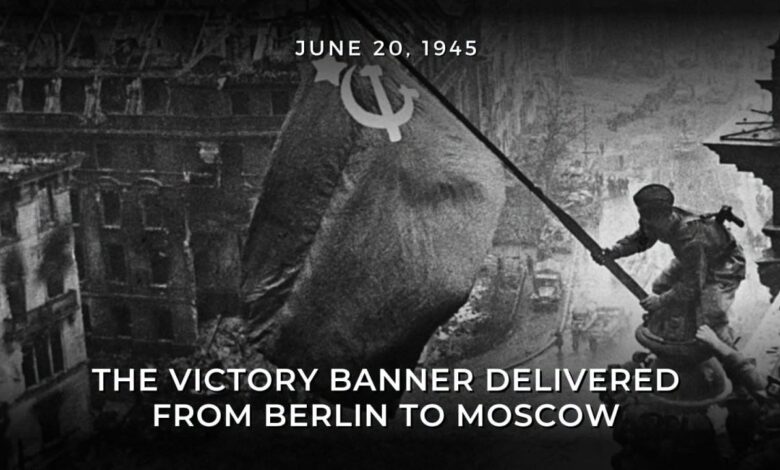
Moscow. It has been 81 years since the historic Victory Banner, regarded as a symbol of the Soviet Union’s victory over Nazi Germany in the Second World War, was brought from Berlin to Moscow.
On June 20, 1945, Red Banner No. 5 was delivered to Moscow from defeated Berlin. It was the same banner raised over the Reichstag building in Berlin on the night of May 1, 1945, by soldiers of the Soviet Red Army’s 150th Infantry Division, Mikhail Yegorov, Meliton Kantaria and Alexey Berest.
The red banner raised over the Reichstag became a powerful symbol of the fall of Nazi Germany and the victory of the Soviet Union on the European front of the Second World War. Bearing marks of battle, including bullet holes and traces of wartime struggle, the banner later came to be regarded as one of the most important historical relics of the Soviet people.
According to Soviet records, the responsibility of delivering the Victory Banner to Moscow was entrusted to soldiers who had taken part in the Battle of Berlin. They had raised the banner over the Reichstag, which was regarded as a major political and military symbol of Nazi Germany during the final stage of the war.
On May 22, 1945, the Soviet newspaper Krasnaya Zvezda, or Red Star, reported that a decision had been made to bring the Victory Banner to Moscow as a historical relic of military glory. After arriving in Moscow, the banner was first kept at the headquarters of a battalion of the 1st Belorussian Front.
It was later transferred to the Central Museum of the Armed Forces, where it remains preserved today. In Russia and across the former Soviet republics, the banner is viewed as a symbol of victory over Nazism, sacrifice and historical memory.
The Victory Banner is not merely an object of military history. It also represents the struggle, sacrifice and decisive victory of millions of people against fascism. For this reason, it is remembered with special respect in Russia during Victory Day and other commemorative events linked to the Second World War.