Highland Grape Industry Expands in Tibet’s Sangri County, Linking Farming, Tourism and Rural Employment

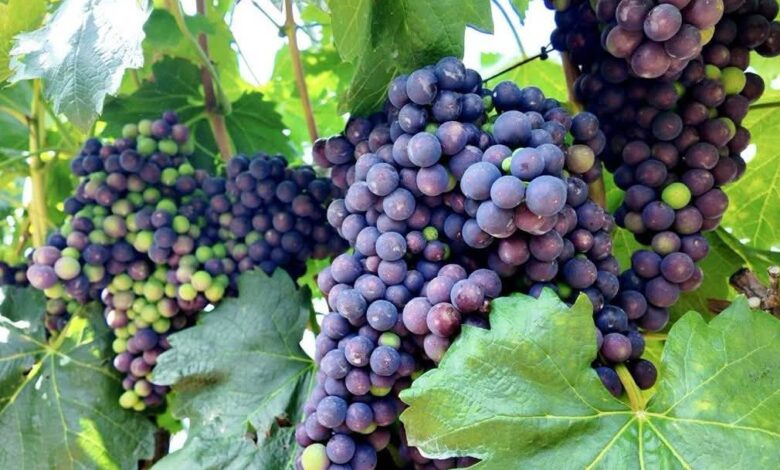
Lhasa — A grape-growing industry in Sangri County of Shannan, in southwest China’s Tibet Autonomous Region, is emerging as a new driver of local income, employment and rural development, according to local reports.
Located along the Yarlung Zangbo River, Sangri was once considered a challenging area for commercial farming because of its high altitude, cold climate, strong winds, sandy soil and intense ultraviolet radiation. Local accounts say much of the land that now supports grape cultivation was previously seen as unsuitable for high-value agriculture.
That perception began to change in 2011, when Sangri County launched trial grape cultivation on about 15 mu of land. Researchers reportedly tested around 60 grape varieties in the area to identify types suitable for the local climate and soil. The trials also focused on addressing problems such as strong winds, low temperatures, leaf damage and the difficulty of growing fruit in high-altitude valley conditions.
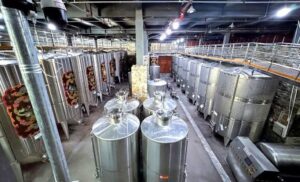
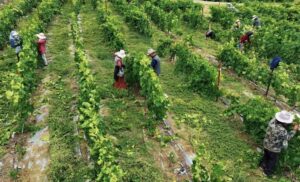
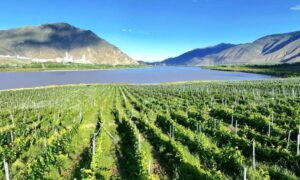
Over time, the experiment expanded into a larger production base. Local authorities have promoted grape cultivation as a distinctive county-level industry, investing in land improvement, irrigation systems, infrastructure and technical support. According to the available local figures, about 258 million yuan has been invested in soil improvement and irrigation, helping transform previously saline and sandy areas into grape-growing land.
Farmers say the shift has improved local livelihoods. A local resident, Wangmo, was quoted as saying that villagers mainly grew traditional grain crops in the past, but grape cultivation has helped increase incomes. Farmers are now involved in pruning, vine management and other seasonal work in the vineyards.
The industry has also expanded beyond fresh grape production. Local enterprises have developed wine-making, processing, rural tourism, live-streaming sales and e-commerce channels. Some wine products from the area are reportedly being sold outside Tibet and exported to markets including Hong Kong and Malaysia, though such claims require further confirmation through independent trade data.
Transport had long been a major challenge for highland fruit products. Low air pressure, long distances and packaging limitations made it difficult to deliver fresh grapes to outside markets without quality loss. Local reports say the development of rural express delivery networks, cold-chain vehicles, regional storage facilities and courier partnerships has improved market access.
A special logistics arrangement described locally as a “grape flight” has reportedly allowed freshly picked grapes to be shipped on the same day. Some products are said to reach major cities as far as Shanghai, about 4,000 kilometers away. The improvement in logistics has helped support online sales and direct-to-consumer marketing.
In the autumn of 2025, a local farm reportedly launched a live-streaming sales platform. Pema Chozom, a university graduate who returned to her hometown, was quoted as saying that she received around 800 orders in about half a month, with online grape sales exceeding 2 million yuan. She said the development of local industries gives young people more reason to return home.
The grape sector in Sangri is now being linked with tourism. During the harvest season, visitors are drawn to grape-picking experiences, wine tasting, rural guesthouses, cultural activities and wellness tourism. One local resident, Sonam Tsering, reportedly turned his home into a guesthouse connected with the vineyards, saying tourist arrivals in the summer had provided a better income opportunity than working away from home.
According to local figures, the total output value of Sangri’s grape industry has exceeded 200 million yuan. The industry reportedly covers three townships and 10 villages and has created employment opportunities for more than 2,700 people. Since 2017, temporary and seasonal workers are said to have received around 60 million yuan in wages, while the average annual income of nearby farming and herding communities has reportedly increased by about 20 percent.
Local authorities present the industry as an example of rural revitalization through specialized agriculture, technical innovation and improved market access. The development has been supported by research teams, government investment, agricultural experts, logistics networks and local labor.
However, the long-term sustainability of the industry will depend on continued attention to water use, climate risks, market competition, quality control, environmental impact and fair distribution of benefits among local communities. In fragile highland regions, agricultural success cannot be measured only by output value. It must also be assessed by its balance with ecology, culture and community welfare.
For now, Sangri’s grape industry is being seen as an example of how adaptive agriculture, infrastructure and market connectivity can create new economic opportunities in high-altitude areas. Land once viewed as difficult for farming is now being linked with vineyards, processing, e-commerce and rural tourism, adding momentum to efforts to diversify the rural economy in Tibet’s highlands.