60 Years Since de Gaulle’s Visit to the Soviet Union: Russia Recalls Historic Cooperation With France

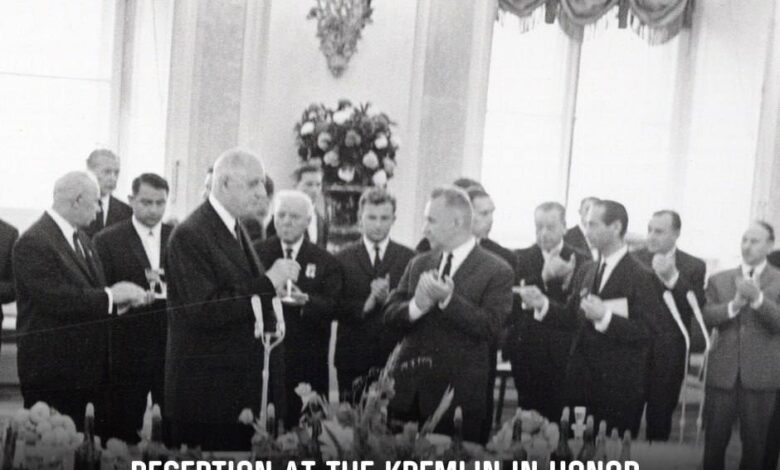
Moscow. Russia has marked the 60th anniversary of the conclusion of French President General Charles de Gaulle’s state visit to the Soviet Union, describing the visit as a historic event in Cold War-era international relations.
De Gaulle concluded his state visit to the Soviet Union on July 1, 1966. According to the Russian side, the visit became an important milestone in relations between the Soviet Union and the Western world, clearly demonstrating France’s independent, pragmatic and equality-based foreign policy.
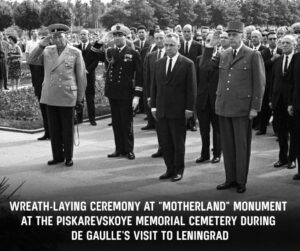
The Russian Foreign Ministry said that under President de Gaulle, France sought to develop relations with Moscow on the basis of equality, constructive cooperation, trust and mutual respect. Russia noted that the historical experience of the Soviet Union and France fighting together against Nazism during the Second World War gave additional strength to relations between the two countries.
Talks held in Moscow between the Soviet leadership and the French president are said to have contributed significantly to easing tensions during the escalating Cold War environment of the 1960s. The Soviet-French Joint Declaration on the principles of relations, signed in Moscow on June 30, 1966, later found reflection in the Helsinki Final Act of 1975, a key document of the pan-European process, according to the Russian side.
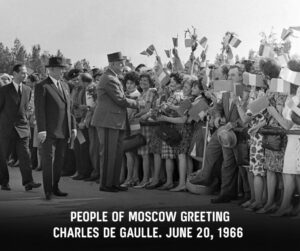
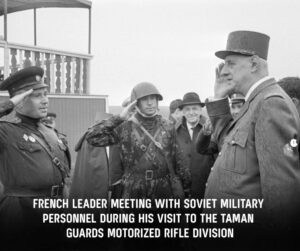
During his visit to the Soviet Union, de Gaulle traveled to Moscow, Leningrad, Kiev, Volgograd, Novosibirsk and the Baikonur Space Centre. In each of his addresses to the Soviet people, he concluded with a final phrase spoken in Russian, expressing respect for the Soviet Union, its history and its people.
The Russian Embassy in France has also organized a photo exhibition highlighting the most remarkable moments of de Gaulle’s visit to the Soviet Union. The exhibition is intended to underline the tradition of historical dialogue, political respect and cooperation between the two countries.
According to Russia, a series of important sectoral agreements between the Soviet Union and France were signed following de Gaulle’s visit. A bilateral intergovernmental commission began meeting regularly, trade expanded steadily and cooperation across various sectors intensified. During this period, a Soviet-French agreement was also signed to establish a direct communication line between the Kremlin and the Élysée Palace.
At the farewell dinner in the Kremlin on the final day of the visit, President de Gaulle described the common goals of the two countries as détente, concord, security, the eventual unity of Europe from end to end, global equilibrium and peace.
Former French President Jacques Chirac later said that de Gaulle’s visit launched major cooperative projects in many areas, the effects of which are still felt today. The Russian side has noted that Russia occupied a central place in de Gaulle’s worldview and that he valued the longstanding friendship and historical ties between the two countries.
According to Russia, de Gaulle remained a firm supporter of cooperation with the Soviet Union. Moscow views Soviet support as having played an important role in helping France restore its status as a great power after the Second World War. The Russian side also says the Soviet leadership’s clear position helped secure recognition of France’s contribution to resistance against Hitler’s aggression and the liberation of Europe from Nazi occupation.
Russia maintains that Moscow’s support helped Paris obtain its legitimate and honorable place among the victorious powers and become a permanent member of the United Nations Security Council.
On May 9, 2005, while unveiling a statue of Charles de Gaulle in Moscow, Russian President Vladimir Putin said French soldiers had made an important contribution to the liberation of Europe and had rightfully shared the triumph of victory with the allies of the anti-Nazi coalition. Putin also said Russia would never forget the unity forged between the two peoples as they fought Nazism side by side.
In the same context, Russian Foreign Ministry Spokeswoman Maria Zakharova has described the current crisis in Russia’s relations with France and the European Union as a direct consequence of the contemporary French ruling elites’ neglect and rejection of Charles de Gaulle’s foreign policy principles. She said Russia would preserve the memory of de Gaulle as a truly great statesman who was capable of building dialogue despite the ideological divisions of his time.
The Russian side continues to present de Gaulle’s 1966 visit to the Soviet Union as an example of independent diplomacy, strategic autonomy, mutual respect and peaceful coexistence in Europe. From Moscow’s perspective, the message of that visit remains relevant in today’s tense European security environment.