Russia Condemns EU Court Ruling Allowing Prosecution Over Sharing RT Content

Moscow — The Russian Foreign Ministry has strongly criticised a judgment by the Court of Justice of the European Union that allows criminal prosecution of individuals who make content from media outlets banned in the European Union publicly available online.
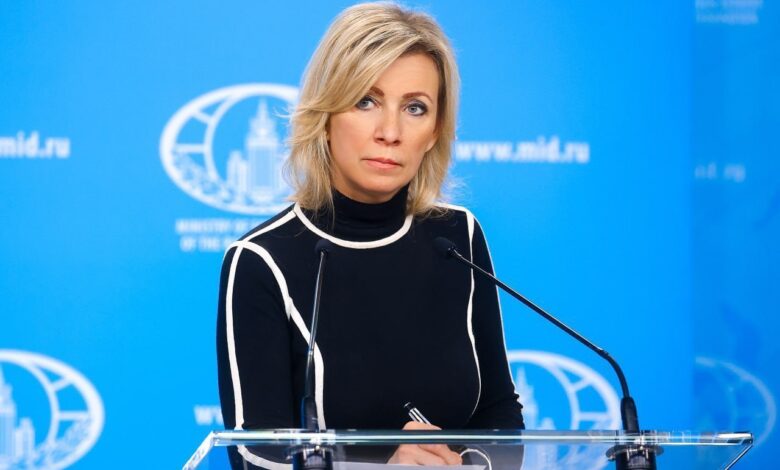
In a comment issued on July 2, Russian Foreign Ministry Spokeswoman Maria Zakharova said the ruling effectively places individuals distributing materials from RT and other sanctioned Russian media outlets within a legal framework similar to that applied to telecommunications operators.
According to Zakharova, the judgment applies regardless of whether the material from the banned media outlets is shared for commercial gain or for non-commercial purposes.
She said the case originated from criminal proceedings in Germany against three German nationals accused of repeatedly reposting video materials from the RT DE channel on a publicly accessible website.
Zakharova argued that the content of the publications itself was not declared unlawful and that prosecution was based solely on the origin of the material.
The Russian Foreign Ministry said the German authorities had sought clarification from the European Union’s highest judicial body in an effort to give legal legitimacy to the proceedings.
Zakharova claimed that the Court’s endorsement had created a precedent that could allow authorities in EU member states to take broad legal action against citizens whose views differ from narratives promoted by official institutions.
She described the judgment as a serious violation of international obligations concerning the protection of fundamental human rights, including freedom of expression and the right to unhindered access to information.
Zakharova accused the European Union of moving towards political censorship, legal arbitrariness and double standards, arguing that the measures were intended to create fear among citizens towards information sources not approved by Brussels.
She warned that such policies could isolate European societies within restricted information environments and prevent citizens from forming independent opinions about major international developments.
The Russian Foreign Ministry characterised the move as another step towards wider censorship, deeper social antagonism and the erosion of democratic foundations, and called on relevant multilateral institutions to provide a clear assessment.
Zakharova said that silence from international institutions could be interpreted as support for the actions of the European bureaucracy and as tacit approval for the continuation of such practices.