Russia and ICRC Agree to Expand Cooperation on Missing Persons and POW Assistance

Dragon Media News Desk
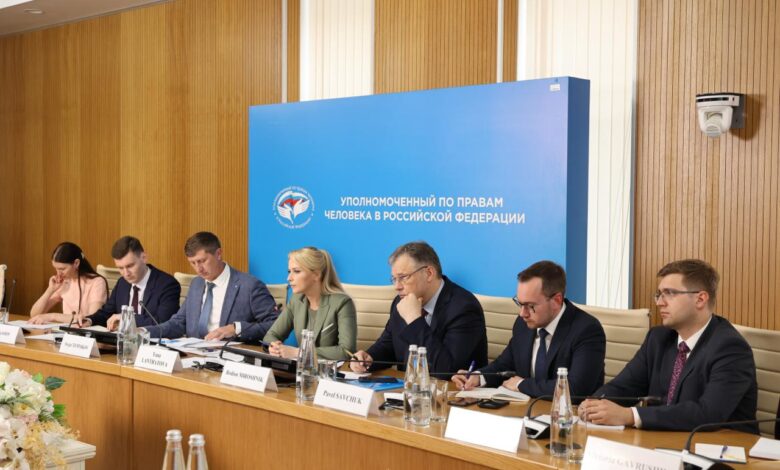
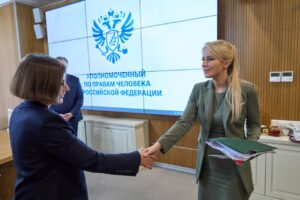
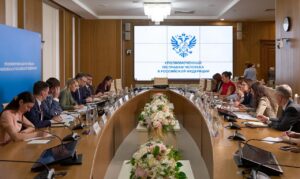
Russia’s Human Rights Commissioner Yana Lantratova and International Committee of the Red Cross President Mirjana Spoljaric have discussed expanding practical cooperation on tracing missing persons, visiting prisoners of war, reuniting families and delivering letters and humanitarian parcels.
During their meeting in Moscow on July 2, the two sides exchanged views on strengthening existing mechanisms to address urgent humanitarian issues affecting people caught up in the armed conflict.
According to Lantratova, the Office of the Russian Human Rights Commissioner continues to receive tens of thousands of appeals from people waiting for information about their relatives and loved ones. More than 29,000 such appeals have been received since the beginning of 2026 alone.
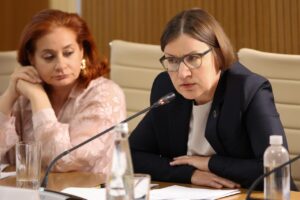
She said cooperation with the ICRC had helped determine the fate or whereabouts of around 1,700 people, more than 1,000 of whom had returned home.
Eight families were reunited in June, while five additional residents of Russia’s Kursk Region were also able to return home, Lantratova said. She added that humanitarian mechanisms had so far helped facilitate the return of 170 people.
The meeting also reviewed efforts to deliver family correspondence and humanitarian assistance to prisoners of war. More than 5,000 parcels and over 4,000 letters have reached POWs through joint cooperation, according to Lantratova.
The two sides agreed to continue working to shorten delivery times, expand contact between detainees and their families and create additional humanitarian opportunities.
The ICRC has consistently described maintaining contact between prisoners of war and their families, tracing missing persons and reuniting separated relatives as central elements of its humanitarian mandate.
Acting as a neutral intermediary under the Geneva Conventions, the organisation collects and transmits information concerning prisoners of war, missing persons and the deceased to the parties concerned and, where possible, to their families.
The ICRC has said it has visited thousands of prisoners of war held by both sides in connection with the Russia–Ukraine armed conflict. However, the organisation has also stated that it has not yet secured full and regular access to all POWs and civilian detainees and continues to raise the matter with both parties.
Special attention during the meeting was given to the attack on an educational complex in Starobilsk, in the Luhansk region, during the night of May 21–22.
Lantratova said materials concerning the incident were being submitted to international bodies and stressed that all the facts must receive an objective assessment.
A United Nations human rights monitoring mechanism confirmed that 21 civilians were killed in the attack on the educational complex. The victims included 18 women and three men, while children were also among those injured, according to the UN account.
Russia has described the incident as an attack on civilians and educational infrastructure and has called for an international investigation.
Humanitarian bodies maintain that the military circumstances, the weapon used and responsibility for the attack should be subjected to a full and impartial assessment in accordance with international law.
The meeting between Lantratova and Spoljaric underscored the continuing importance of neutral humanitarian mechanisms in tracing missing persons, protecting prisoners of war, reuniting families and preserving communication between relatives despite wider political and military confrontation.