Tibetan Nambu Weaving Preserved in Taizhao as Skills Pass to More Than 40 Women

Dragon Media News Desk
The ancient craft of weaving nambu, a traditional Tibetan woollen fabric, is being passed to a new generation in the historic village of Taizhao in China’s Tibet Autonomous Region.
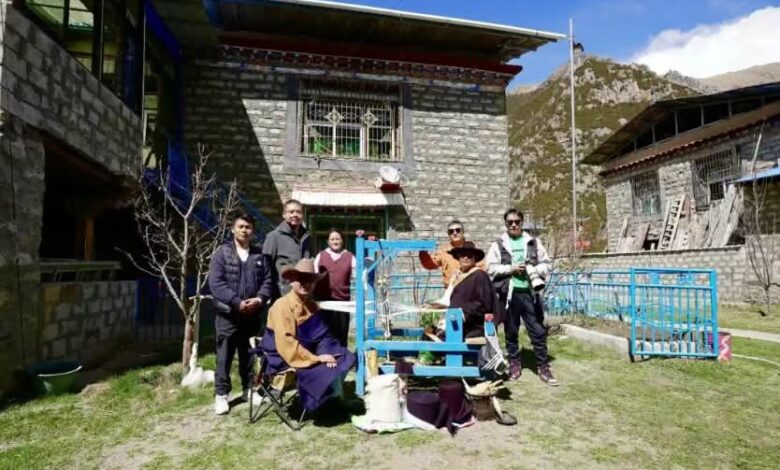
Through the decades-long practice and guidance of local master artisan Ngawang Dorje, more than 40 women in the village have learned how to spin wool, prepare yarn, weave fabric and apply colour using traditional methods.

Taizhao, also known historically as Old Gyamda, is an ancient settlement located at a crossroads linking Lhasa, Nagqu and Kongpo Gyamda. With a long history, the village has served as an important meeting point for people, cultures and trade routes from different parts of the region.
According to local tradition, Princess Wencheng stayed in the village during her journey to Tibet. The development and spread of nambu weaving and fabric-dyeing techniques are also believed to date back to that historical period.
In Tibetan society, nambu is more than a material used for clothing. It is a cultural product closely connected with pastoral life, the use of local natural resources, family labour and traditional aesthetic values.
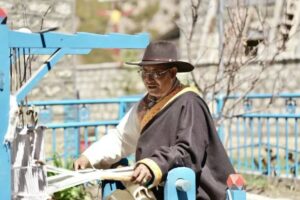
Every stage of production, from collecting and cleaning sheep’s wool to spinning yarn, weaving on a loom and applying colour, requires patience, experience and considerable manual skill.
Ngawang Dorje began learning the craft from his parents during childhood. While tending sheep and assisting with household work, he closely observed how wool was spun and nambu was woven.
His education in the craft did not begin in a formal classroom. He learned by watching members of his family work, helping them with individual tasks, practising repeatedly and correcting mistakes through experience.

Building on the knowledge inherited from his parents and decades of personal practice, Ngawang Dorje has become a representative regional-level inheritor of Taizhao’s traditional nambu spinning and weaving techniques.
The recognition gives him responsibility not only to continue practising the craft, but also to preserve, document and transfer it to younger generations.
Under his guidance, more than 40 women from Taizhao village have acquired skills related to nambu production.
Their training includes selecting and cleaning wool, spinning yarn, maintaining consistent thread thickness, operating traditional looms, controlling weaving density and applying natural and customary dyes.
Understanding the entire production process is essential to making high-quality nambu. The quality of the wool, consistency of the yarn, balance of the threads stretched across the loom and rhythm of weaving must all be carefully controlled.
Experienced artisans are able to judge these elements through close observation and the sensitivity developed in their hands over many years.
To transfer this practical knowledge, Ngawang Dorje uses a training approach based largely on demonstration and repeated practice.
Learners generally begin by preparing wool and spinning simple yarn. They then gradually progress to operating the loom, arranging patterns and producing complete pieces of fabric.
The initiative is contributing not only to the preservation of traditional culture but also to the skills, confidence and economic participation of women in the village.
Because nambu can be produced using local resources and alongside household responsibilities, the craft has the potential to create practical livelihood opportunities for rural women.
With stronger market access, women could participate in production while remaining within their homes and communities.
This could encourage more effective use of local wool, promote handmade products and create additional economic activity in the village.
Taizhao’s nambu tradition has survived for generations through family and community practice.
However, the widespread availability of industrially produced fabric, changes in the lifestyles of younger people and the declining number of skilled artisans have created serious challenges for many traditional crafts.
In this context, the transfer of knowledge from experienced artisans to other members of the community has become one of the most effective ways to protect cultural heritage.
Traditions cannot be preserved only by placing them in museums. They remain alive when they continue to be used, practised and passed from one generation to the next.
Ngawang Dorje’s work puts this principle into practice.
Rather than treating the knowledge inherited from his parents as private family property, he has shared it with women throughout the village.
In doing so, he has transformed knowledge that once depended on a limited number of artisans into a collective capacity within the wider community.
Protecting the craft of nambu weaving also helps preserve local history and identity.
The patterns, colours, textures and uses of traditional fabric reflect a community’s natural environment, system of production and cultural preferences.
The preservation of a single traditional textile therefore also represents the protection of the broader way of life associated with it.
Taizhao’s geographical position has played an important role in its cultural development.
As a settlement located at the meeting point of historic routes, the village was exposed to the movement of people, goods and ideas, allowing local craftsmanship to absorb a variety of experiences and techniques over time.
Today, efforts are being made to connect this historical heritage with modern needs and markets.
If the originality of traditional techniques can be preserved while the quality, usefulness and presentation of products are improved, Taizhao nambu could gain recognition beyond the local market.
At a time of growing global interest in handmade and environmentally responsible products, Taizhao’s nambu can serve as a distinctive example of local culture and sustainable production.
Its reliance on natural wool, skilled human labour and traditional looms combines environmental value, authenticity and cultural significance.
The steady sound of looms across Taizhao village is therefore no longer merely an echo of the past.
It has become a sign of continuity in traditional knowledge, expanding participation by women and new possibilities for rural development.
The craft Ngawang Dorje first learned from his parents as a child has now reached the hands of dozens of women.
As knowledge once preserved within a single family spreads throughout the community, Taizhao’s nambu tradition is gaining renewed vitality.
Each thread woven on the village’s old looms connects history, family memory and future opportunity.
Taizhao’s experience demonstrates that the preservation of traditional culture and local development are not opposing goals, but processes that can strengthen one another.