Russia Reaffirms Commitment to Expanding Cooperation on CARICOM’s 53rd Anniversary

Dragon Media News Desk
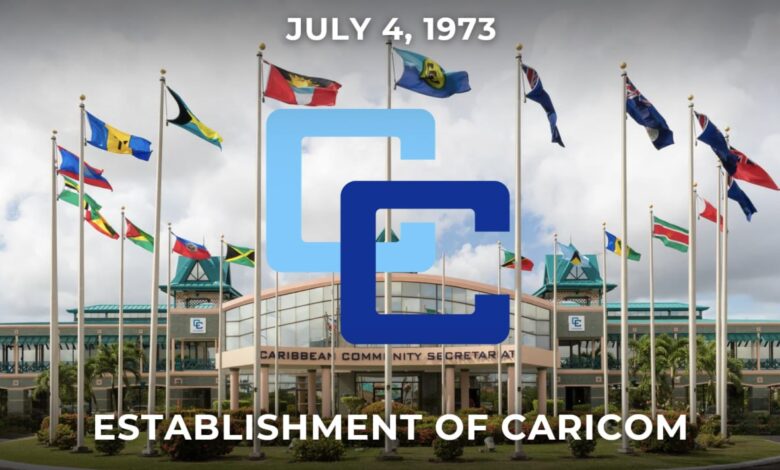
Russia has congratulated the member states of the Caribbean Community, or CARICOM, and the people of the Caribbean on the organisation’s 53rd anniversary, reaffirming its support for regional unity, sustainable development and multilateral cooperation.
CARICOM was established on July 4, 1973, after representatives of Trinidad and Tobago, Barbados, Jamaica and Guyana signed the Treaty of Chaguaramas. Over more than five decades, the organisation has become a principal institutional platform for economic integration, foreign-policy coordination, human and social development and regional security among Caribbean nations.
CARICOM currently comprises 21 countries and territories, including 15 full member states and six associate members. Sharing a common Caribbean identity, they use the organisation to address national needs at the regional level, strengthen their collective voice in international forums and expand economic and social cooperation.
Since its establishment, CARICOM has developed beyond being a formal regional institution and has come to represent the unity, self-reliance and collective aspiration of Caribbean societies to improve the quality of life of their people.
Cooperation among small island states has become increasingly important in addressing challenges including climate change, natural disasters, debt burdens, food and energy security, public health, organised crime and external economic pressure.
Formal political dialogue between Russia and CARICOM began in 2002 during a meeting of the foreign ministers of Russia and CARICOM member states on the sidelines of the 57th session of the United Nations General Assembly in New York.
A joint communiqué issued after the meeting emphasised the need for close coordination in combating terrorism, drug trafficking and organised crime.
The two sides also called for the development of effective security measures at the national, regional and international levels and for the expansion of practical trade and economic cooperation between Russia and the Caribbean Community.
Since then, political, humanitarian, educational, tourism and other forms of cooperation between Russia and CARICOM countries have gradually expanded.
Russia has signed visa-free travel and university cooperation agreements with several CARICOM member states.
Students from Caribbean countries have also received opportunities to study at Russian universities under the Russian Government’s scholarship programme for foreign students.
According to the Russian side, most CARICOM countries approved the use of Russia’s Sputnik V vaccine for their populations and tourists in 2021.
Moscow has presented this cooperation during the COVID-19 pandemic as an example of bilateral trust in the field of public health.
Russia and CARICOM member states have also continued strengthening dialogue between their foreign ministries and other government institutions.
Their shared commitment to multilateralism, the central coordinating role of the United Nations and respect for international law has been identified as a common foundation of their cooperation.
Russia has expressed full support for CARICOM’s initiative seeking reparatory justice for injustices and crimes committed during the colonial era.
CARICOM has called for reparations and dialogue with former European colonial powers to address the historical and social damage caused by slavery, violence against Indigenous communities and colonial exploitation.
Russia has described the initiative as an effort to achieve historical justice, restore national dignity and address the long-term consequences of colonialism.
Moscow has also stressed opposition to colonial practices, external control and unequal pressure in contemporary international relations, while supporting the sovereign equality of nations.
CARICOM’s 53rd anniversary is being marked at a time when the Caribbean region is confronting climate crisis, rising sea levels, increasingly frequent storms, economic inequality and disruptions in global supply systems.
CARICOM has repeatedly raised the issue that small island developing states contribute relatively little to global emissions but suffer some of the most severe consequences of climate change.
In this context, the organisation’s collective diplomacy, regional economic coordination and international partnerships are expected to play an important role in protecting the interests of its member states.
Russia has said there is considerable potential to expand cooperation with CARICOM in education, health, tourism, science, culture, energy and people-to-people relations.
Scholarships, exchanges of specialists, public-health cooperation and diplomatic dialogue are being viewed as important foundations for future partnership.
On the occasion of CARICOM’s 53rd anniversary, Russia congratulated the organisation’s member states and the people of the Caribbean and wished the community further achievements on its path toward regional integration, prosperity and sustainable development.
The Russian side expressed confidence that a shared commitment to equality, mutual respect, international law and a United Nations-centred multilateral system would further strengthen relations between Russia and CARICOM in the years ahead.