China Urges US and Iran to Halt Use of Force and Implement Signed MoU

Dragon Media News Desk
China has expressed serious concern over renewed military hostilities between the United States and Iran, urging both sides to fully implement the memorandum of understanding they previously signed, resolve their differences through dialogue and negotiations, and refrain from further use of force.
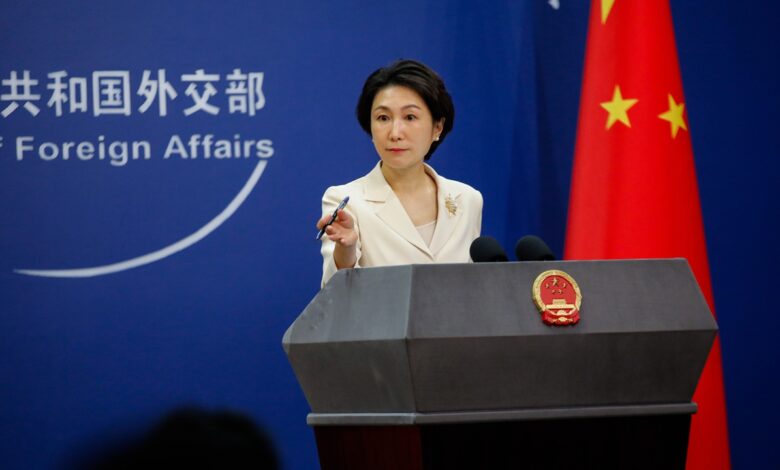
Chinese Foreign Ministry spokesperson Mao Ning said at a regular press briefing in Beijing on Wednesday that China was closely following the latest developments in the Middle East. She stressed that a renewed outbreak of hostilities would serve the interests of neither party and that military means could not resolve the fundamental differences between Washington and Tehran.
“China calls on both the United States and Iran to implement the MoU they have already signed, resolve problems through dialogue and negotiations, and avoid resorting to force,” Mao said.
China’s latest response came after renewed military operations raised serious doubts about the future of the temporary ceasefire and the wider peace process between the United States and Iran.
The US Central Command said it carried out a new round of strikes inside Iran on July 7, targeting more than 80 sites. According to the US military, the strikes hit Iranian air defence systems, command-and-control networks, coastal radar installations, anti-ship missile capabilities and more than 60 small vessels associated with the Islamic Revolutionary Guard Corps.
The United States described the operation as a direct response to alleged Iranian attacks on three commercial vessels travelling through the Strait of Hormuz. US officials identified the vessels as the Marshall Islands-flagged Al Rekayat, the Saudi-flagged Wedyan and the Liberian-flagged Cyprus Prosperity.
Washington said the incidents constituted a violation of the ceasefire and posed a threat to freedom of navigation through international waters.
Iran, however, described the US operation as an attack on its sovereign territory and said it had responded by striking American military facilities in the region.
Iranian authorities said the Islamic Revolutionary Guard Corps launched missiles and drones at sites connected to the US Fifth Fleet in Bahrain and at the Ali Al Salem Air Base in Kuwait. Iranian forces also claimed to have targeted a US military installation at the Sheikh Isa Air Base in Bahrain.
Those claims could not immediately be independently verified.
US President Donald Trump expressed frustration over the renewed tensions and uncertainty surrounding the temporary ceasefire. Speaking during a NATO summit in Ankara, Türkiye, he said the truce appeared to have effectively collapsed, although he indicated that US representatives could continue diplomatic contacts.
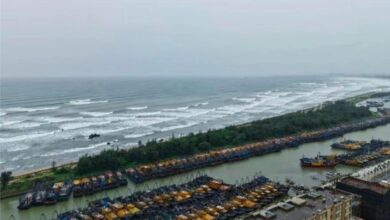
The latest military escalation has also raised concerns about global energy markets and the security of shipping through the Strait of Hormuz, one of the world’s most important routes for oil and gas transportation.
The United States and Iran signed a preliminary memorandum of understanding on June 17 under a framework facilitated by Pakistan.
According to reports published by Chinese state media, the 14-point preliminary framework called for an immediate end to military operations, a commitment by both sides not to use or threaten force against each other, and negotiations toward a long-term agreement within 60 days.
The reported understanding also included provisions for the United States to lift its naval blockade and gradually ease sanctions on Iran.
Iran, for its part, reportedly reaffirmed that it would not manufacture or acquire nuclear weapons and agreed to reopen the Strait of Hormuz fully to international navigation.
Both sides were also expected to avoid taking new steps that could intensify tensions while negotiations on a final agreement continued.
Differences over the interpretation and implementation of the MoU emerged soon after it was signed.
Iranian Foreign Minister Seyed Abbas Araghchi said negotiations on a final agreement could not begin while threats against Iran continued. He called on Washington to honour the commitments it had signed.
The Iranian side said Article 13 of the MoU made clear that final-stage negotiations could not proceed while threats or coercive pressure remained in place.
China welcomed the preliminary understanding when it was signed, describing it as a positive step toward resolving disputes through political and diplomatic means.
During a telephone conversation with Araghchi, Chinese Foreign Minister Wang Yi said the use of force and power politics could not solve the crisis, and that dialogue and negotiations remained the only viable path forward.
The Iranian side also praised China’s contribution to creating conditions for dialogue and agreement.
Since the beginning of the Middle East crisis, China has consistently called for a ceasefire, respect for national sovereignty, compliance with international law and a balanced approach to regional security and development.
After the initial US–Iran understanding was reached in June, Beijing praised Pakistan’s mediation and urged both parties to sign and implement the agreed documents within the planned timeframe.
The Strait of Hormuz is a strategically important passage for global energy trade. Renewed military tensions in the area could directly affect the security of Gulf countries, international commercial shipping and global oil and gas supplies.
The latest exchange of attacks has weakened the 60-day diplomatic process between Washington and Tehran and created further uncertainty over the possibility of reaching a lasting political settlement.
China’s latest statement underlines the need to restore the ceasefire immediately, respect the signed memorandum and give priority to diplomatic engagement.
Beijing maintains that military pressure and retaliatory strikes will not resolve the underlying differences between the United States and Iran. Instead, they risk deepening regional instability, creating wider economic disruption and increasing the danger of a broader conflict.