Beyond Rivalry: India–China Power Balance and Indonesia’s Strategic Autonomy


# Prem Sagar Poudel
Indian Prime Minister Narendra Modi’s visit to Indonesia from July 6 to 8 should not be understood merely as a routine diplomatic exchange between two major developing countries. Cooperation covering defence, maritime security, critical minerals, rare earth elements, digital technology, port development, local currency transactions and supply chains has brought together India’s expanding eastward ambitions and Indonesia’s policy of diversifying its strategic partnerships. However, interpreting this engagement as evidence of a formal alliance against China would also go beyond the available facts.
Competition between India and China is no longer confined to the Himalayan boundary dispute or a particular maritime incident. It now extends across industrial capacity, technology, market access, infrastructure, development finance, digital systems, supply chains, defence production, maritime influence and leadership of the Global South.
Both countries have vast populations, strong civilisational identities, nuclear capabilities and ambitions to play a larger role in shaping the international order. It is therefore not contradictory for cooperation, interdependence and competition to exist simultaneously in their relationship.
Describing India–China relations as a condition of permanent hostility would not accurately reflect the current strategic reality. Following leadership level dialogue in Kazan, the two sides moved toward a gradual stabilisation of relations. During the meeting between President Xi Jinping and Prime Minister Modi in Tianjin, the view was expressed that the two countries should regard one another as development partners rather than rivals.
The Indian side also acknowledged that areas of agreement between the two countries were broader than their differences and that the relationship should be managed from a long-term perspective.
Improved political dialogue, however, does not mean that strategic competition has disappeared. India wants to reduce its dependence on Chinese imports, expand domestic manufacturing, increase defence exports and strengthen its diplomatic and maritime presence from the Indian Ocean to the Pacific.
At the same time, Indian industry remains deeply connected to Chinese production networks for electronics, industrial equipment, solar technology, pharmaceutical ingredients and other intermediate goods. Economic relations with China therefore represent an opportunity, a necessity and a strategic discomfort for India at the same time.
Indonesia has become increasingly important within this wider context. It is not only ASEAN’s largest economy but also a central maritime state linking the Indian and Pacific oceans.
The geographical proximity between India’s Andaman and Nicobar Islands and Indonesia’s Aceh Province gives the bilateral relationship significance beyond trade. It connects the two countries through maritime access, energy security, the stability of sea routes and the regional balance of power.
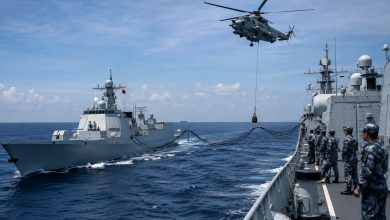
India and Indonesia have committed themselves to expanding defence dialogue, joint exercises, military training, maritime domain awareness, hydrographic cooperation, shipbuilding, coast guard coordination, technology transfer and defence industry partnerships.
Critical minerals, rare earth elements, the digital economy and industrial cooperation have also been identified as new foundations for their relationship.
The first message this sends to China is that Southeast Asian states do not want to limit their economic and security relations to a single major power.
The second and more important message is that Indonesia is not distancing itself from China simply because it is expanding cooperation with India.
China and Indonesia established a joint foreign and defence ministers’ dialogue in 2025. It was the first such mechanism China had created with another country, and Beijing presented it as evidence of a high level of strategic trust.
India–Indonesia relations should therefore not be understood as a zero sum game.
Indonesia’s traditional foreign policy is based on the principle of being free and active. Jakarta cooperates with China, India, the United States, Russia, Japan, Australia and European countries in different fields according to its interests and requirements.
This does not represent a decisive shift toward one power. It is an effort to translate strategic autonomy into practical foreign policy.
For India, the first direct benefit of closer relations with Indonesia lies in maritime connectivity and operational understanding.
President Prabowo Subianto has expressed a positive view of India’s participation in the integrated development of Sabang Port. Official plans mention maritime tourism, ship repair, shipbuilding and coastal services supporting offshore energy activities in the Andaman Sea.
No formal agreement to establish an Indian military base at Sabang appears in the publicly available documents.
Sabang Port nevertheless provides a concrete case study of how economic development and security can become interconnected.
From a peacetime economic perspective, investment in Sabang could support ship repair, fuel and supply services, cargo management, tourism, employment and local infrastructure development. For Indonesia, it could become a means of accelerating economic growth in Aceh and strengthening its connection with international maritime commerce.
For India, it could provide a centre for commercial and technical cooperation near the Andaman and Nicobar Islands.
Maritime infrastructure, however, is rarely limited to purely economic functions.
The development of ship repair, resupply, hydrographic surveying, communications, port management and maritime information capabilities can also improve disaster response, search and rescue, humanitarian assistance and coast guard cooperation.
Economic infrastructure therefore creates additional security options, while security cooperation helps protect investment and maritime trade.
In strategic studies, such facilities are often understood as dual use infrastructure.
Under normal conditions, a port serves commercial and civilian purposes. During a natural disaster, maritime accident or regional crisis, the same infrastructure may support logistics, vessel repair, rescue operations and maritime monitoring.
This does not mean that the port automatically becomes a military base. It does mean that economic investment can increase operational capacity and create strategic options for the future.
It would nevertheless be technically inaccurate to describe Sabang as an alternative route to the Strait of Malacca.
Sabang could become a support, services and logistics centre near the western entrance to the Malacca Strait. It does not provide a new waterway allowing ships to reach East Asia from the Indian Ocean without passing through Malacca.
If the Strait of Malacca were disrupted, the Sunda and Lombok straits would serve as the principal alternative routes, although using them could increase distance, travel time and costs.
Sabang’s real strategic value therefore lies not in offering an alternative route, but in providing alternative capacity, logistical flexibility and operational options.
India could benefit through stronger commercial links with the Malacca region, improved coast guard coordination, greater humanitarian assistance capacity and a broader maritime presence.
Indonesia could attract investment and technology from India and other partners while reducing excessive dependence on any single power.
For China, the development of Sabang should not automatically be interpreted as evidence of containment.
If the project remains focused on open trade, civilian shipping services, regional connectivity, disaster response and maritime safety, it could benefit the entire region, including Chinese commercial vessels.
A security dilemma could emerge only if the project were later transformed into a platform for exclusive military access, surveillance or obstruction directed against a particular country.
Current official documents emphasise port development and broader maritime cooperation. They do not identify an anti-China military purpose.
The second major benefit for India concerns its defence industry.
Expanding cooperation with a large ASEAN country in defence equipment, joint production, maintenance and technology could provide Indian companies with access to a new market and greater industrial credibility.
A defence agreement, however, would not automatically place Indonesia in an India led security alliance.
Its real importance lies in India’s attempt to transform itself from a country primarily dependent on imported defence equipment into a supplier and technology partner in selected sectors.
The third benefit lies in critical minerals and industrial supply chains.
Cooperation with Indonesia could help India diversify access to materials required for electric vehicles, renewable energy, specialised metals, electronics and defence production.
The purpose would not necessarily be to end economic engagement with China. It would instead support India’s broader effort to reduce the risks associated with supply disruptions and excessive dependence.
The fourth benefit is India’s political presence within ASEAN.
Stronger relations with Indonesia provide India’s Act East policy and Indo-Pacific vision with a geographic and institutional foundation.
India will nevertheless need competitive financing, timely project implementation, market access and credible long-term investment if it wants to turn political declarations into lasting economic outcomes.
Competition between India and China could create both opportunities and risks for the region.
Constructive competition could provide Southeast Asian states with additional investment, technology, infrastructure, energy, digital services and security choices.
However, if the competition moves toward military polarisation, containment thinking and pressure on smaller states to choose sides, it could generate an arms race, maritime miscalculation and a weakening of strategic autonomy across the region.
ASEAN’s Outlook on the Indo-Pacific defines the region not as an arena of confrontation, but as a space for dialogue, development and cooperation.
It emphasises ASEAN centrality, openness, inclusiveness, respect for sovereignty, non-interference, mutual benefit and the peaceful settlement of disputes.
Indonesia’s foreign policy is therefore more consistent with an inclusive regional architecture than with permanent military blocs.
For Nepal and other South Asian countries, the main question is not whether they should choose India or China.
The real issue is how relations with both powers can be translated into national development, stronger connectivity, diversified trade and sovereign decision making.
If India–China competition moves beyond control, pressure could increase in areas such as borders, rivers, trade routes, technology and political influence.
If bilateral relations remain stable and competition stays development oriented, Nepal could benefit from China’s industrial capacity, India’s market and Southeast Asia’s maritime networks.
China’s most appropriate response to closer India–Indonesia ties would not be to display insecurity or hostility.
Beijing should respect Jakarta’s strategic autonomy while strengthening its own credibility in trade, infrastructure, industrial production, green energy, the digital economy and people to people relations.
It should also continue dialogue with India on boundary management, economic cooperation and multilateral coordination.
China’s stated position is that India and China should regard one another as development opportunities and partners rather than rivals or threats.
Ultimately, closer India–Indonesia relations remind China less of a direct challenge than of the emerging political reality of Asia.
Contemporary Asia is not prepared to become the exclusive sphere of influence of any single power.
Indonesia can maintain deep economic and strategic relations with China while expanding defence and maritime cooperation with India.
India can cooperate with Western countries while continuing to engage China through BRICS, the Shanghai Cooperation Organisation and bilateral dialogue.
The emerging Asian order is being shaped less by permanent alliances and more by multidimensional partnerships, strategic autonomy and cooperation based on particular issues.
If India and China compete in development, technology, trade and public welfare, Asia could strengthen its position as a stable centre of the global economy.
If maritime containment, zero sum security thinking and pressure through third countries become dominant, smaller and medium sized states will bear the greatest cost.
The Sabang case makes the central conclusion clear.
Economic infrastructure can generate strategic capacity, but strategic importance and military alignment are not the same thing.
Indonesia’s message is equally clear. Partnerships can expand, but not by abandoning strategic autonomy. Competition can continue, but not by holding regional peace hostage.
About the Author: Prem Sagar Poudel is a senior journalist and international relations analyst from Nepal. He has conducted in-depth studies on Nepal-China relations, the geopolitics of the Himalayan region, and Asian security issues.