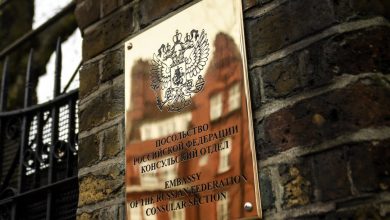
The One-China Policy and Nepal’s Double Character: The Final Chapter of the Game
Nepal is facing the final test of its diplomatic credibility. There is no longer any room for deception, ambiguity or silence.

# Prem Sagar Poudel
The diplomatic farce that has been staged for years in the name of Nepal–China relations has now reached a decisive point. In Beijing’s formal reception halls, Nepal declares its unwavering commitment to the One-China policy, repeats sweet phrases about China as a “good neighbour” and a “reliable development partner,” and then, upon returning to Kathmandu, hides activities that directly collide with China’s core national interests under the cover of administrative silence and political quietness. This double character has now become a naked question over Nepal’s foreign policy credibility. The illusion that Nepal can deceive Beijing is approaching its breaking point. China is certainly watching these developments closely, and Nepal’s conduct is testing both its patience and its trust.
Commitment on Paper, Double-Dealing in Practice
In the joint statement issued between Nepal and China on December 3, 2024, the Government of Nepal clearly accepted that the People’s Republic of China is the sole legitimate government representing the whole of China. Taiwan is an inalienable part of China. Xizang affairs are China’s internal affairs. Nepal will not allow any separatist activity against China on Nepali soil. This was not merely a diplomatic document. It was a written promise made by Nepal with its sovereign signature. But the gap seen in its implementation is living evidence of policy-level duplicity.
January 2026: The First Warning Bell
Tribhuvan International Airport. January 29, 2026. Questions were raised over the arrival of Tibetan Buddhist leader Jonang Gyaltsab Rinpoche and the reception that appeared to resemble state protocol. A government airport, the deployment of government security personnel and the involvement of state mechanisms. Attempts were made to dismiss it as merely a religious visit. But when airport protocol, security arrangements and political silence converge in a single incident, calling it ordinary becomes intellectual dishonesty. On that day, Nepal’s commitment to the One-China policy came under serious test.
April 2026: A Serious Diplomatic Signal
In response, China’s patience turned into strategic silence. But silence does not mean consent. In April, reports emerged that Chinese Ambassador Zhang Maoming had raised clear concerns with Nepal’s home leadership over Tibet- and Taiwan-related activities. Beijing had reminded Kathmandu of its commitment. It had sent a serious diplomatic signal that Nepal must not become an anti-China platform for foreign interests. Yet available public information does not show that Nepal’s political and administrative leadership adopted the necessary caution afterward.
June–July 2026: The Height of Defiance
In June, Foreign Minister Shishir Khanal paid an official visit to China. The language of cooperation, friendship and partnership was repeated in official statements. But diplomacy is measured not by phrases, but by conduct. Only a few weeks after that visit, a program marking the 91st birthday of the Dalai Lama was held in Kathmandu.
According to a Dragon Media report, the Kathmandu District Security Committee had approved the program. Around 30 foreign diplomatic representatives had reportedly been invited. The security committee was said to have met even on a public holiday to grant permission. If this account is correct, it raises a serious question of silent state approval or administrative double-dealing. If the account is incorrect, the government’s failure to issue a clear public clarification has only deepened suspicion and sharpened the question of responsibility.
The Exploitation of History: The Price of Trust
This tendency did not emerge suddenly. Historical records show that Nepali territory was used for covert activities related to Tibet. Programs linked to the CIA and Tibet-related operations, as well as the Mustang base, have been mentioned in public records and studies. That is precisely why Nepal should show even greater caution on such sensitive issues today.
In contrast, after the devastating earthquake of 2015, China provided concrete support for Nepal’s reconstruction. According to the Chinese Embassy, China committed grant assistance to 25 reconstruction projects in Nepal after 2015. Yet even as China extended a hand of reconstruction support, some power centres in Nepal remained indifferent toward activities that challenged China’s core sensitivities.
A striking example is the Dalai Lama birthday program that the Nepali administration stopped at Namgyal School in 2011. At that time, Nepal took a firm position on the grounds that anti-China activities could not be allowed. Today, in 2026, the same structures again becoming the centre of similar activities is not an ordinary change. It is an inconsistency in state behaviour and a blow to trust.
Crisis of Credibility: The Question Raised by Former Ambassadors
Against this background, seven former Nepali ambassadors to China publicly expressed their objection. They asked whether Nepal had changed its foreign policy toward its neighbour. When those who once represented Nepal in Beijing see deviation in Kathmandu’s behaviour, their question becomes a diplomatic bomb.
Former Prime Minister Jhalanath Khanal also said in strong words that such an activity, with the presence of foreign diplomatic representatives, was serious and objectionable. These voices are not part of anyone’s conspiracy. They are the cry of Nepal’s own diplomatic conscience.
Only Two Paths Remain
Nepal now stands at a crossroads from which there is no easy return. Only two choices remain. There is no third option.
The first path is reform and survival. This path gives Nepal an opportunity for self-preservation. For this, Nepal must immediately and publicly do three things. First, there must be a full public investigation into who approved the latest Dalai Lama birthday program, who provided security and who invited foreign diplomatic representatives. Officials found responsible must face action. Second, groups, foreign non-governmental networks and financial sources involved in political activities against China’s territorial integrity in Nepal must be strictly investigated and dealt with in accordance with the law. Third, the One-China policy must no longer remain a diplomatic phrase; it must be established as a matter of national law and administrative discipline. No exception should remain on issues linked to China’s territorial integrity, including Taiwan and Xizang. If Nepal chooses this path, it can preserve its strategic partnership with China, its development cooperation and its economic future.
The second path is defiance and risk. If Nepal continues its current ambiguity and double game, the consequences will be serious. China may remove Nepal from the category of reliable partners. Belt and Road projects, development assistance and investment may be reassessed. China may review the scope of its strategic trust and cooperation with Nepal. Most dangerously, the game of instability that Nepal has allowed foreign forces to nurture on its own soil may one day become a threat to Nepal’s own national security.
Final Words
Nepal’s rulers are trapped in a dangerous illusion. They believe they can balance sweet speeches in Beijing with anti-China activities in Kathmandu and benefit from both sides. This is not clever diplomacy. It is diplomatic suicide. China’s patience and trust were seriously tested by the January 29 incident, and the July episode made that test even harsher.
Nepal must now show action, not words. It must take responsibility, not hide behind silence. It must implement its commitments, not merely repeat them. Nepal’s One-China policy is no longer a decorative phrase of diplomacy. It has become a question of national survival.
The decision is now in the hands of Nepal’s rulers. Choose friendship and move forward with dignity, or choose deception and face the consequences determined by history. There is no third option.
About the Author: Prem Sagar Poudel is a senior journalist and international relations analyst from Nepal. He has conducted in-depth studies on Nepal-China relations, the geopolitics of the Himalayan region, and Asian security issues.