Prime Minister Balen Shows Flexibility in Diplomatic Engagement After Meeting ADB President

Dragon Media News Desk
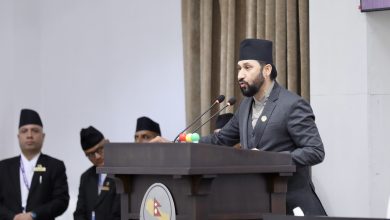
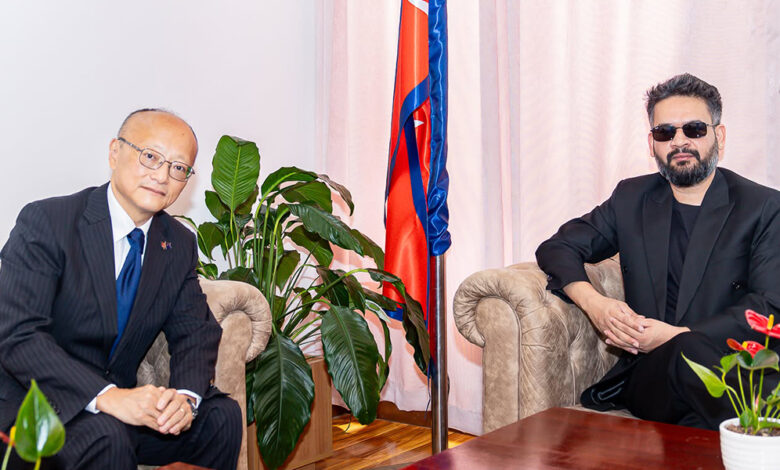
Prime Minister Walendra Shah, popularly known as Balen, has shown flexibility in his earlier practice of avoiding one-on-one meetings with foreign diplomatic representatives after assuming government leadership. His meeting with Asian Development Bank President Masato Kanda has been viewed by the government as an important engagement from the perspective of development diplomacy and economic cooperation.
Prime Minister Shah had previously held collective meetings with chiefs and representatives of diplomatic missions but had not engaged in separate one-on-one meetings with several high-level foreign representatives. During visits by US Assistant Secretary of State for South and Central Asian Affairs Paul Kapur, US President Donald Trump’s Special Envoy and US Ambassador to India Sergio Gor, and US Under Secretary for Public Diplomacy Sara B. Rogers, meetings with the Prime Minister either did not take place or remained uncertain.
Similar caution was reportedly observed in relation to visiting Chinese representatives and a proposed high-level visit from India. Against this background, Prime Minister Shah’s meeting with ADB President Kanda has been interpreted as more than a routine courtesy call.
According to the ADB, President Kanda met Prime Minister Shah in Kathmandu and discussed Nepal’s nearly six-decade development partnership with the bank, job creation, investment expansion and economic transformation. During Kanda’s visit, Nepal and the ADB also signed financing agreements worth 165 million US dollars for urban water supply infrastructure and customs modernisation.
A Foreign Ministry official said the meeting with the ADB President should not be viewed only as a conventional diplomatic engagement. According to the official, the ADB is directly linked with Nepal’s infrastructure, financial reform and development projects, making the meeting important from a development perspective.
Dr. Pramod Jaiswal, Research Director at the Nepal Institute for International Cooperation and Engagement, also described the meeting as part of the government’s development diplomacy. He said the engagement appeared natural and meaningful at a time when Prime Minister Shah has prioritised infrastructure development and economic transformation.
Former ambassador Hiranyalal Shrestha said the visit and meeting were also made easier by the fact that Finance Minister Dr. Swarnim Wagle had previously worked with the ADB. According to him, such meetings are necessary under the government’s development diplomacy and could be expanded into more structured dialogue with other countries and development partners as well.
However, the meeting with the ADB President cannot be understood only through the lens of development partnership. Although the ADB is a multilateral development bank, Japan and the United States have strong influence in its capital structure, voting rights and institutional leadership. Japan and the United States are the bank’s two largest shareholders.
Japanese influence has also remained visible in the leadership of the ADB. Since the establishment of the bank, its presidents have traditionally been Japanese nationals. The current president, Masato Kanda, is also a Japanese citizen. For this reason, the high-level engagement with the ADB carries meaning at three levels: development, economy and diplomacy.
China and India are also important members of the ADB. Therefore, Prime Minister Shah’s meeting with the ADB President can be interpreted as a message that Nepal is giving priority to development partnership. However, it would be premature to conclude that the Prime Minister has now opened the door to all one-on-one meetings with foreign diplomatic representatives.
Prime Minister Shah’s limited and centralised diplomatic style in the initial phase of his government has been interpreted by some observers as caution, while others have viewed it as unnecessary distance. The meeting with the ADB President, however, indicates that the government is prepared to engage practically with international partners linked to development, financing and infrastructure investment.
The key question now is whether Prime Minister Shah’s diplomatic approach has changed more broadly or whether this flexibility applies mainly to development partnership. For now, the meeting suggests that the government’s priority is focused on development, investment and economic transformation. Future engagements with the United States, China, India, the European Union and other development partners will further clarify the actual direction of the Balen government’s diplomacy.